

Recruiting in 2025 is no longer about filling roles, it’s about building a hiring engine that is fast, fair, structured, and resilient. Talent teams today are expected to evaluate candidates with precision, handle massive applicant volumes, maintain a consistent candidate experience, and deliver measurable results, all while juggling internal expectations and limited bandwidth.
It’s no surprise that AI hiring tools have become a core part of modern recruiting operations. But not every tool is created equal. The best tools don’t replace recruiters; they remove noise, automate repetitive tasks, and strengthen human judgment with structured intelligence. Recruiters stay in control, but with cleaner signals, faster shortlists, and more transparent workflows.
To help teams design an effective 2025 stack, we evaluated dozens of AI recruiting software platforms across sourcing, screening, interviewing, scheduling, assessment, and workflow automation. Our evaluation included product demos, customer case studies, output quality, fairness criteria, and integration capabilities.
Below is the definitive list of nine tools that meaningfully improve recruiter efficiency and hiring accuracy, not gimmicks, but real value.
TL;DR Best Picks at a Glance
| Tool | Strength | Ideal For |
| JusRecruit | Unified screening + interviews + scorecards | High-volume, cross-functional teams |
| Metaview | Structured interviewer intelligence | Mid-market & enterprise |
| HireEZ | Deep sourcing & enrichment | Tech, niche, enterprise |
| Paradox Olivia | Frontline automation | Retail, hospitality, BFSI |
| SeekOut | Talent & DEI intelligence | Enterprise TA |
| HireVue | Video interviews & assessments | Large-scale roles |
| Fetcher | Automated sourcing + outreach | Outreach-heavy teams |
| Manatal | Affordable ATS with AI | SMBs & agencies |
| X0PA AI | End-to-end automation | Enterprise automation |
Why 2025 Is the Year to Upgrade Your Recruiting Stack
Recruiting has always been a systems problem disguised as a people problem. In 2025, three forces make AI recruiting tools unavoidable:
1. Resume volumes exploded, but recruiter bandwidth didn’t
Average applicant volume per role has crossed 250+ resumes, with as many as 88% poorly matched. Recruiters now spend 23 hours per hire just screening inbound applications. That is before interviews, coordination, assessments, and reporting.
Manual resume screening is no longer viable.
AI resume screening and shortlist automation reduce this workload dramatically, but only when done with guardrails, fairness, and structured evaluation.
2. Speed has become a talent advantage
Top talent accepts offers within 10–14 days. Slow teams lose candidates not because of compensation, but because their processes contain:
- Slow resume triage
- Delayed screening calls
- Unstructured interviews
- Scheduling bottlenecks
AI hiring tools help remove this friction, giving teams agility without compromising depth.
3. Fairness and consistency are now mandatory
Candidates notice when interviews feel random or unstructured.
Companies that use:
- Structured scorecards
- Consistent first-round interviews
- Transparent evaluation rubrics
…are perceived as fairer, more professional, and more trustworthy.
This directly improves offer acceptance rates.
4. Recruiters need relief from repetitive work
Whether it’s screening, scheduling, follow-up, or note-taking, too much recruiter time is spent on admin instead of relationship-building.
The right AI recruiting tools solve this, not by replacing recruiters but by letting them focus on high-value conversations and decisions.
The 9 AI Tools Every Modern Recruiter Needs in Their 2025 Stack
1. JusRecruit
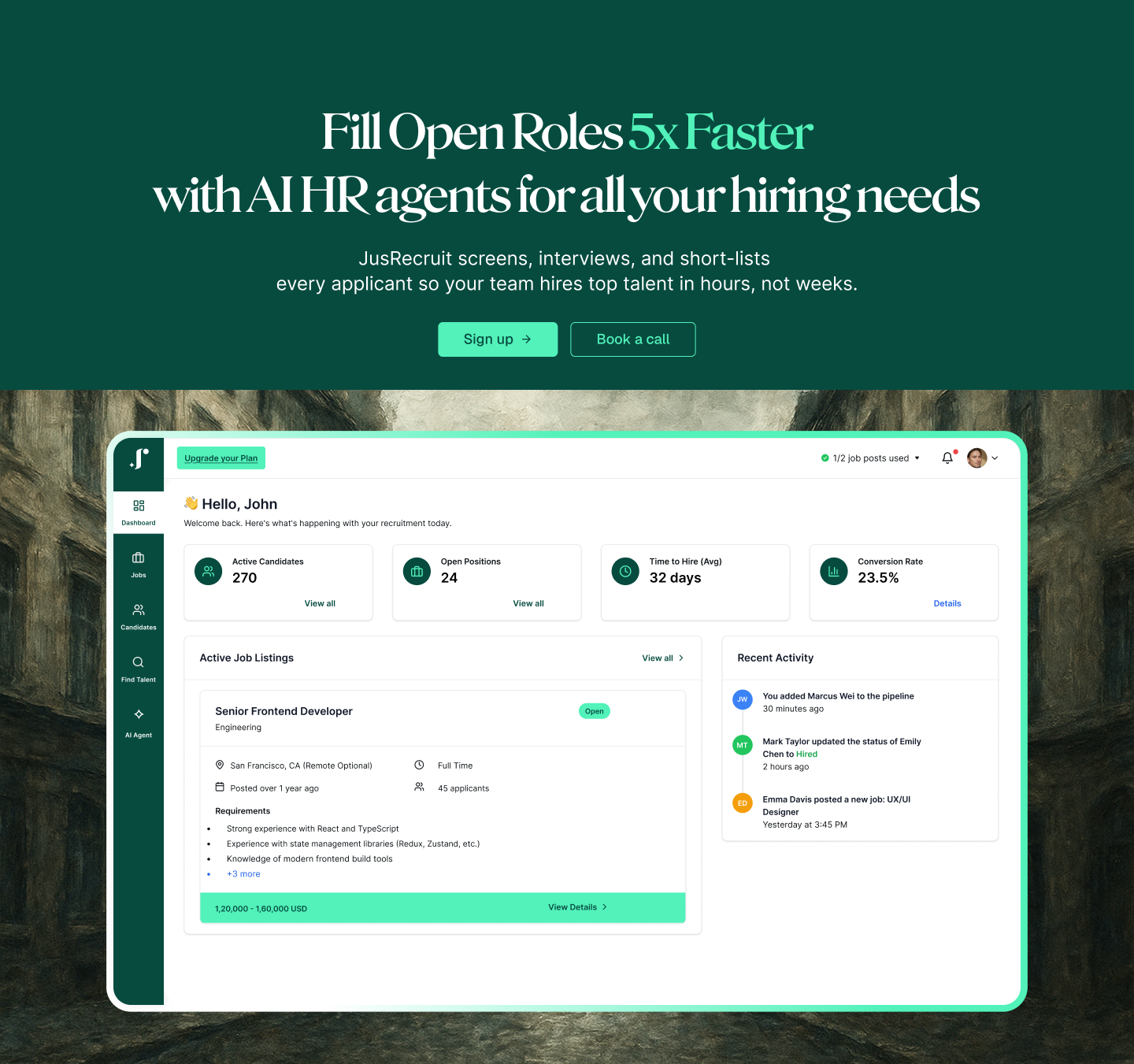
AI-first screening + structured interview automation
JusRecruit is purpose-built to fix the broken front-half of hiring: too much resume noise, inconsistent first-rounds, and interview feedback that varies wildly depending on who conducted the call.
It combines AI resume screening, an adaptive AI interviewer, structured scorecards, and a lightweight ATS, creating the closest thing to a unified “meaningful first pass” in hiring.
Key Features
1. AI resume vetting with job-specific intelligence
Instead of “keyword matching,” JusRecruit evaluates resumes based on skills, experience patterns, and role alignment, producing fit scores and structured summaries that recruiters can trust.
It handles:
- noise removal
- candidate clustering
- signal extraction
- side-by-side comparisons
Recruiters finally get a shortlist instead of a stack of noise.
2. Adaptive first-round interviews (AI interviewer)
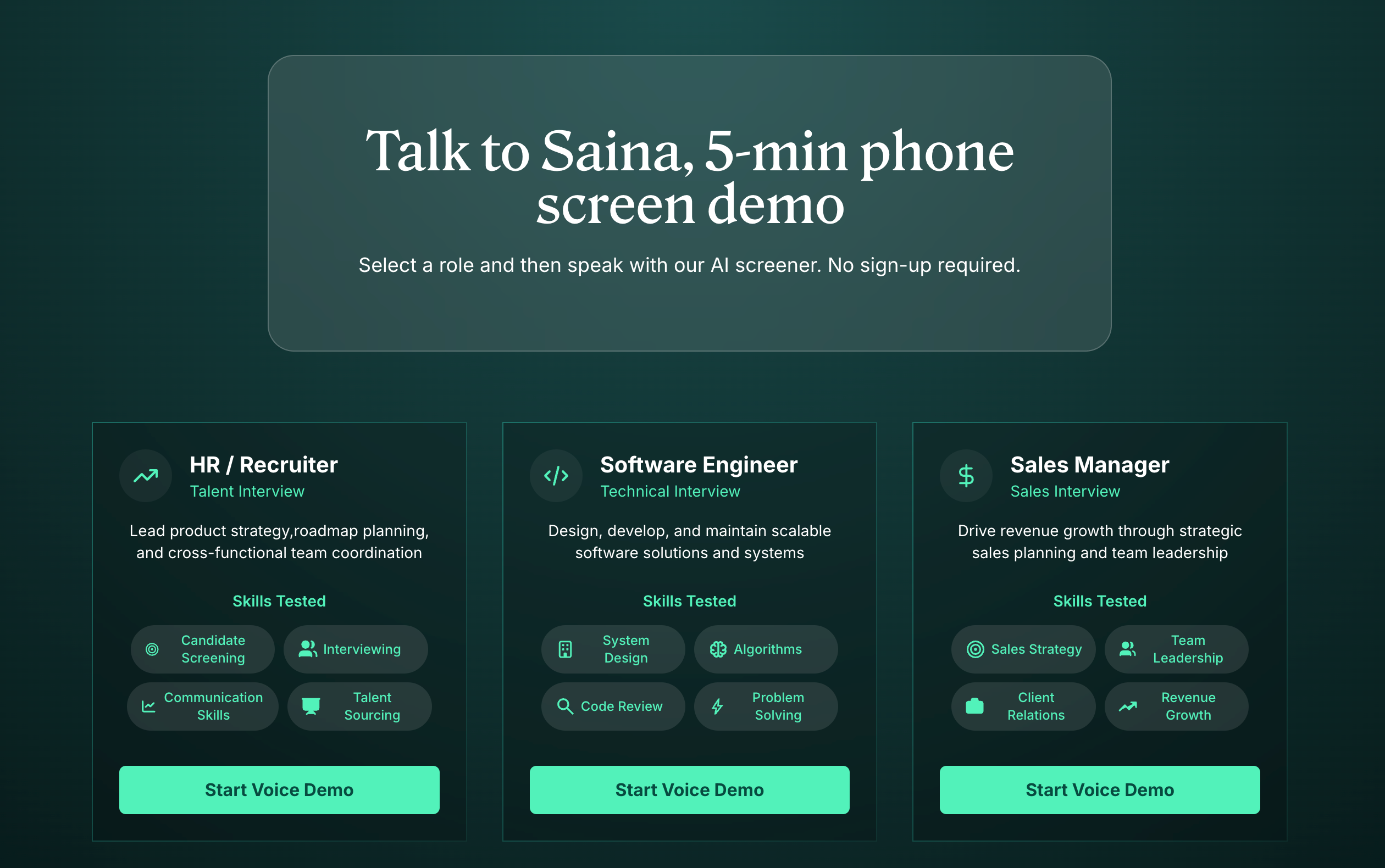
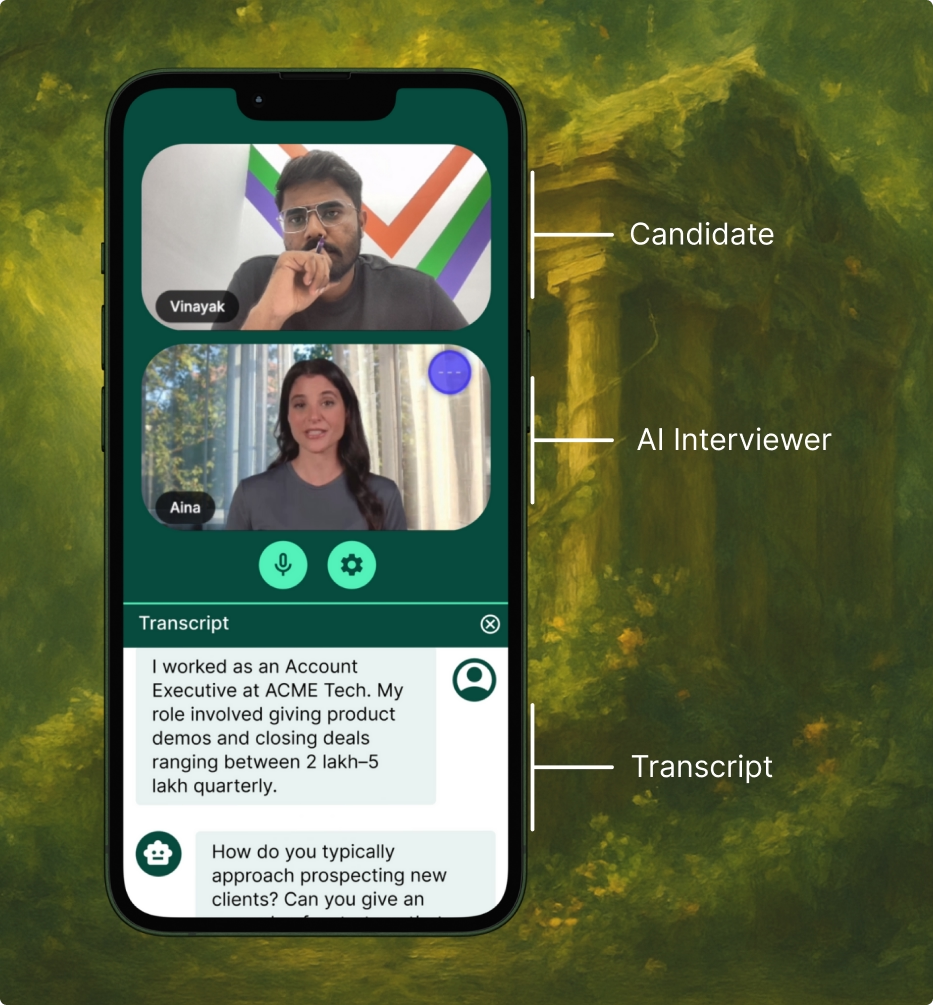
JusRecruit’s AI interviewer (Saina) adapts questions based on candidate responses, producing fair, structured, comparable interviews at scale.
This is not a chatbot.
It’s a structured, competency-aligned interviewer that ensures:
- every candidate gets the same evaluation framework
- questions adapt deeper if a candidate demonstrates strong understanding
- irrelevant tangents and interview bias are eliminated
- output = exceptionally detailed, structured scorecard
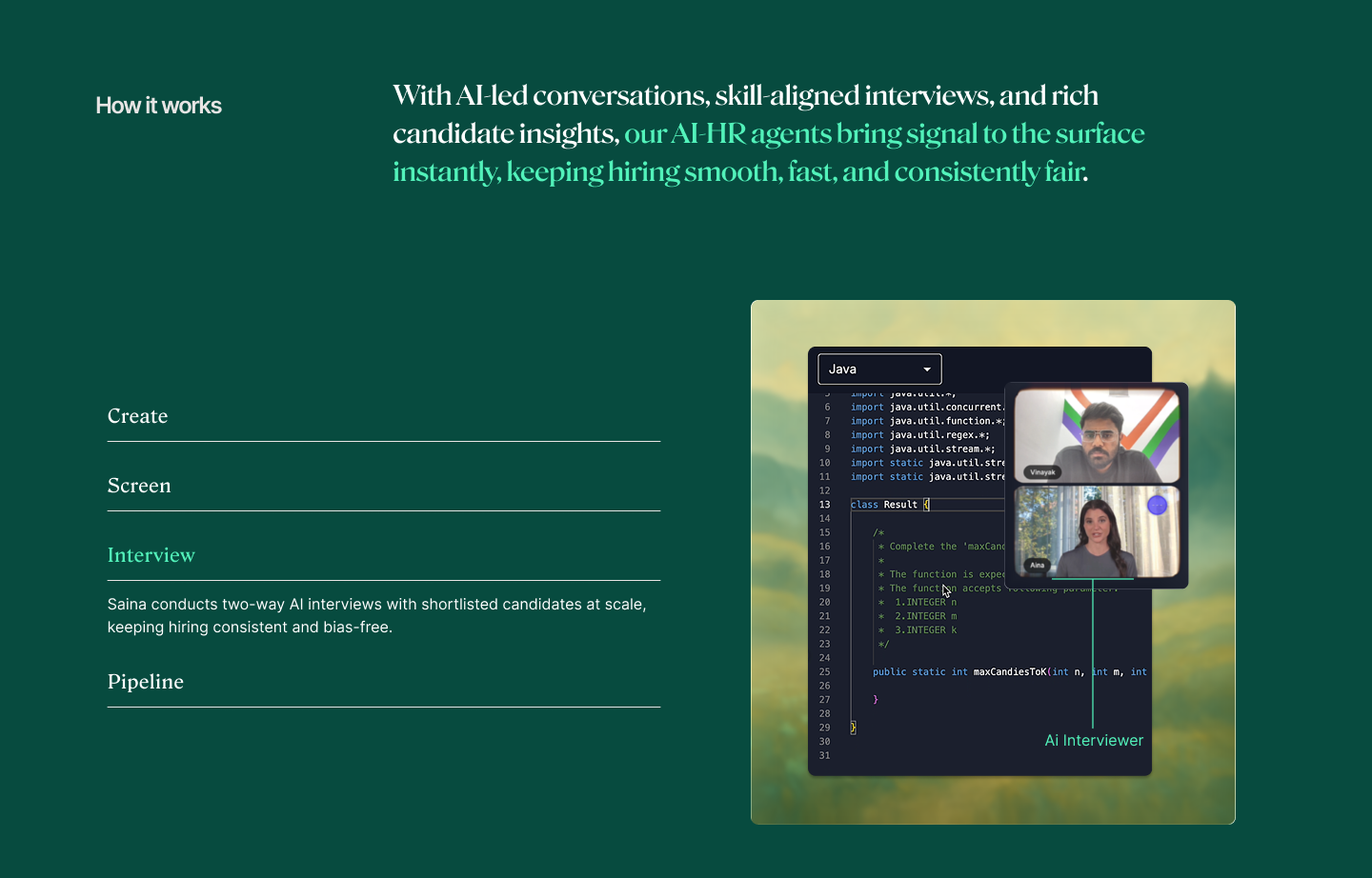
Recruiters and hiring managers get insights they would never get from a rushed screening call.
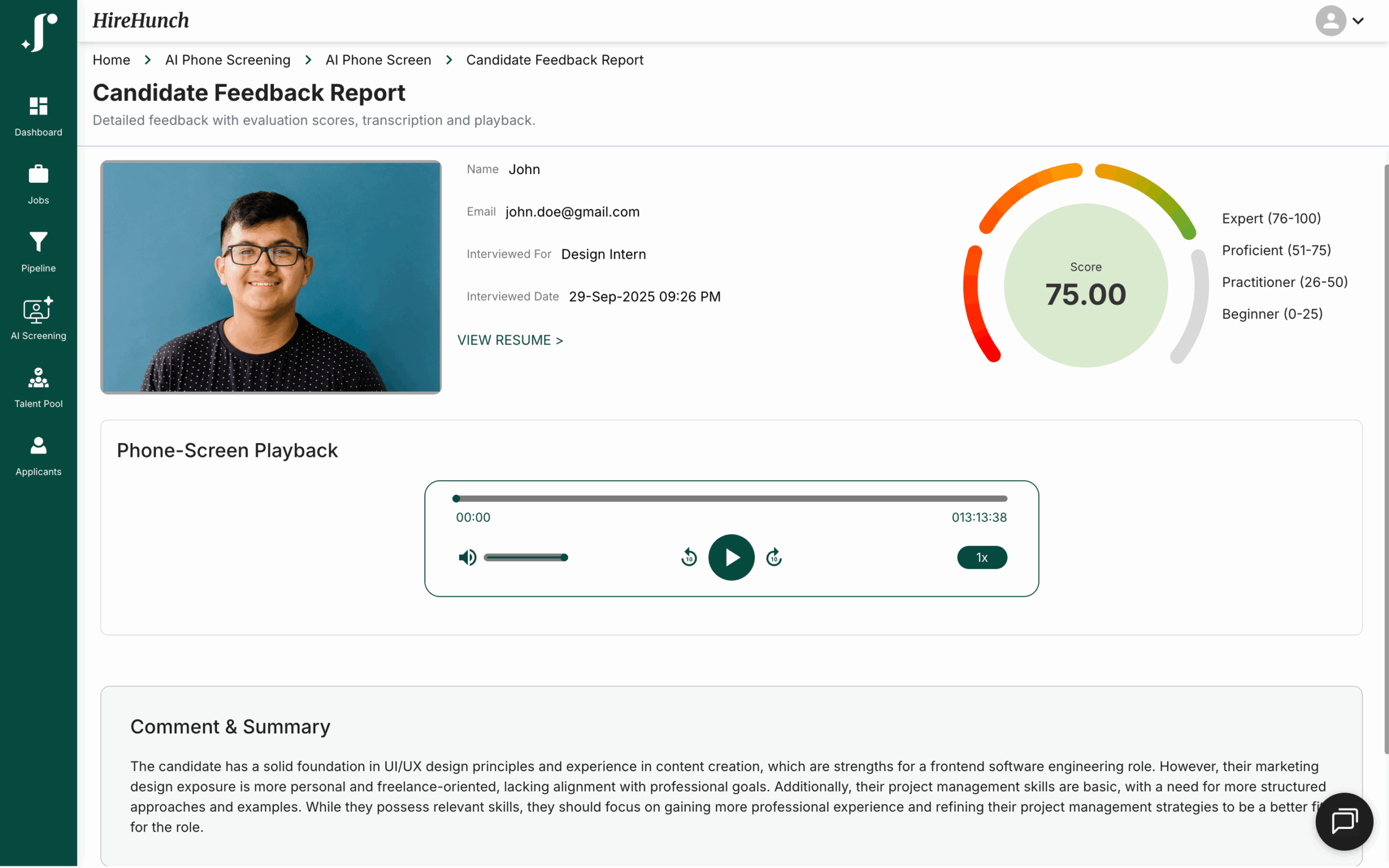
3. Structured, comparable scorecards
Every interview produces:
- rubric-driven scores
- highlights and examples
- red flags
- consistency metrics
- skill-by-skill evaluation
This solves the single biggest interview problem: noisy, low-signal interview feedback.
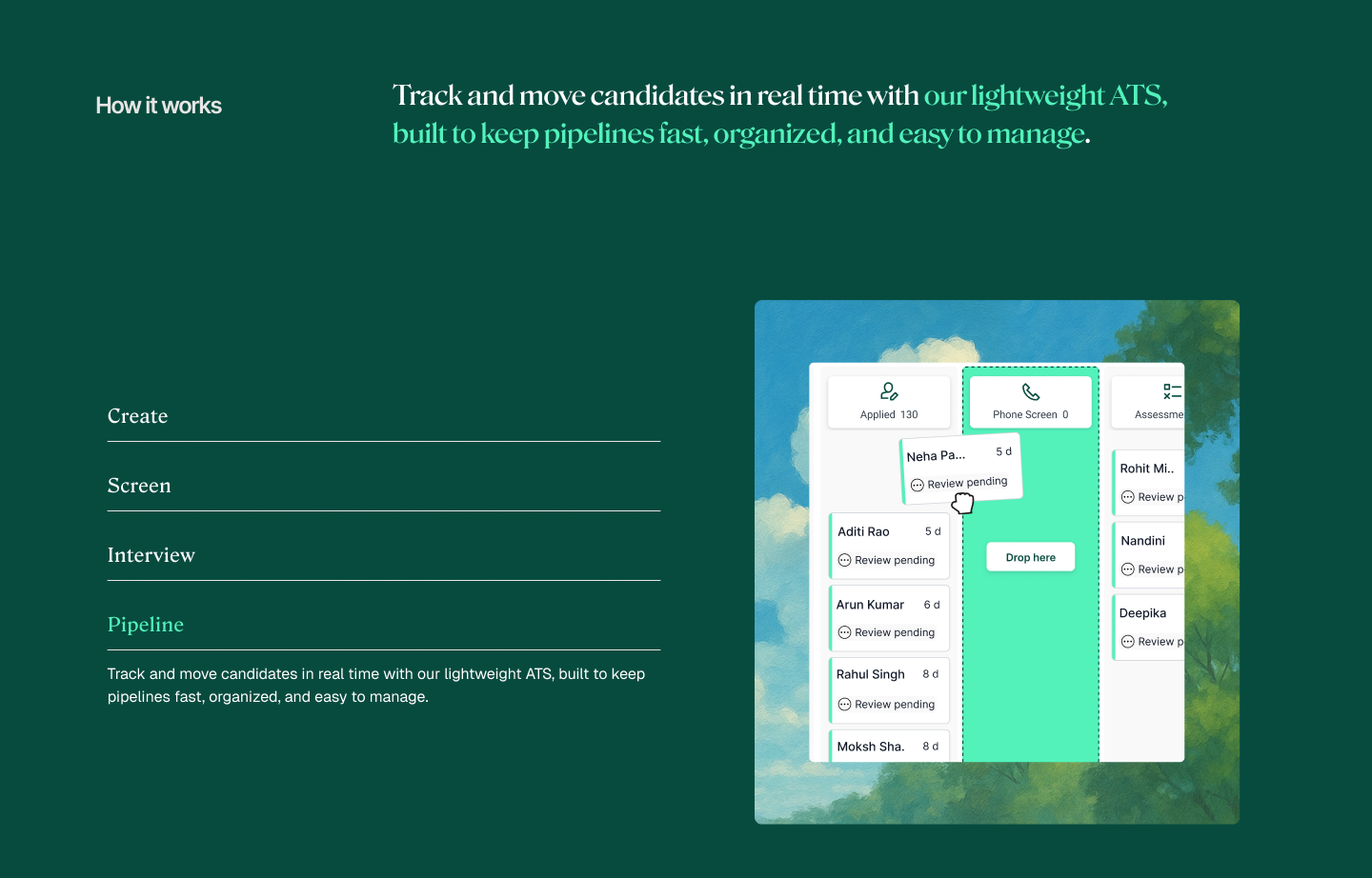
4. Lightweight ATS + automated routing
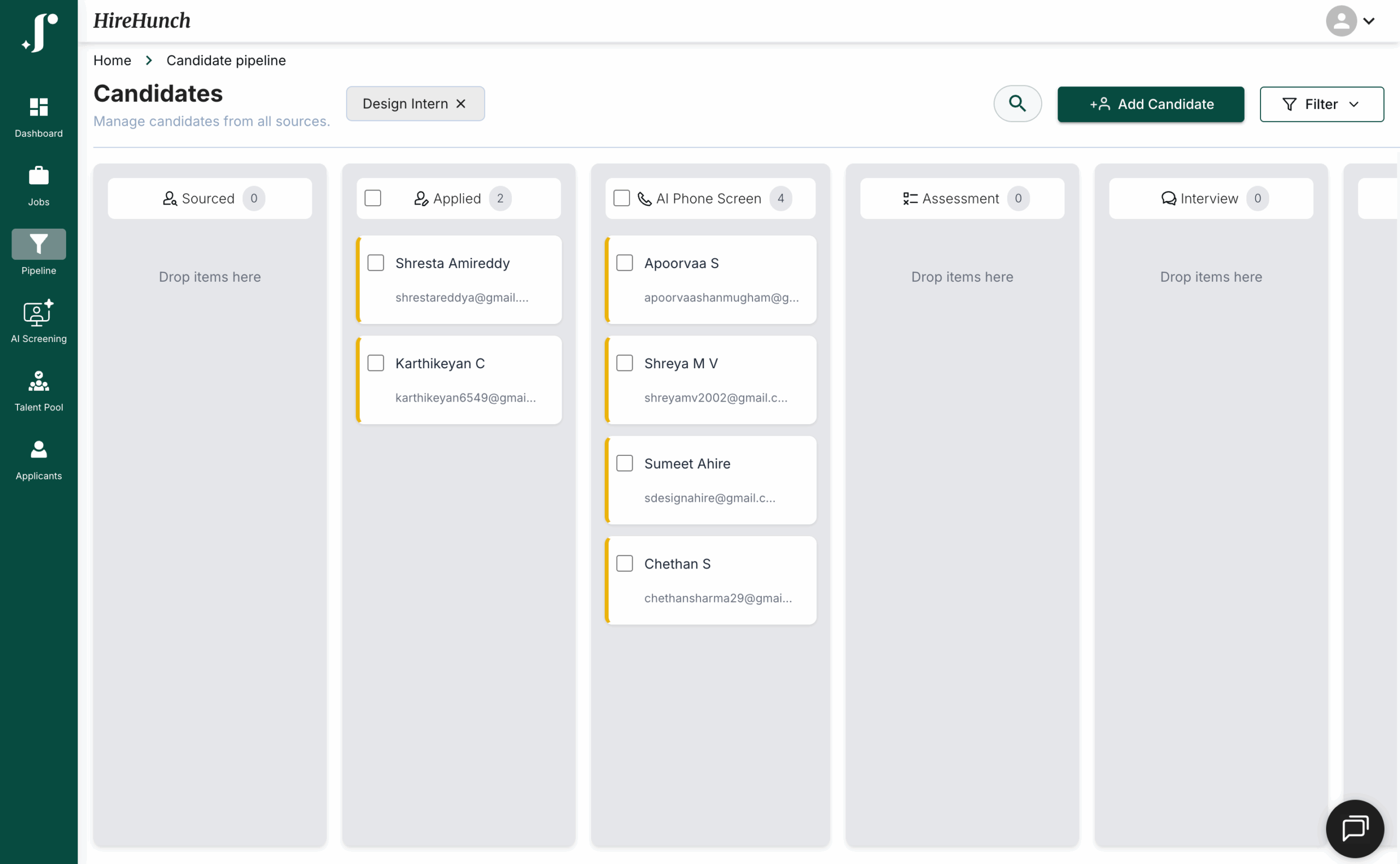
Instead of reopening the ATS 30 times a day, teams get a clean pipeline view:
- who is screened
- who is interview-ready
- who needs a decision
- auto-reminders, nudges, and scheduling triggers
It’s the difference between orchestrating chaos vs. moving candidates precisely through a pipeline.
Best For
- High-volume inbound roles
- Teams wanting structured, fair first-round interviews
- Companies replacing tedious manual screening
- Hiring managers frustrated by inconsistent interviewer feedback
- Recruiters who want to save 20+ hours per week
Pros
- Dramatically reduces screening hours (70%+ time saved)
- Consistent, fair interviews for every applicant
- Immediate interview-ready shortlists for hiring managers
- Enables recruiters to focus on relationship-building
- Improves candidate experience through structure + transparency
- Ensures data-driven hiring decisions
Cons
- Requires teams to define competencies clearly
2. Metaview
AI interviewer intelligence & structured note-taking
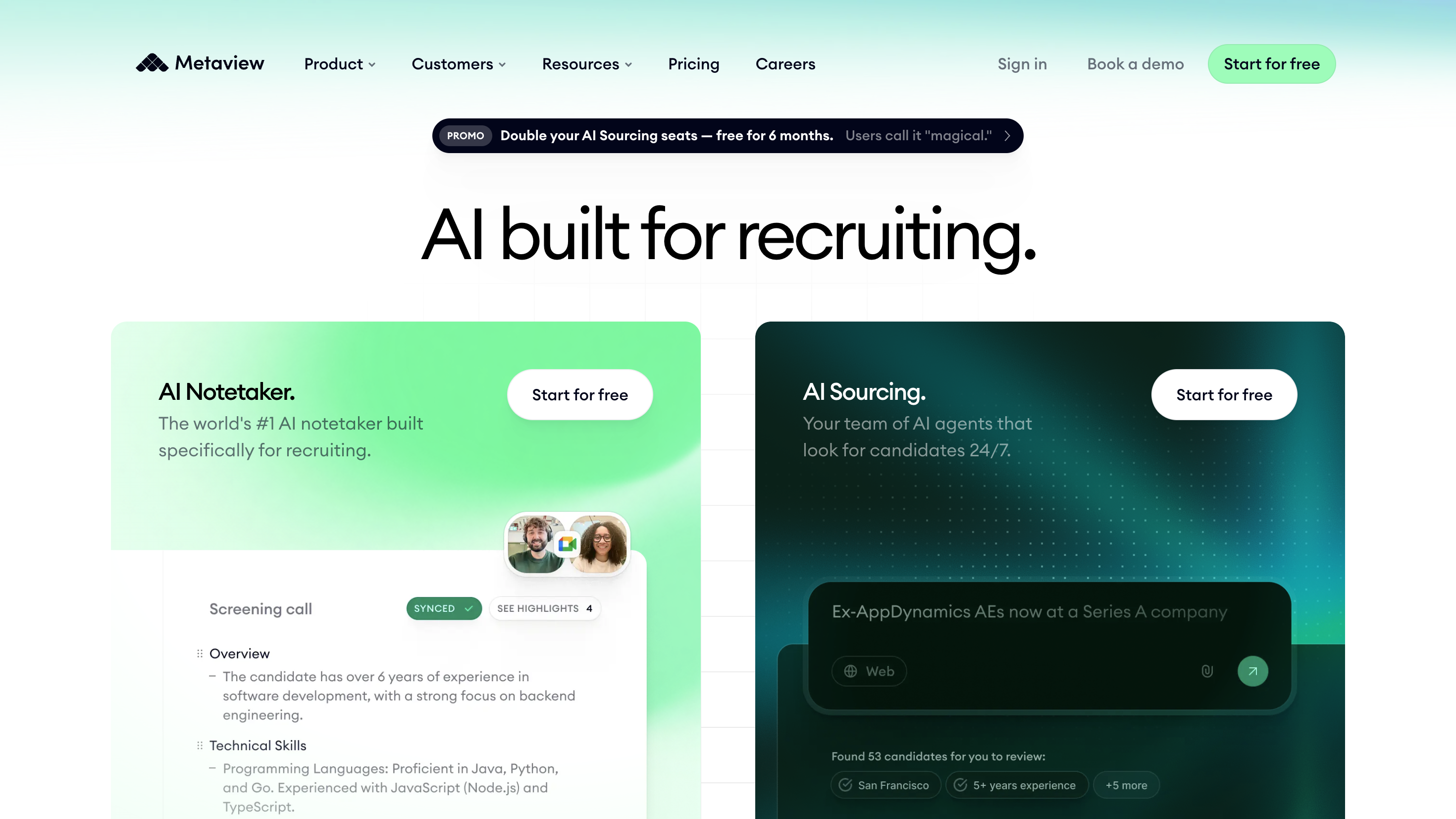
Metaview’s strength lies in its deep understanding of interviews. It improves live interviews by guiding interviewers, capturing structured notes, and generating high-quality scorecards.
Key Features
1. AI-powered real-time transcription
Metaview listens, transcribes, and organizes interviews in real time, allowing interviewers to stay engaged.
2. Automated structured notes
Instead of raw transcripts, recruiters receive structured summaries aligned to competencies.
3. Interviewer coaching
Prompts help interviewers stay consistent, avoid bias, and ask deeper questions.
4. Rubric-driven evaluation
Ensures evaluators give consistent scoring across candidates.
Pros
- High-signal interviews
- Improves interviewer performance over time
- Great for compliance and fairness
- Excellent for leadership or technical roles
Cons
- No sourcing or screening capability
- Requires operational adoption
- Output fidelity depends on interview audio quality
3. HireEZ
Deep sourcing meets talent intelligence
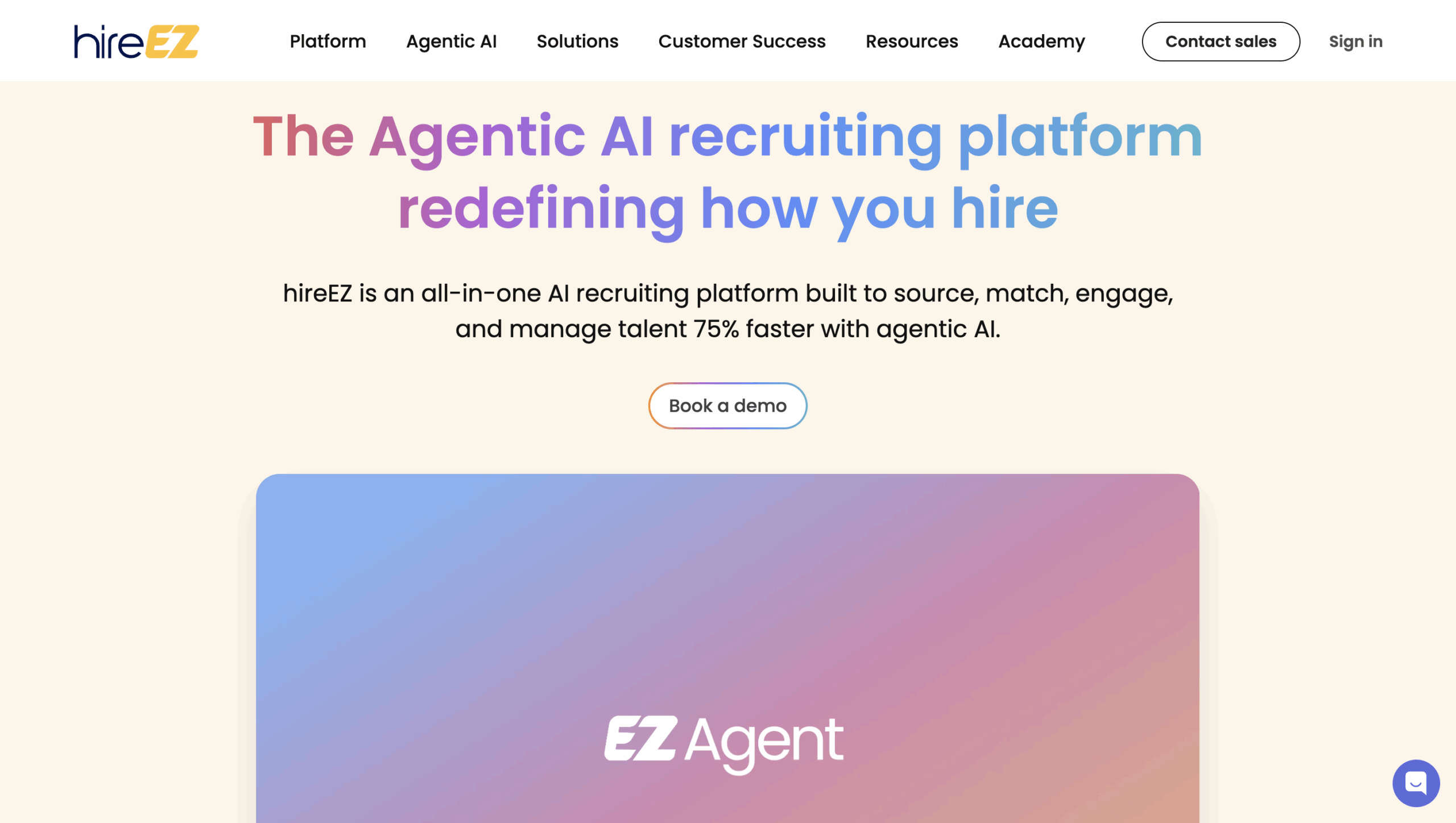
HireEZ turns the open web into a talent database. It is one of the few platforms that excel at both sourcing and data enrichment at scale.
Key Features
1. Web-wide sourcing engine
Aggregates candidate profiles from dozens of public sources.
2. Enrichment & inferred skills
Predictive models fill in gaps to provide a complete candidate snapshot.
3. Talent maps & market insights
Understand where talent lives and how competitive the space is.
4. Diversity analytics
Enhances DEI hiring strategies through structured data.
Pros
- Superb for hard-to-fill roles
- Strong enrichment
- Instant visibility into talent markets
- Great for outbound-driven teams
Cons
- No interviewing or assessment
- Steeper learning curve
- Can produce more leads than teams can handle without automation
4. Paradox Olivia
Conversational AI for High-Volume Hiring
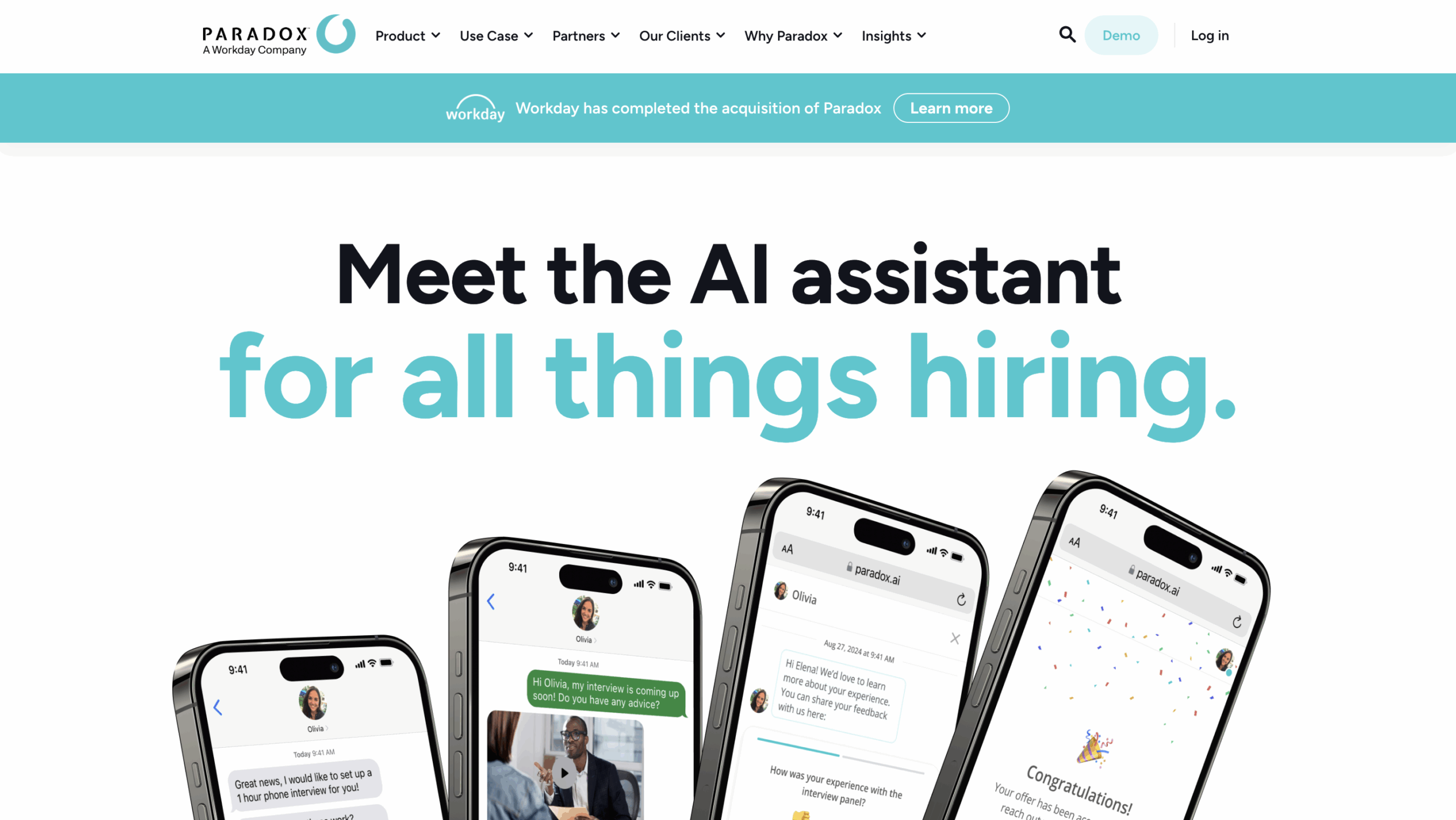
Olivia functions as a 24/7 conversational assistant that handles candidate interactions at scale. It excels in environments where speed, responsiveness, and seamless scheduling are essential — particularly frontline, shift-based, and high-volume roles.
Key Features
1. Conversational Q&A
Answers candidate queries instantly and provides a human-like chat experience.
2. Automated screening
Runs candidates through predefined knockout criteria to qualify them quickly.
3. Instant scheduling
Books interview slots automatically based on recruiter availability.
4. Candidate FAQs
Delivers consistent, automated responses to common candidate questions.
5. Mobile-first experience
Optimized for candidates applying and interacting via mobile devices.
Pros
- Lightning-fast frontline hiring
- Reduces candidate drop-off by keeping engagement real-time
- Great for shift-based and deskless-worker roles
- Real-time scheduling eliminates recruiter bottlenecks
Cons
- Less depth for specialized or technical roles
- Requires clearly defined workflows to perform effectively
- Can feel impersonal if over-automated
5. SeekOut
Enterprise Talent Intelligence
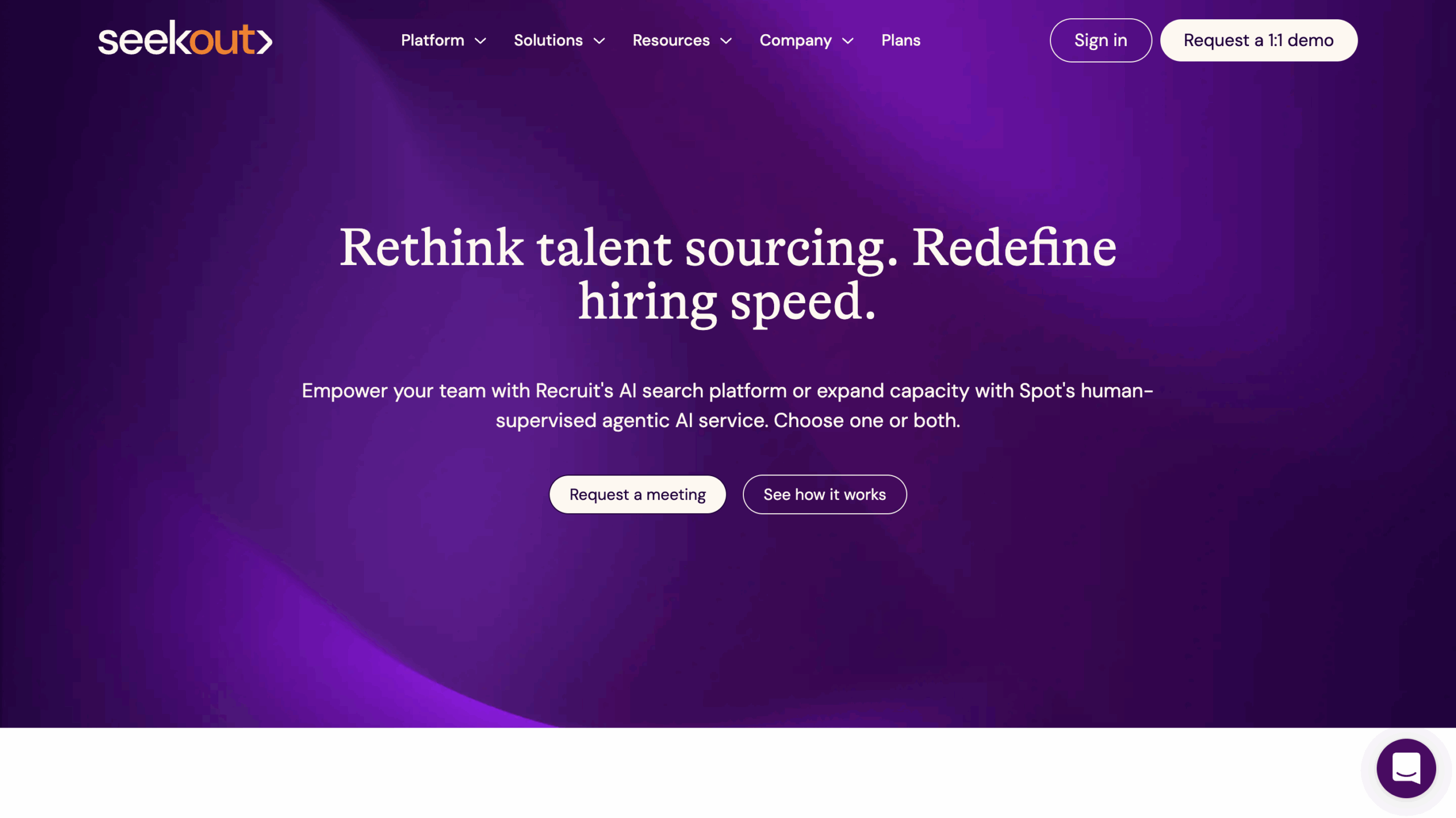
SeekOut is designed for advanced talent acquisition teams that need deep sourcing capabilities, rich DEI analytics, and strategic workforce planning tools. It’s especially useful for enterprises hiring at scale or building long-term talent strategies.
Key Features
1. Advanced Boolean + AI search
Combines precision Boolean with AI-assisted discovery to surface highly targeted talent.
2. Diversity insights
Provides structured DEI analytics to help teams build more inclusive pipelines.
3. Internal mobility analytics
Maps internal skills and movement patterns to support internal hiring and career pathways.
4. Workforce planning dashboards
Gives TA and HR leaders visibility into future hiring needs, skill gaps, and market dynamics.
5. Team collaboration features
Enables shared projects, talent pools, and feedback loops across large TA teams.
Pros
- Unmatched data quality across roles and industries
- Brilliant for enterprise workforce planning
- Helps TA leaders collaborate effectively with business leadership
- Supports DEI initiatives with transparent, actionable data
Cons
- Complex setup for new teams
- High learning curve for advanced searches
- Not optimized for frontline or high-volume hourly roles
6. HireVue
Scalable interviewing + assessments
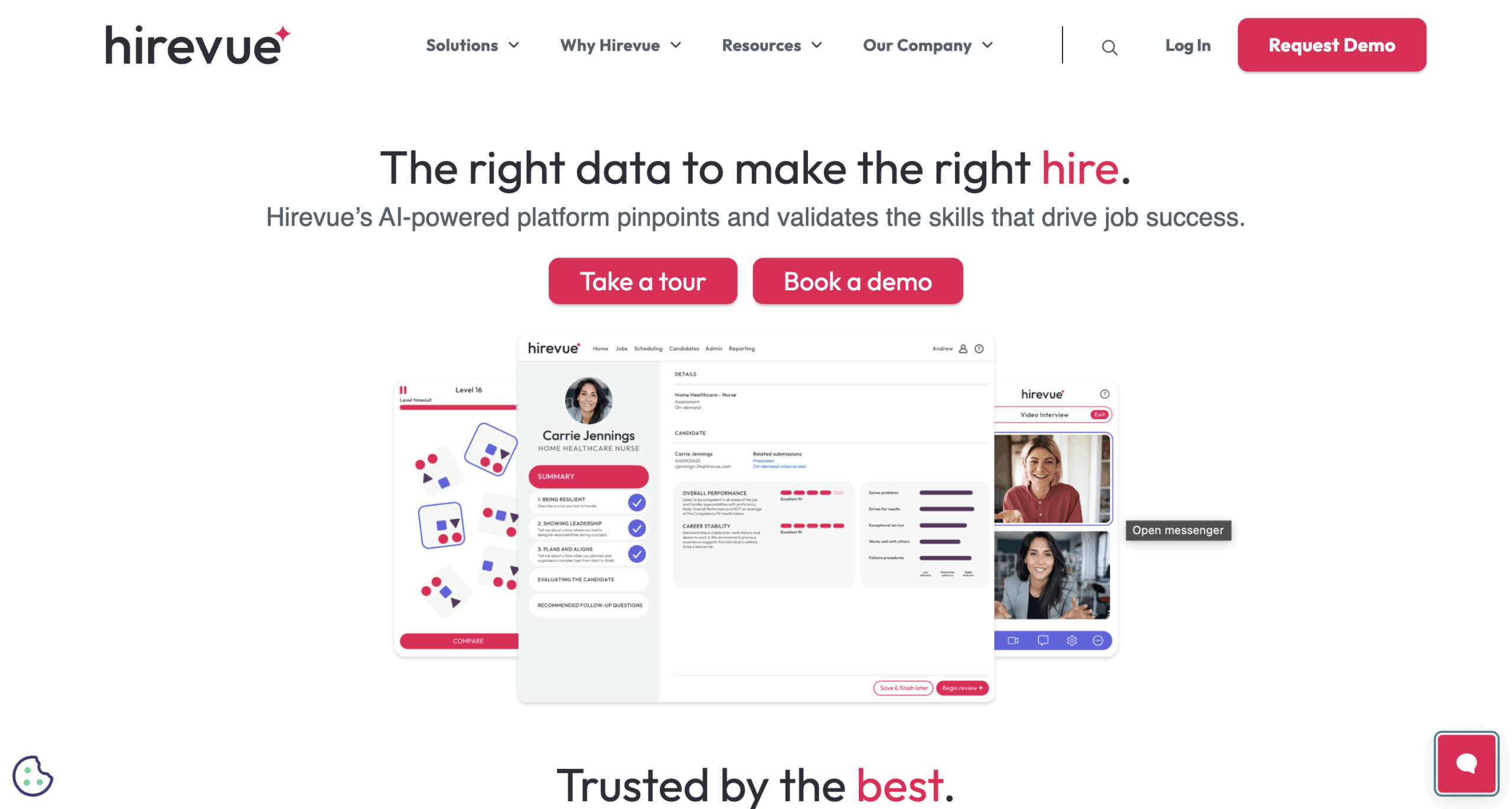
HireVue pioneered asynchronous interviewing and continues to deliver at scale.
Key Features
1. Video assessments
Enables candidates to complete interviews asynchronously, reducing scheduling friction at scale.
2. Psychometric tests
Provides structured cognitive and behavioral assessments to evaluate aptitude and role fit.
3. Technical assessments
Offers coding challenges and job-relevant simulations for technical roles.
4. Predictive scoring
Uses AI models to analyze responses and generate job-aligned performance predictions.
5. Structured interview templates
Standardizes interviewer prompts to ensure consistent evaluation across batches.
Pros
- Excellent for global operations
- Handles thousands of candidates
- Strong for competency and aptitude screening
- Consistent output
Cons
- Experience can feel rigid
- Requires candidate readiness
- Videos can increase fatigue in high-volume hiring
7. Fetcher
Automated sourcing + outreach
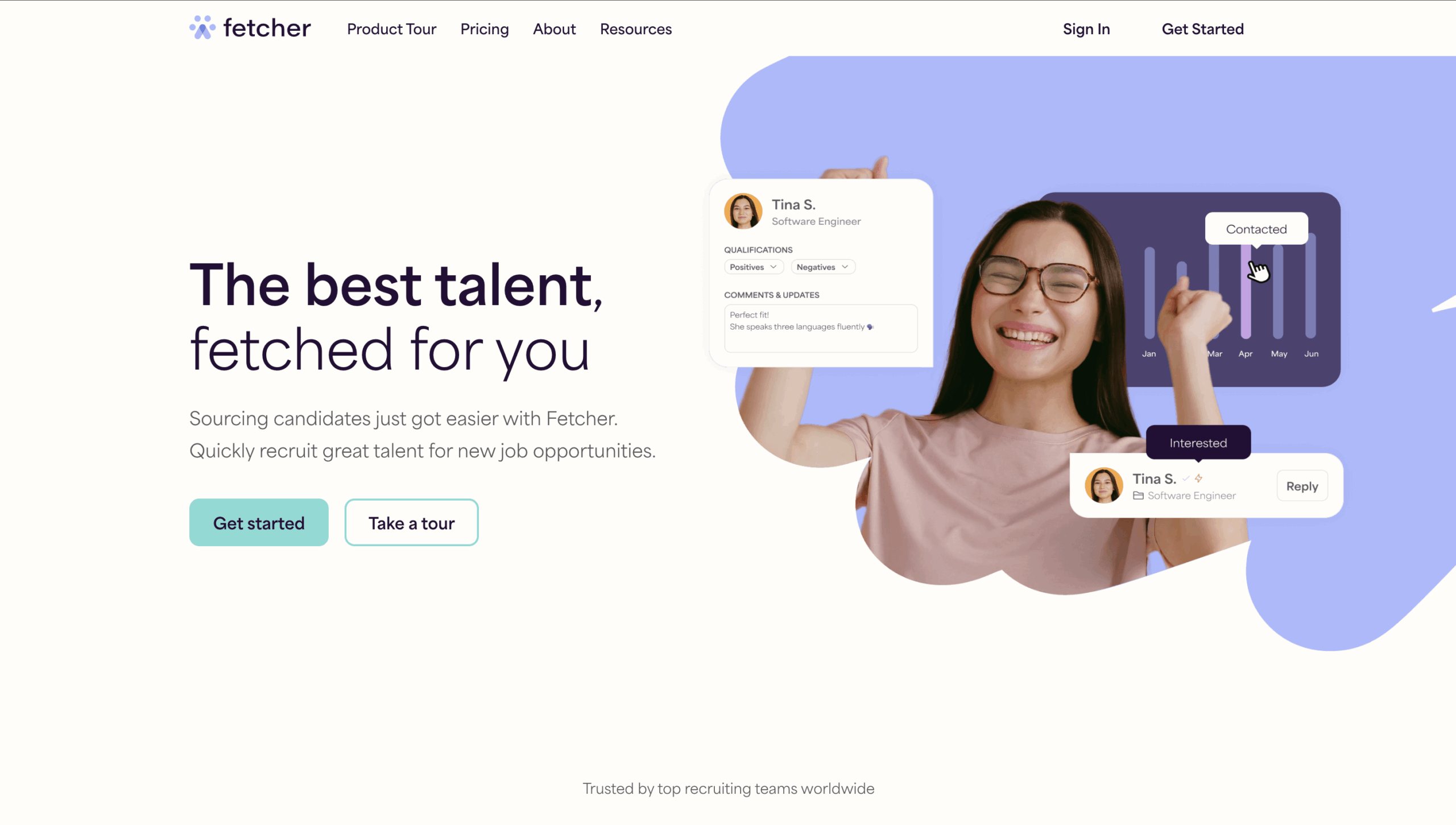
Fetcher simplifies building and engaging candidate pipelines by automating both sourcing and personalized outreach.
Key Features
1. Automated sourcing lists
Generates curated lists of potential candidates based on role requirements and search parameters.
2. Diversity filters
Surfaces more inclusive pipelines with structured diversity-focused search options.
3. Outreach sequences
Sends automated, personalized email sequences to engage candidates over time.
4. Engagement reporting
Tracks open rates, reply rates, and conversion metrics to improve outreach effectiveness.
5. CRM-like pipeline view
Offers a simple, visual pipeline to monitor outreach status and candidate progression.
Pros
- Saves huge sourcing hours
- Great for SDR, sales, marketing roles
- Boosts outbound quality
- Strong email deliverability
Cons
- Not ideal for deep tech sourcing
- Requires ongoing sequence optimization
- Limited interviewing capabilities
8. Manatal
SMB-friendly ATS with AI
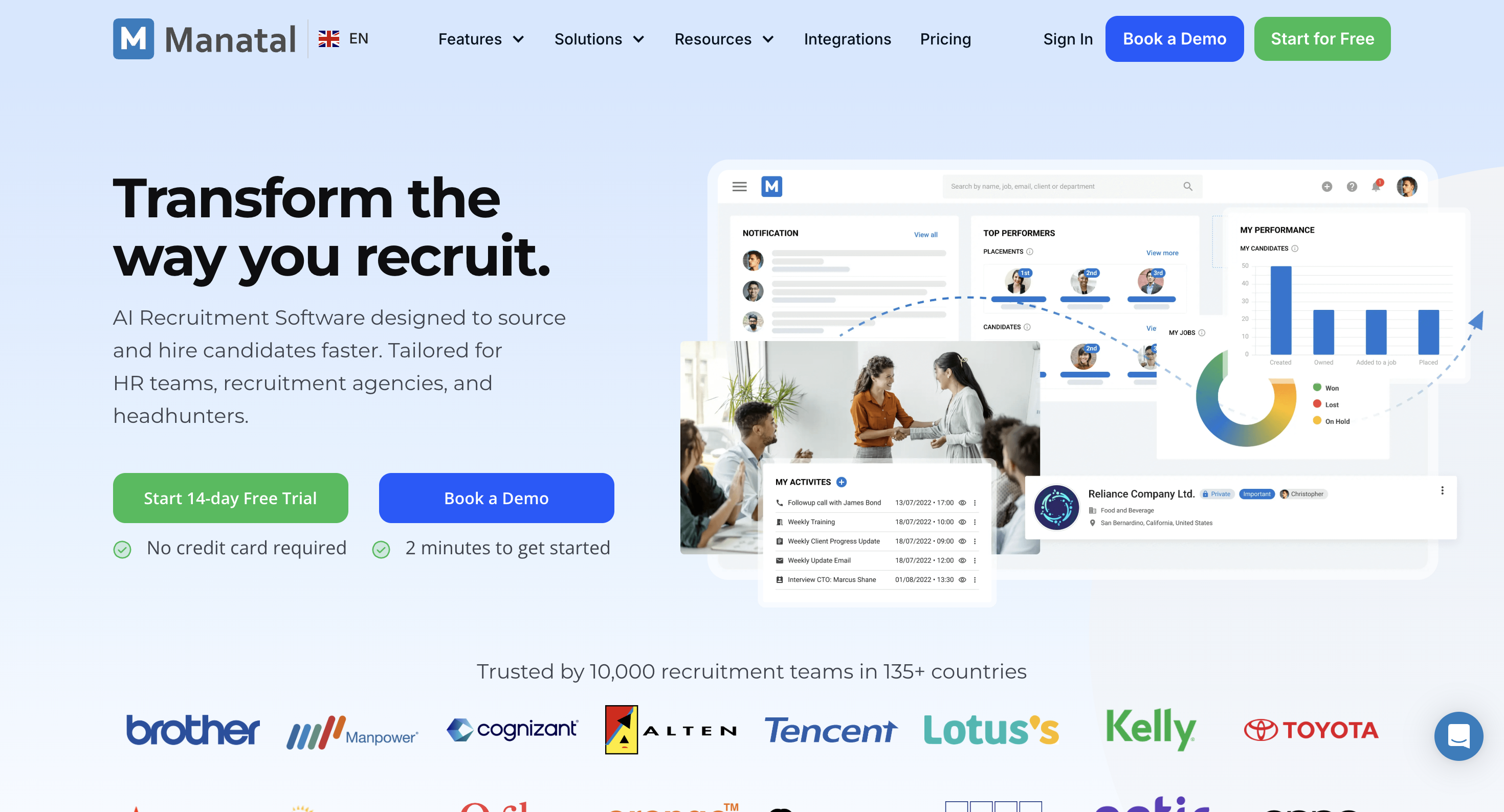
Manatal is a modern ATS that brings AI features, resume enrichment, recommendations, and pipeline clarity, to small and medium teams.
Key Features
1. Resume parsing
Extracts key candidate data automatically to speed up profile creation.
2. AI recommendations
Suggests relevant candidates from your database based on job requirements.
3. Drag-and-drop pipelines
Allows recruiters to move candidates visually through stages with minimal friction.
4. Social media enrichment
Pulls additional data from public social profiles to create richer candidate profiles.
5. Affordable workflows
Offers cost-effective, easy-to-use recruiting workflows built for smaller teams.
Pros
- Low cost
- Fast onboarding
- Great for agencies
- Clean pipeline views
Cons
- Limited analytics
- Not suited for enterprise complexity
- AI insights can be surface-level
9. X0PA AI
Predictive analytics + automation
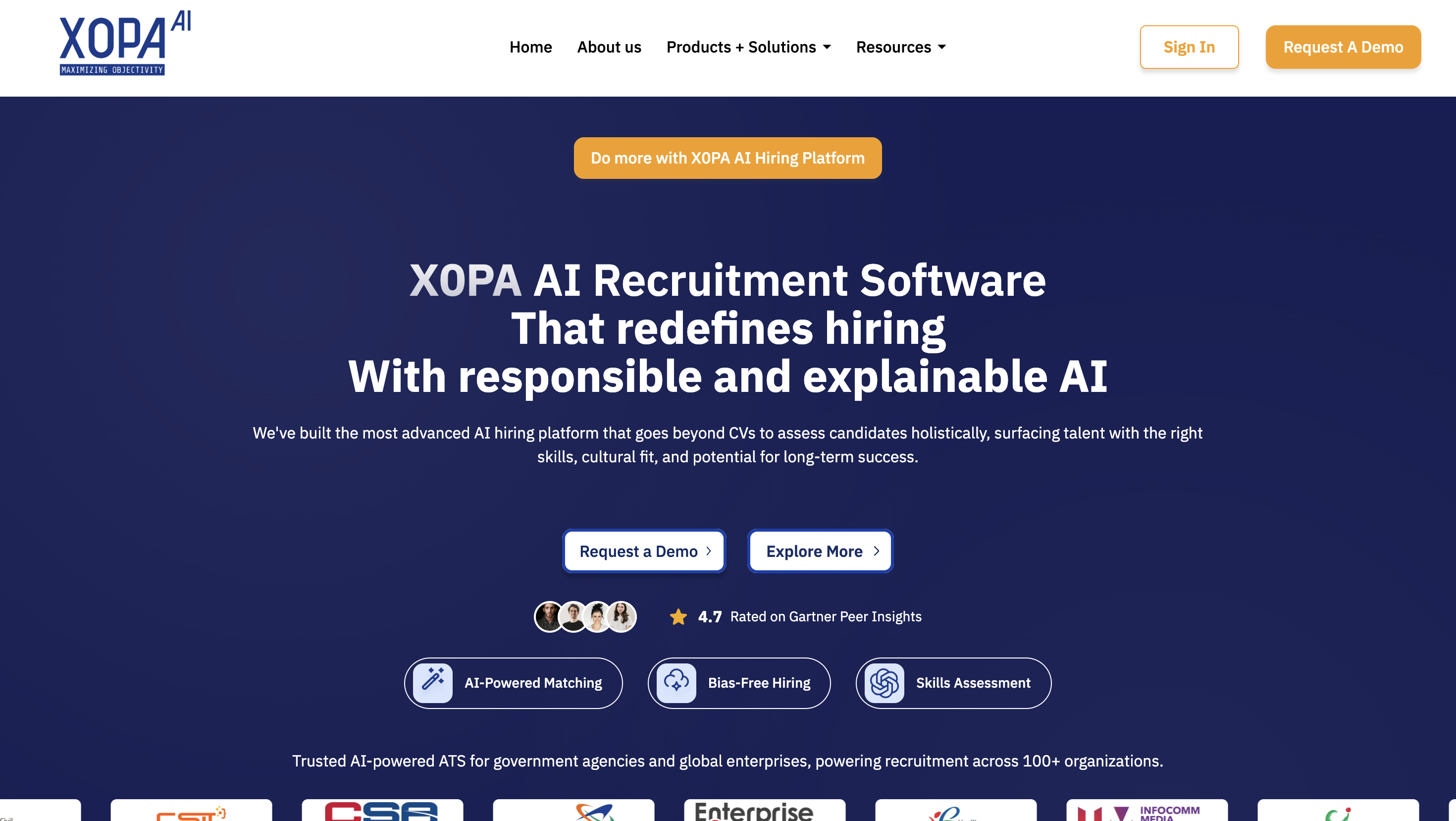
X0PA AI is an enterprise-grade automation platform that leverages predictive models to help organizations scale recruitment intelligently.
Key Features
1. Predictive scoring
Uses AI models to evaluate candidates based on predicted success and alignment with job requirements.
2. Workflow automation
Automates key hiring steps — from screening to communication — to reduce manual workload across large teams.
3. Assessment tools
Offers structured assessments to evaluate candidate competencies and role fit.
4. Compliance features
Includes guardrails and documentation designed to support fair and compliant hiring practices.
5. End-to-end hiring analytics
Provides deep dashboards and reporting for visibility into bottlenecks, performance, and hiring outcomes.
Pros
- Highly configurable
- Deep analytics
- Great for government, education, enterprise
- Supports structured hiring
Cons
- Heavy implementation
- Requires operational discipline
- Best suited for large orgs
Which Tool to Use at Each Recruiting
Sourcing
HireEZ
The strongest web-wide sourcing engine for technical, niche, and passive talent. Great for building deep, enriched pipelines.
SeekOut
Amazing for enterprise sourcing, DEI analytics, and workforce intelligence. Ideal when you need strategic talent insights.
Fetcher
Best for automated sourcing + outreach sequences. Helps recruiter–sourcer hybrids generate consistent top-of-funnel flow.
JusRecruit
1. Immediate evaluation of sourced candidates
Every sourced profile is automatically screened with job-specific fit scoring and structured summaries, so recruiters don’t waste time manually triaging sourced leads.
2. AI-led first-round interviews on demand
Sourced candidates complete a structured adaptive interview right away, producing a scorecard that shows whether they’re truly worth engaging, eliminating the biggest outbound bottleneck: slow qualification.
Screening
Paradox Olivia
Great for frontline and shift-based roles with quick knockout workflows.
HireVue
Strong for video-first assessments and competency-based screening.
Manatal
Useful for SMBs needing basic ATS-led screening.
JusRecruit
1. AI resume vetting that removes noise
JusRecruit extracts skills, evaluates alignment, and generates ranked shortlists, reducing screening time from hours to minutes.
2. Adaptive AI screening interviews with structured scorecards
Instead of manual phone screens, candidates get a fair, consistent first-round interview that produces evidence-backed, comparable scorecards for better decisions.
Interviewing
Metaview
Optimizes live interviews with structured notes and coaching.
HireVue
Delivers large-scale asynchronous interviews + assessments.
X0PA AI
Offers structured interviews with predictive scoring.
JusRecruit
1. Adaptive, structured AI interviews at scale
Every candidate receives job-aligned, bias-resistant interviews with dynamic follow-ups, generating deep insight without interviewer involvement.
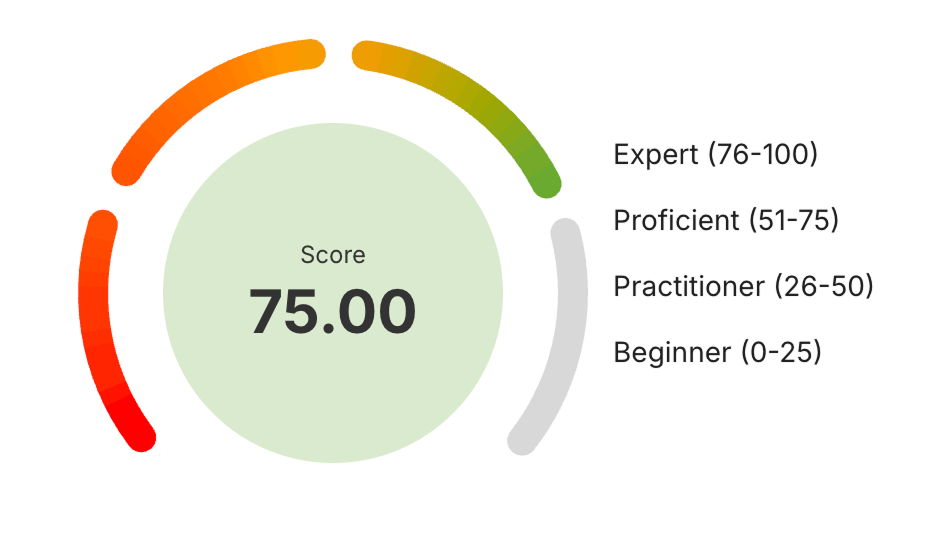
2. Evidence-rich, comparable scorecards
Interview outputs include clear ratings, behavioral evidence, and next-step recommendations, giving hiring managers consistent, high-signal insights immediately.
Scheduling
Paradox Olivia
Instant scheduling for frontline hiring.
Manatal
Basic ATS scheduling for smaller teams.
GoodTime
Advanced interviewer matching + load balancing.
JusRecruit
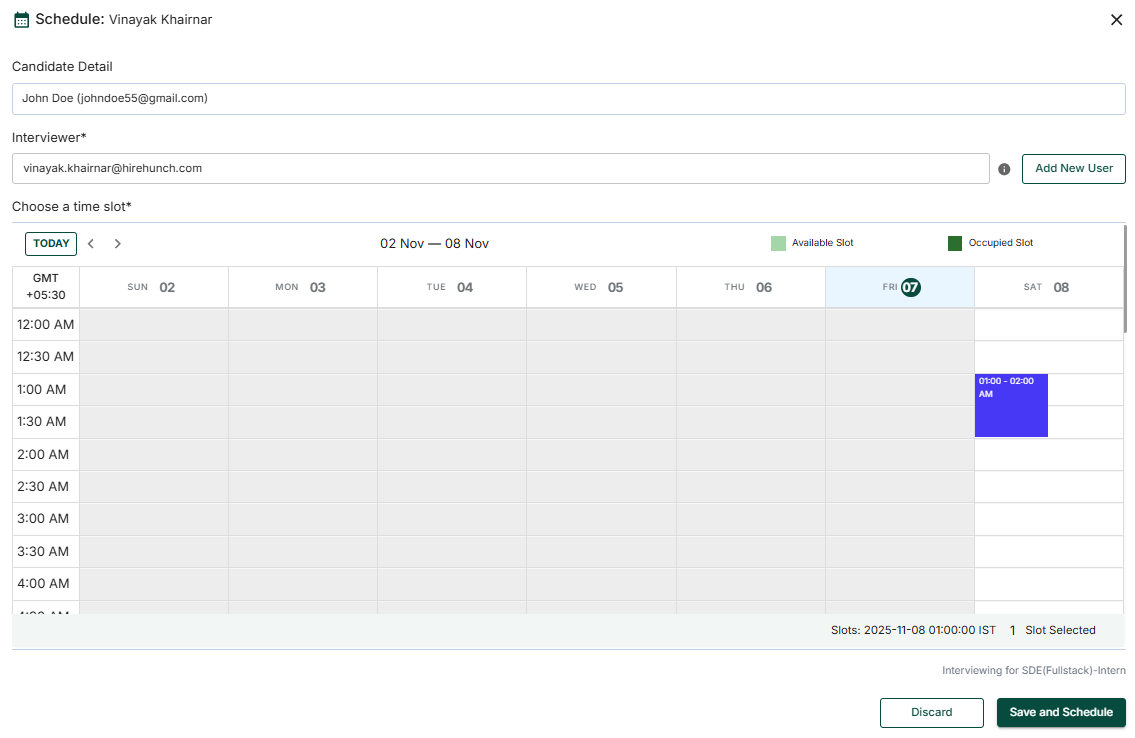
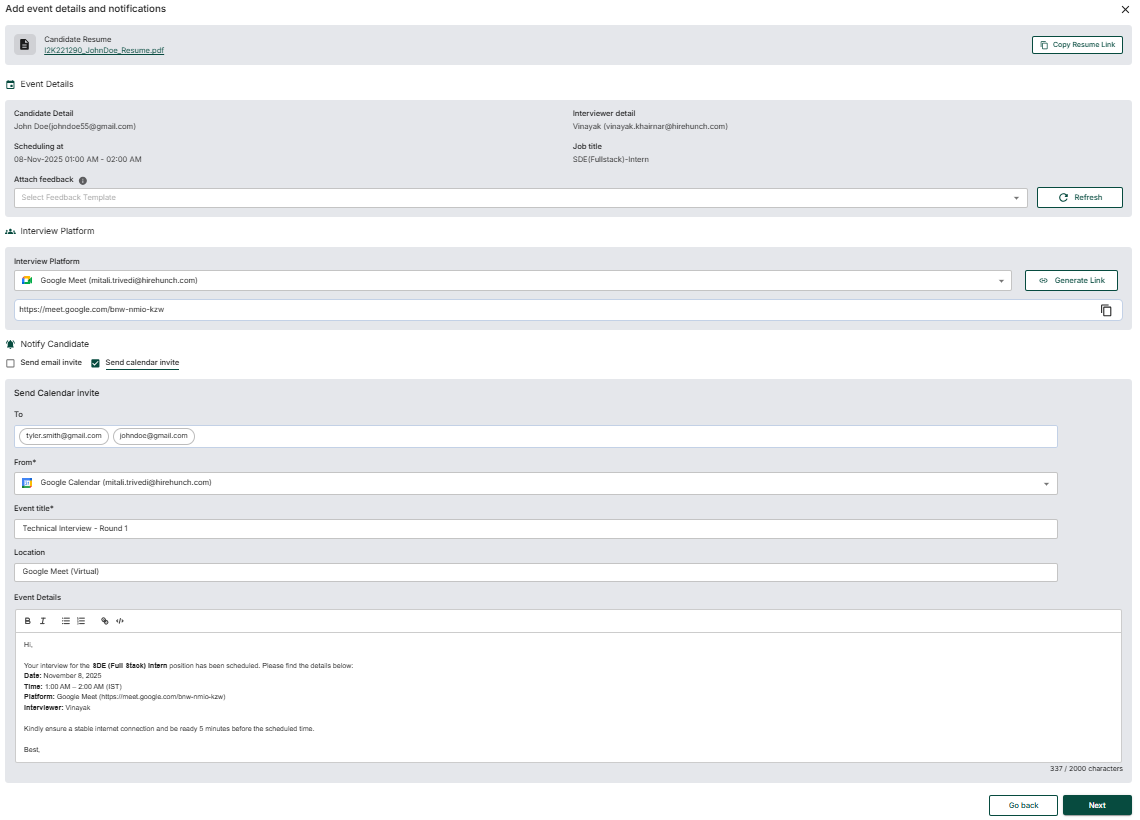
1. Automatic routing after interviews
Candidates move to the right next step instantly, hiring manager rounds, assessments, or rejection, eliminating back-and-forth coordination.
2. Automated nudges & reminders
JusRecruit reduces no-shows and drop-offs with smart reminders for candidates and interviewers, making scheduling frictionless.

Assessment
HireVue
A strong library of structured assessments and cognitive/aptitude tests.
X0PA AI
Predictive, structured evaluation workflows for large organizations.
Metaview
Improves live interviewer assessment consistency through structured notes.
Implementation Checklist & Pilot Plan
A 90-day JusRecruit-enabled pilot can transform how a TA team operates.
KPIs to Track
- Time-to-screen
- Time-to-interview
- Signal quality of first-round interviews
- Scorecard consistency
- Candidate drop-off
- Hiring manager satisfaction
- Recruiter hours saved
30/60/90 DAY PLAN
0–30 Days: Foundation
- Define competencies
- Set up AI screening
- Run pilots for 1–2 roles
- Train recruiters on structured evaluation
31–60 Days: Expansion
- Add adaptive interviews
- Integrate routing + nudges
- Benchmark pre-vs-post metrics
61–90 Days: Scale
- Roll out to more roles
- Standardize processes
- Train hiring managers
- Publish internal best practices
Conclusion
2025 is the year recruiting becomes precision-driven, fair, and fast. The teams that adopt structured AI hiring processes will outperform peers not because they automate everything, but because they automate the right things.
JusRecruit leads this evolution by blending AI-driven first-round evaluation with transparent, structured scorecards, freeing recruiters to make smarter, faster decisions. The supporting tools in this list complement that workflow, making every hiring stage stronger and more consistent.
Start small. Pilot one role. Measure rigorously. Scale with confidence.
Your 2025 stack begins here.