

Quick Summary & TL;DR
Most hiring systems collapse not because companies can’t find enough applicants, but because they receive too many unqualified ones, and the right signals arrive too late.
To scale to 100+ hires/month, you must engineer the hiring funnel so the strongest signals surface early, the weakest disappear automatically, and recruiters spend time only where judgment matters.
The High-Volume Hiring System:
- Define roles, competencies & funnel math
- Source in parallel across 6–7 channels
- Automate early screening with structured first-round conversations
- Shortlist based on evidence, not guesswork
- Run interviews & offers in cohorts
- Automate 60–70% of repetitive tasks
- Track KPIs ruthlessly (velocity, conversion, retention)
Throughout this playbook, you’ll notice how high-performing teams turn principles into practice, using structured workflows and light automation to handle repetitive, time-heavy steps like resume parsing or scorecard generation, while keeping the decision-making human.
Why Bulk Hiring Matters Now (Data, Patterns & Market Shifts)
Bulk hiring meaning: filling large cohorts of employees at scale within compressed timelines.
Volume hiring meaning: continuous intake of talent for roles with steady operational demand or churn.
These realities shape the urgency:
| Hiring Metric | Today’s Reality |
| Average resumes per role | 250–400 |
| Percentage of poor fits | ~85–90% |
| Time spent screening manually | 23 hours per hire |
| Admin load on recruiters | 40–60% |
| Drop-offs due to slow response | 30–50% |
| Impact of early automation | 70%+ reduction in screening load |
The hiring market has changed dramatically:
- Applicants today apply to 8–12 companies at once
- Decision windows have shrunk to hours, not days
- Candidates expect speed, clarity, and fairness
Companies that don’t adapt fall behind, not because they can’t attract talent but because they can’t process it efficiently.
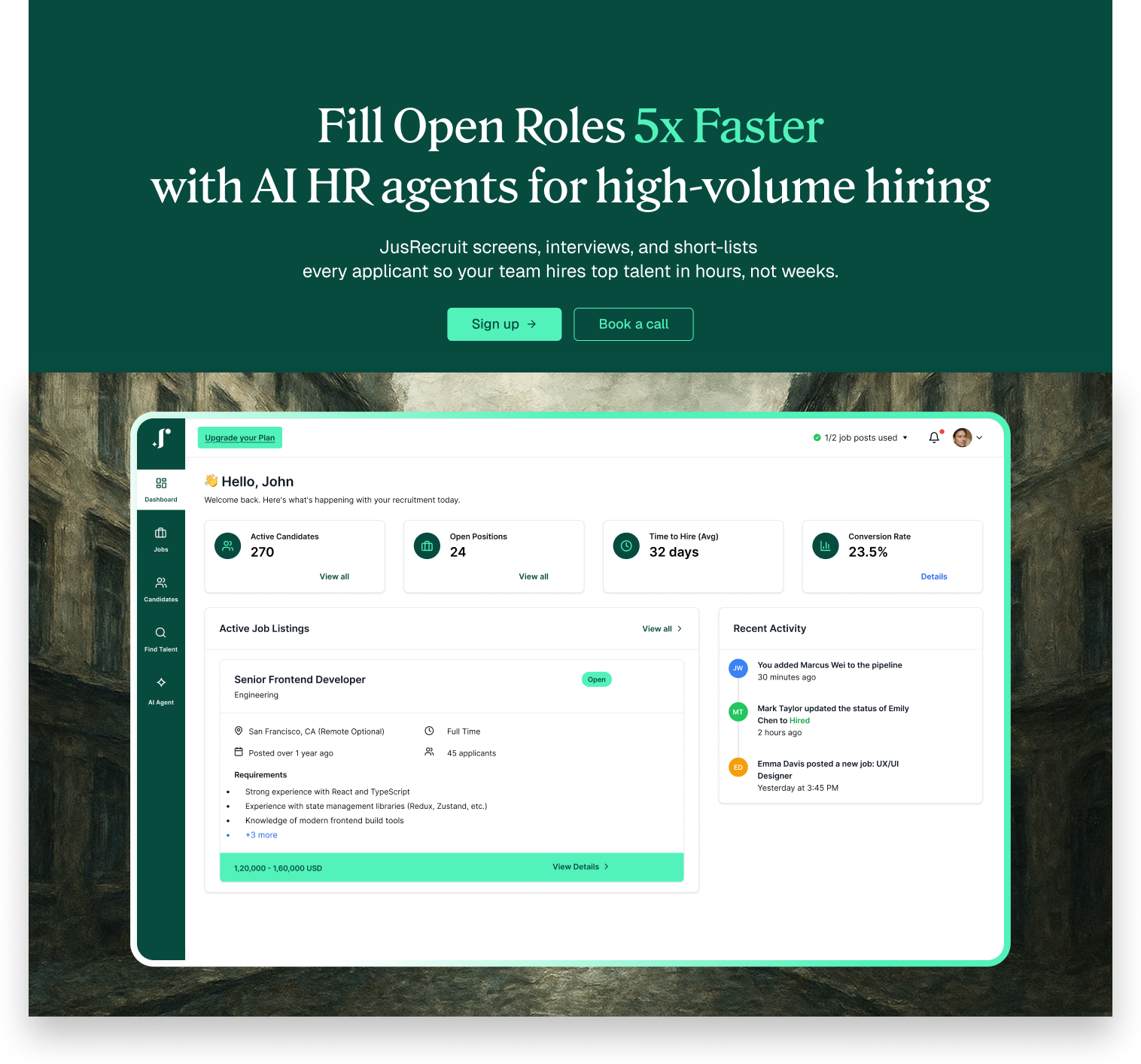
Platforms like JusRecruit fit naturally into this shift because they create early signal clarity, automated evidence extraction, adaptive first-round interviews, comparable scorecards, which lets recruiters skip noise and move straight to real human judgment.
The 90-Day High-Volume Hiring System
Below is the blueprint used by fast-growing ops, support, sales, logistics, and field teams hiring 100–300 people/month.
DAYS 1–30: Foundation & Clarity
- Define roles more sharply than ever
- Build competency models
- Convert ambiguous JDs into skill-based ones
- Create structured scorecards
- Build sourcing plans per job family
- Design the early-signal workflow
- Train hiring managers on consistent evaluation
Why this matters:
Bulk hiring with unclear roles is like flying without instruments.
You’ll spend time, money, and energy, but you won’t know where you’re going.
DAYS 31–60: Automate the Top of the Funnel
- Launch automated screening
- Introduce adaptive first-round conversations
- Generate structured scorecards
- Rank candidates by fit
- Pilot cohort hiring
- Standardize interview scripts
- Implement same-day decisions
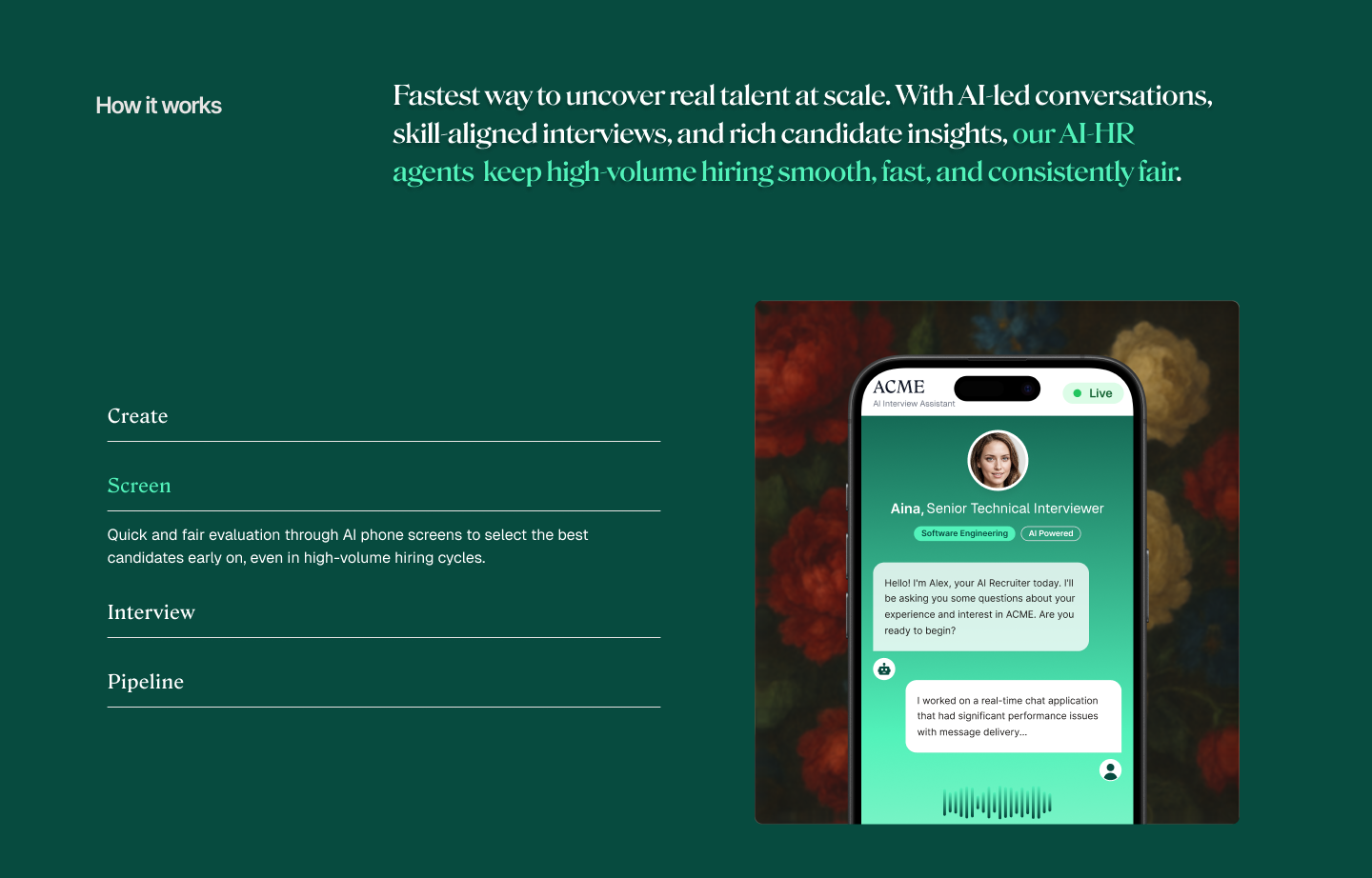
Here, many teams adopt platforms like JusRecruit, which automatically extracts resume evidence, runs a 10-minute structured conversation, and produces comparable fit scores, dramatically reducing the number of poor-fit candidates reaching human interviewers.
DAYS 61–90: Scale Throughput and Predictability
- Move to weekly hiring cohorts
- Reduce manual screening by 70–80%
- Shrink TAT from 30 days → 12–14
- Automate offer + onboarding workflows
- Build dashboards for velocity + conversion
At this stage, your hiring starts feeling predictable, not chaotic.
Your funnel finally stabilizes.
STEP 0 – Define Success: KPIs, Targets & Capacity Planning
Before hiring begins, define:
Your Non-Negotiable KPIs
| KPI | Purpose | Benchmark |
| Time-to-fill | Hiring velocity | 7–14 days |
| Screening-to-interview | Signal strength | 15–25% |
| Offer-to-join | Candidate experience | 55–75% |
| Recruiter capacity | Efficiency | 100–150 candidates/week |
| 90-day retention | Quality of hire | 70–85% |
Capacity Formula For 100+ Hires/Month
Required candidates = target hires × funnel ratios
Recruiter load = candidates ÷ recruiter weekly bandwidth
Automation increases recruiter bandwidth from 30–50 candidates/week → ~120–160.
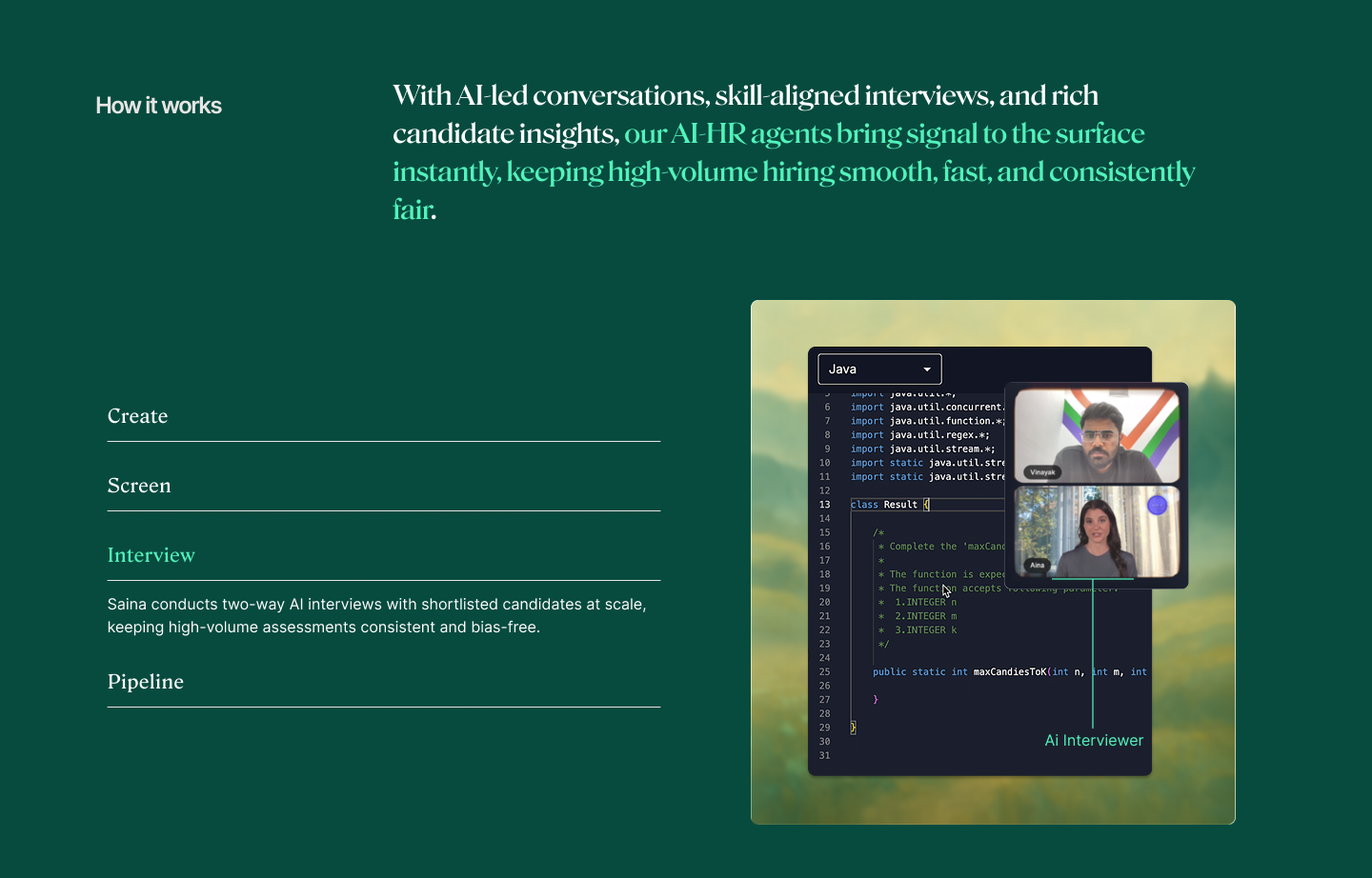
Teams using platforms like JusRecruit typically see this bump because early screening becomes fully automated, freeing recruiters to spend time only on high-signal candidates.
PHASE 1 – Workforce Planning & Job Architecture
A high-volume hiring engine is only as strong as its job architecture.
1. Competency-Based Job Families
These are the backbone of the entire Playbook.
Example: Customer Support Associate
Core competencies:
- Communication clarity
- Empathy
- Problem-solving
- Process adherence
- Tool fluency
Why it works:
Competencies allow you to:
- build repeatable screening
- create dynamic interview scripts
- evaluate fairly across candidates
- generate structured scorecards
Platforms like JusRecruit rely heavily on competency mapping to evaluate candidates systematically without bias.
2. Workforce Forecasting Model
- Role:
- Locations:
- Monthly hiring target:
- Expected funnel ratios:
- Seasonal fluctuations:
- Time-to-fill requirement:
- Manager bandwidth constraints:
- Budget:
PHASE 2 – Sourcing at Scale: Channels, Budgets & Campaigns
Bulk hiring depends on parallel sourcing, not linear “post → wait → review” pipelines.
The 7-Channel Sourcing Stack
- Job boards
- Referral bursts
- Geo-targeted ads
- Community sourcing
- WhatsApp groups
- Walk-in drives
- Pre-vetted candidate pools
Advanced Sourcing Matrix
| Channel | Speed | Cost | Quality | Notes |
| Job boards | Fast | $$ | Medium | Good for ops/support |
| Referrals | Medium | $ | High | Best for retention |
| Geo-targeted ads | Very fast | $$$ | Medium | Works for field roles |
| WhatsApp groups | Fast | $ | Medium | Great for distributed roles |
| Walk-ins | Fast | $ | Medium | Good for blue-collar |
| Campus | Medium | $ | High | Entry-level roles |
| Pre-vetted pool | Very fast | – | High | Largest time saver |
PHASE 3 – Automating Screening & Assessment
This is the core accelerator of the Playbook, the part that makes 100+ hires/month achievable.
Manual screening collapses under scale.
The fix is automated early-signal generation.
Modern teams build a three-layer automated screening engine.
Layer 1: Evidence Extraction
Instead of reading resumes one by one, the system extracts:
- Project outcomes
- Tools & technologies
- Relevant work patterns
- Tenure signals
- Indicators of role fit
Layer 2: Adaptive First-Round Conversation
A 6–10 min conversation that adjusts based on candidate answers, evaluating:
- Communication
- Problem-solving
- Culture indicators
- Scenarios
- Motivation
- Domain basics
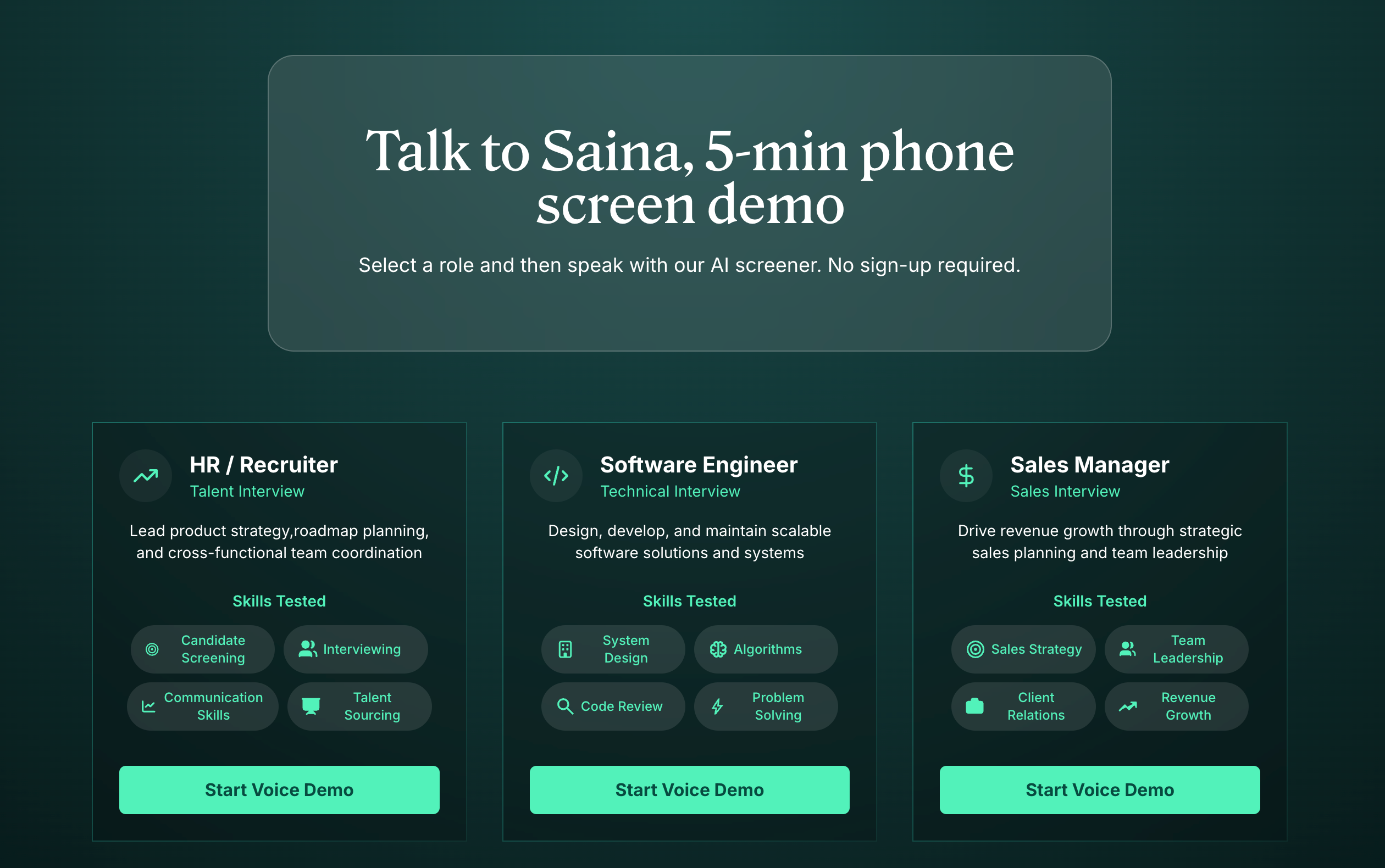
This is where platforms like JusRecruit (via Saina) enable adaptive interviewing at scale, generating structured outputs without requiring recruiter bandwidth.
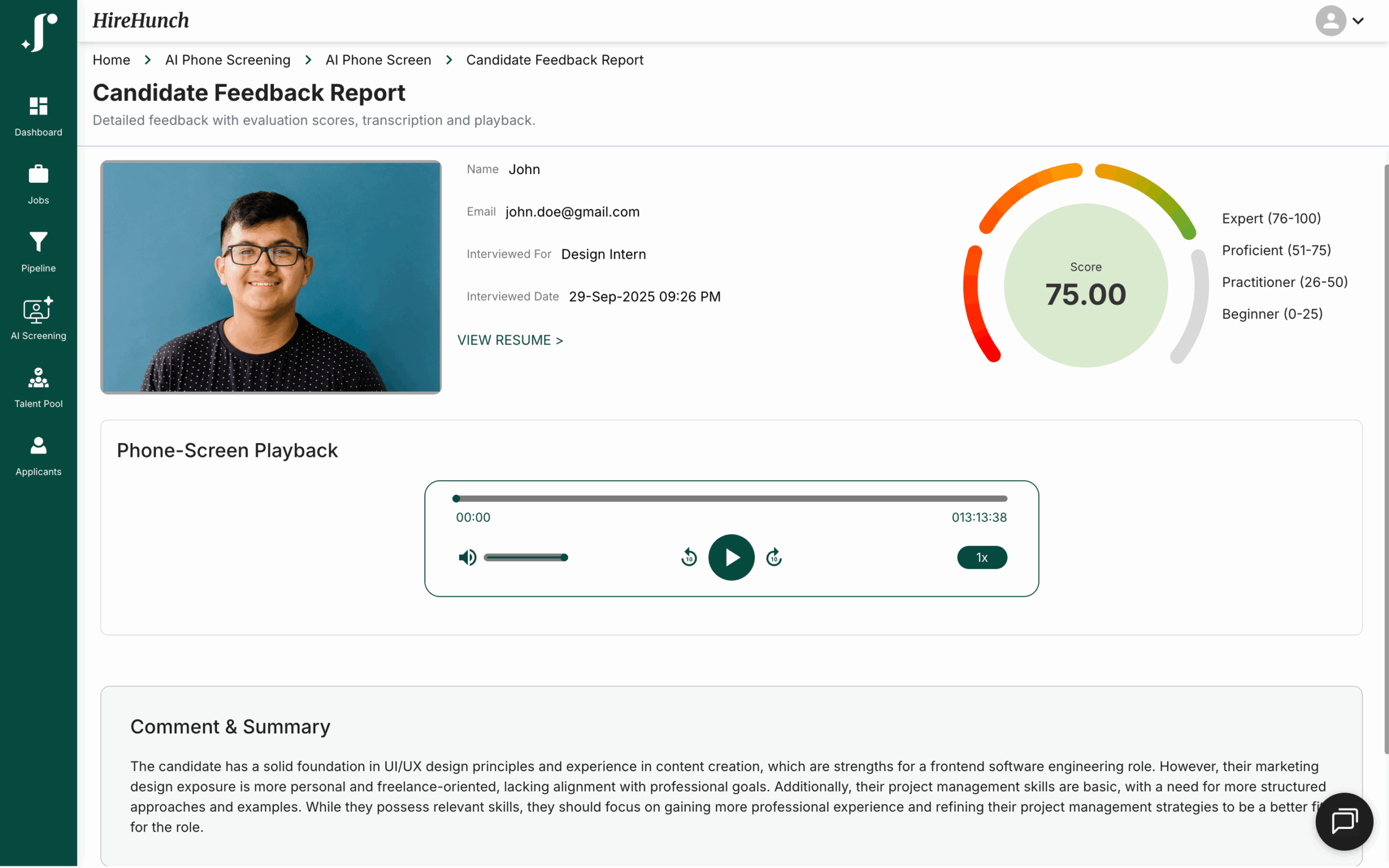
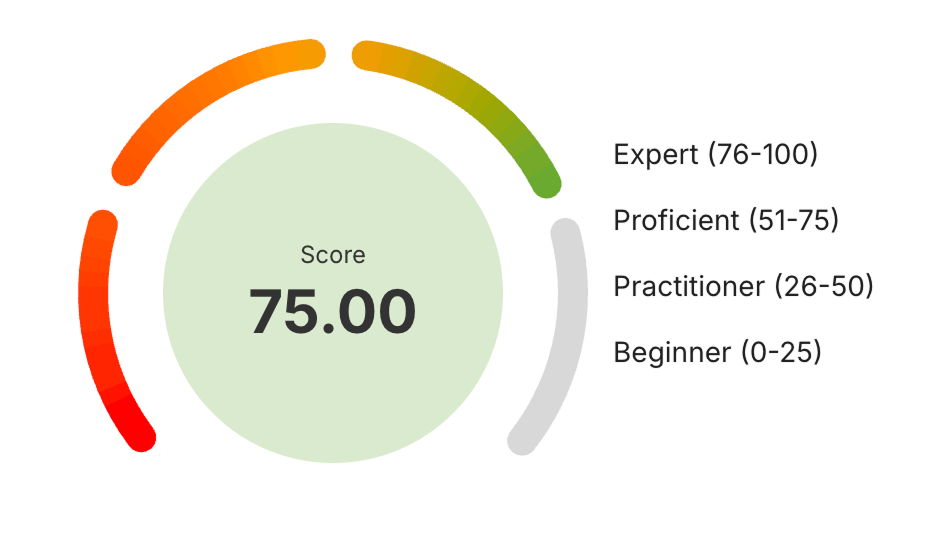
Layer 3: Fit Score & Insights
A structured scoring layer produces:
- Fit score (0–100)
- Strengths
- Concerns
- Flags
- Recommended next steps
This allows humans to focus only on high-signal candidates.
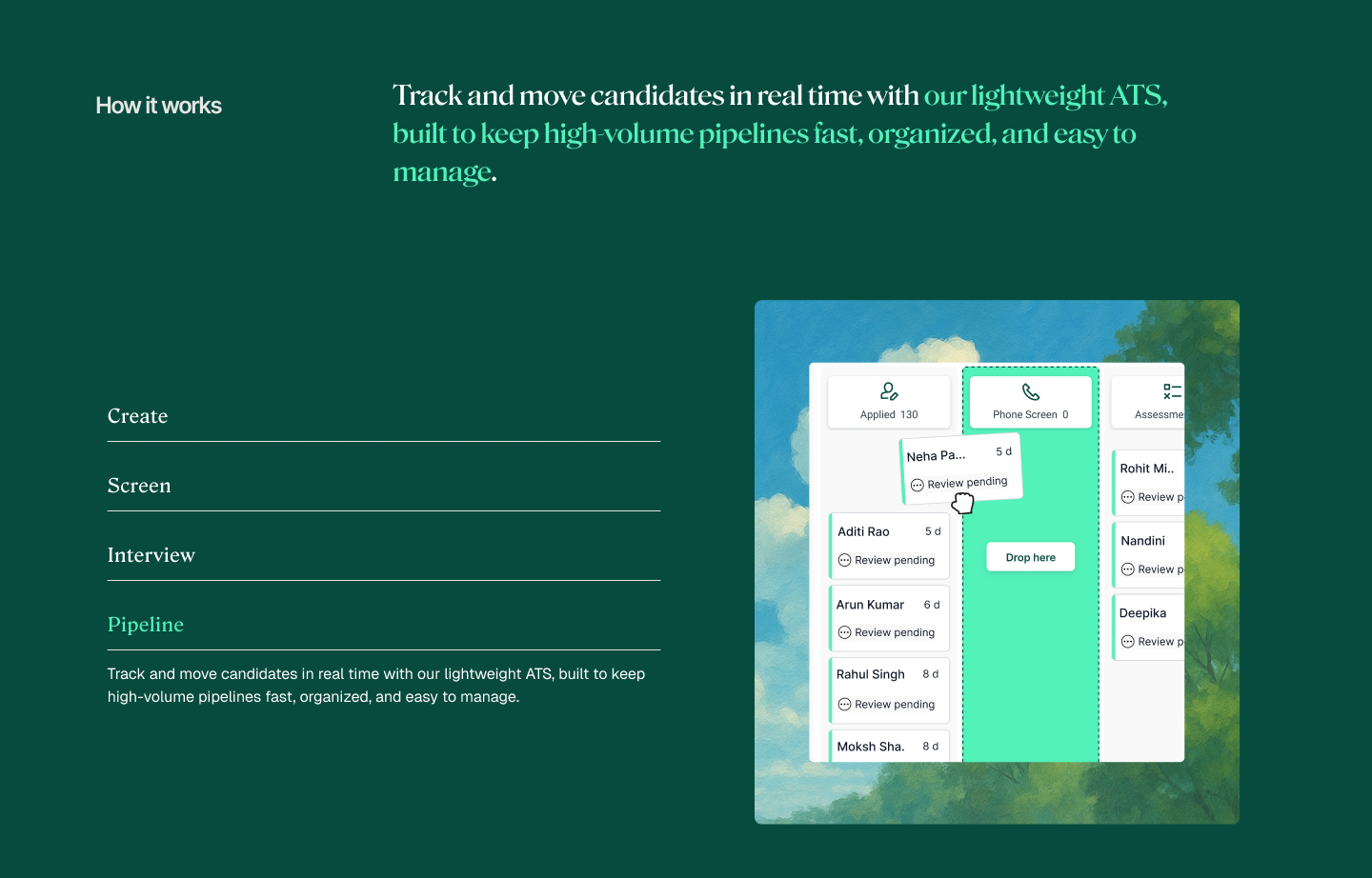
Unified Pipeline View
Candidates flow into a clean, ranked pipeline:
- Highest fits first
- Real evidence behind every decision
- Clear visibility across stages
Lightweight ATS systems like JusRecruit often power this single-view pipeline for TA teams.
PHASE 4 – Interviewing at Scale
Interviews should validate signals already generated — not “rediscover” them.
Structured Scorecards (Non-Negotiable)
| Competency | Weight | Score | Notes |
| Communication | 30% | __/5 | Evidence-driven |
| Problem-solving | 25% | __/5 | Based on scenarios |
| Empathy | 20% | __/5 | Behaviorally tested |
| Process adherence | 15% | __/5 | Role-play |
| Tool fluency | 10% | __/5 | Light test |
Platforms like JusRecruit auto-generate these scorecards after the first-round interview, allowing panels to compare candidates fairly.
Interview Marathon SOP (200 Candidates in a Day)
- 10-minute orientation
- Group Q&A
- Parallel interviews
- Real-time scoring
- Same-day shortlist
- Batch offers
PHASE 5 – Offers, Cohort Hiring & Onboarding
Speed matters more than persuasion.
Automated Offer Workflow
- Email + SMS triggers
- Document collection steps
- Cohort selection
- Mobile-first flow
Many teams automate this with workflows inside systems like JusRecruit, so candidates move from “offer extended” → “cohort assigned” without manual steps.
Cohort Onboarding Dashboard
Track:
- Document completion
- Attendance
- Training progress
- Day 1–7 readiness
Candidate Experience at Scale
Dropping candidates is expensive.
Most candidates disappear because they don’t know what’s happening.
A mobile-first progress tracker with:
- status updates
- sample scorecards
- timeline visibility
…keeps them engaged.
Retention Levers for High-Volume Teams
Retention starts the moment a candidate accepts the offer.
Levers:
- Buddy programs
- Weekly cohort check-ins
- First-week clarity
- Micro-learning modules
- Attendance incentives
Compliance Built Into the Workflow
Country-specific compliance can be automated:
- India → Aadhaar, PAN, PF/ESI
- US → I-9, EEO, FCRA
- EU → GDPR workflows
Platforms like JusRecruit build compliance guardrails into the hiring journey.
Metrics & Benchmarking Dashboard
Measure:
- Hiring velocity
- Stage conversion
- Source-to-hire
- Recruiter time saved
- Candidate NPS
Final Word
The future of bulk hiring blends:
- Automation, to handle scale
- Structure, to ensure fairness
- Human judgment, to make the right calls
Platforms like JusRecruit simply embody this philosophy, but the Playbook above stands on its own.
Follow it, and you will transform your hiring from chaos to clarity.