
Reducing hiring bias isn’t about forcing recruiters to ignore intuition, it’s about creating systems where intuition doesn’t become the deciding factor. The most effective teams today don’t try to “remove bias” by asking people to think differently; they redesign the hiring process so decision-making becomes structured, evidence-based, and repeatable.
These 10 strategies, when combined, create an entire recruiting engine that is naturally resistant to bias. And this is exactly the type of holistic, blended workflow that modern platforms like JusRecruit are built around, automation in the volume-heavy stages, human judgment where nuance matters.
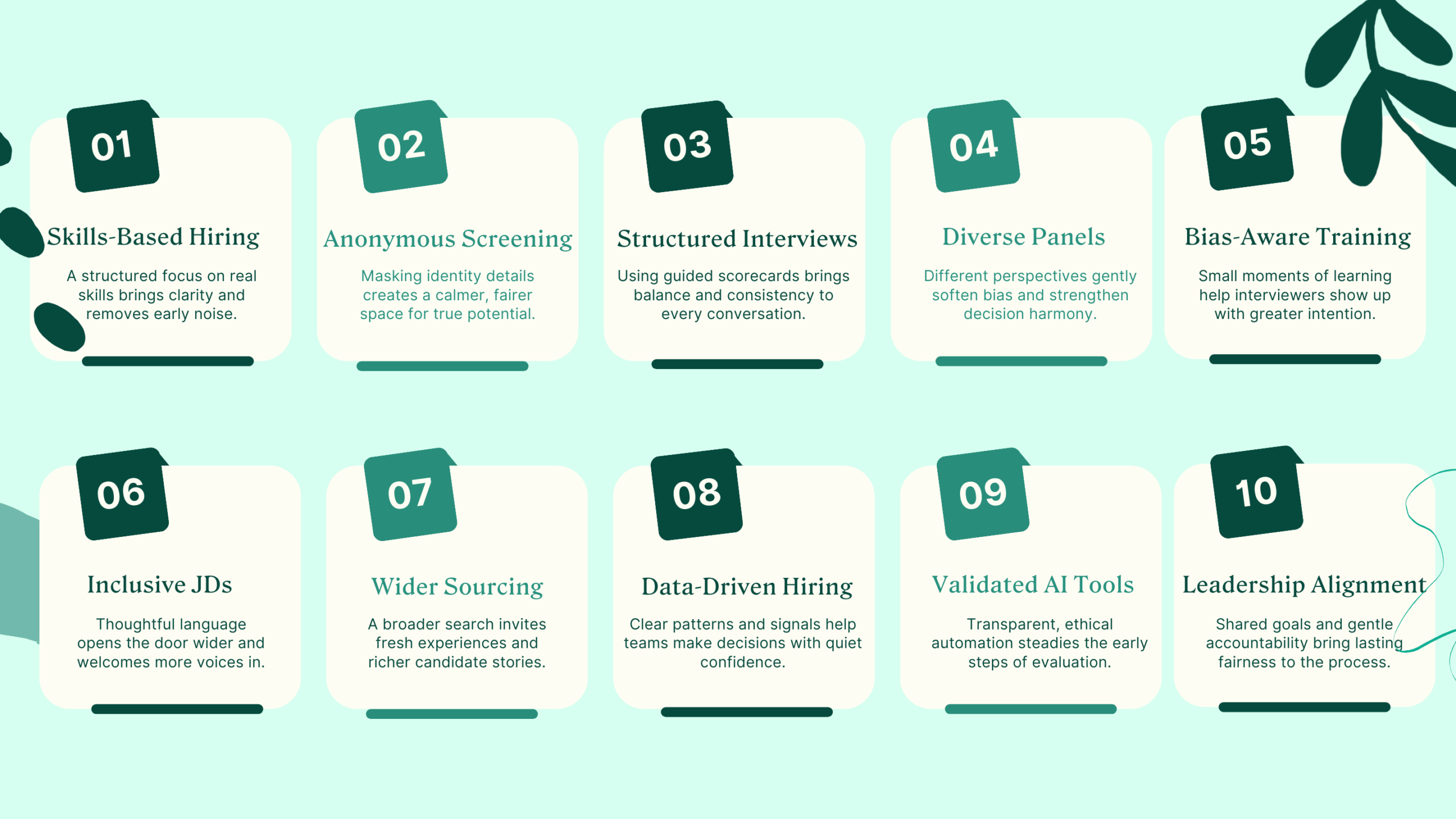
Before we dive deeper, here’s a simple visual overview of the ten practices that anchor a modern, low-bias hiring process.
1. Implement Skills-Based Hiring
Most bias begins when resumes become proxies for ability. Skills-based hiring removes these proxies and replaces them with real signals.
Why this is powerful:
- resumes overweight privilege, connections, brand names, and formatting.
- Skills assessments surface “hidden” talent, candidates without linear backgrounds but with real capability.
- It reduces dependency on keyword matching and guesswork.
- It creates a common language for hiring managers and recruiters.
How to execute well:
- Design assessments around real tasks, not trivia.
- Keep them short (10–20 minutes max).
- Combine multiple forms of signal: scenario work + problem-solving + domain basics.
- Build a calibration library of “high,” “medium,” and “low” quality responses.
- Use the results to prioritize candidates, not to reject prematurely.
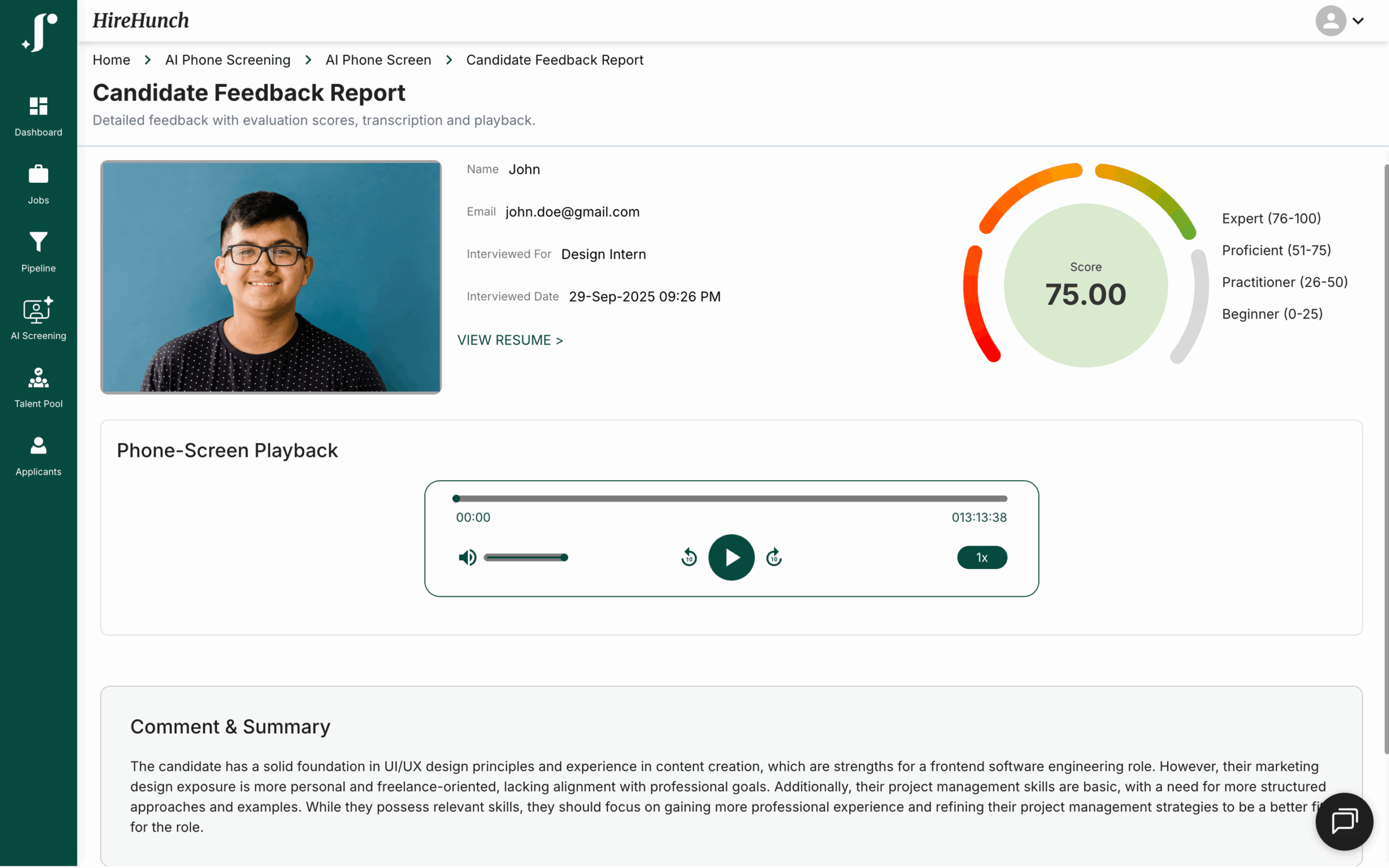
Systems like JusRecruit’s adaptive first-round interviewer generate structured, comparable scorecards based on skills, allowing recruiters to shortlist candidates based on fit, not resume polish.
2. Use Anonymous / Masked resume Screening
Blind screening is not about removing identity, it’s about removing identity proxies that can unconsciously sway first impressions.
Bias triggers that should be masked:
- Names (gender & ethnicity signals)
- Photos
- Graduation years (age signals)
- College names (prestige bias)
- Addresses (socioeconomic bias)
Key Insight:
Blind screening is most powerful when combined with skills-first shortlisting, not as a standalone fix.
3. Standardize Interviews With Scorecards
Unstructured interviews are the #1 source of hiring bias because every interviewer evaluates differently.
What a good scorecard looks like:
- 4–6 competencies
- Clear behavioral indicators
- A defined rating scale (1–4 or 1–5)
- Little to no free-text judgment; evidence only
- Consistent questions across candidates
Example:
For a PM role, “Leadership” isn’t scored on charisma, it’s scored on whether the candidate:
- Identifies misalignment
- Creates clarity
- Secures decision-maker buy-in
Advanced interviewer behavior:
- Every question maps to a competency
- No improvisation in early rounds
- Interviewers calibrate weekly or monthly
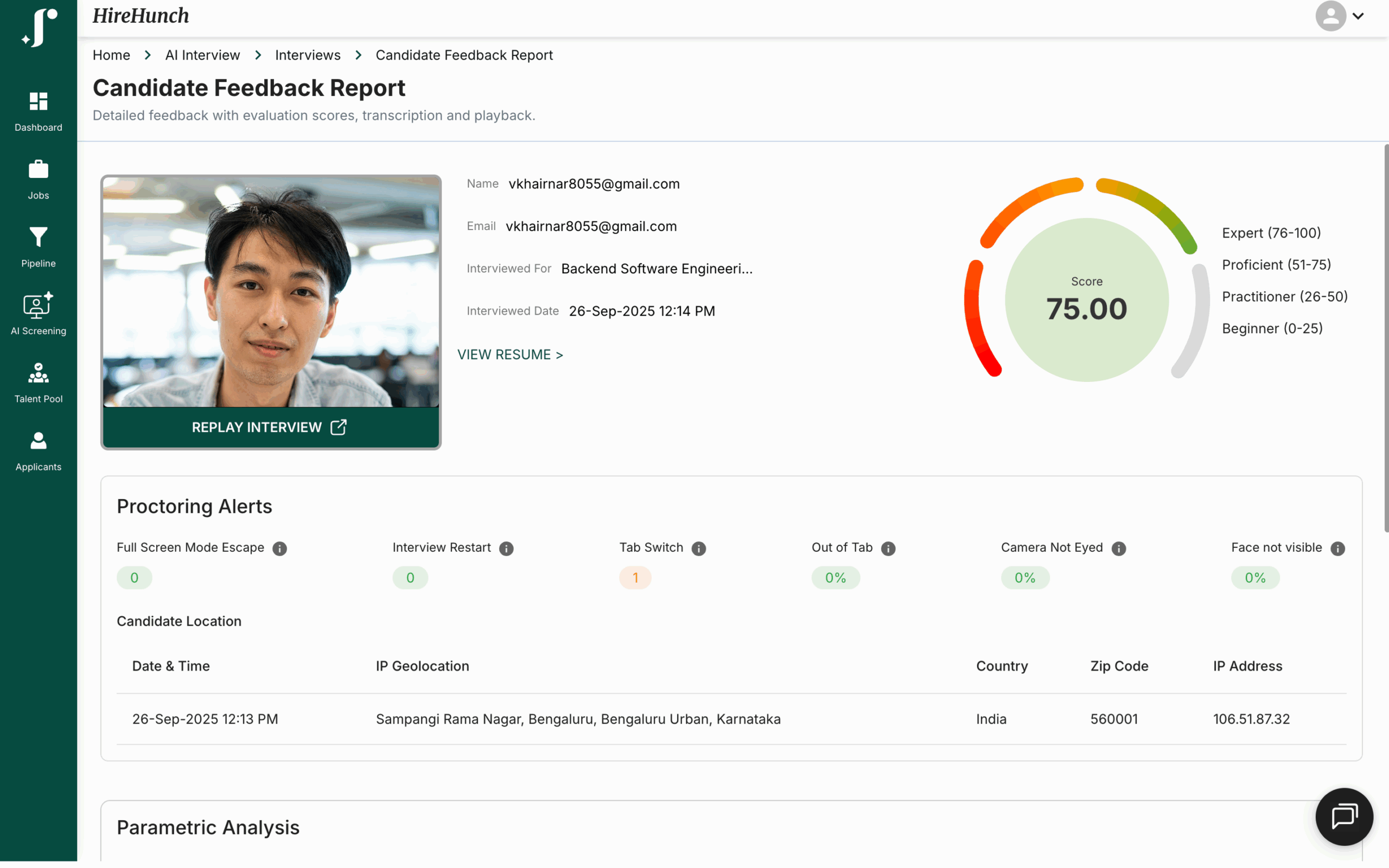
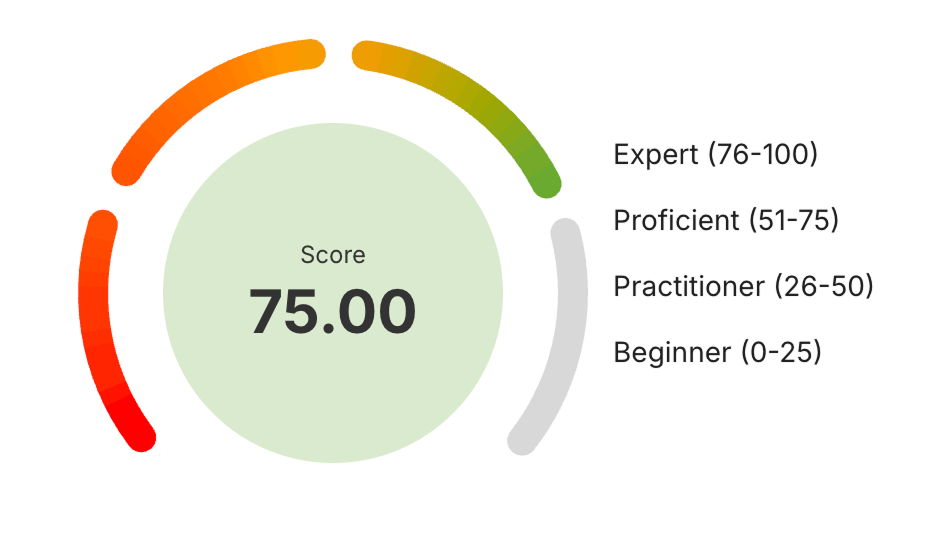
JusRecruit’s structured, evidence-based scorecards are automatically generated after initial screening.
4. Build Diverse Interview Panels & Calibrated Debriefs
One interviewer’s bias is manageable. Three interviewers with the same bias becomes systemic.
A diverse panel creates:
- broader perspectives
- better judgment under ambiguity
- checks against individual inconsistencies
What a well-run panel does:
- Holds a 10-minute pre-brief to review rubric
- Conducts interviews independently
- Scores silently and individually
- Meets for a structured debrief
- Evaluates evidence, not opinions
5. Train Recruiters & Hiring Managers on Unconscious Bias
Training is often treated as a checkbox exercise, but it only works when tied to real scenarios.
Strong programs include:
- Scenario-based microlearning
- Video breakdowns of good vs. biased interviews
- Role-play calibration
- Quarterly refreshers
- Interviewer performance feedback
Key Insight:
People don’t forget training; they forget to apply it because the system doesn’t reinforce it.
6. Use Inclusive Language & Transparent Salary Bands
Small wording changes can transform who applies.
Masculine-coded → neutral:
- “rockstar” → “strong contributor”
- “dominant” → “impact-driven”
- “aggressive” → “proactive”
Benefits of salary transparency:
- Builds trust
- Reduces gender wage gaps
- Prevents negotiation bias
- Improves application rates by 20–30%
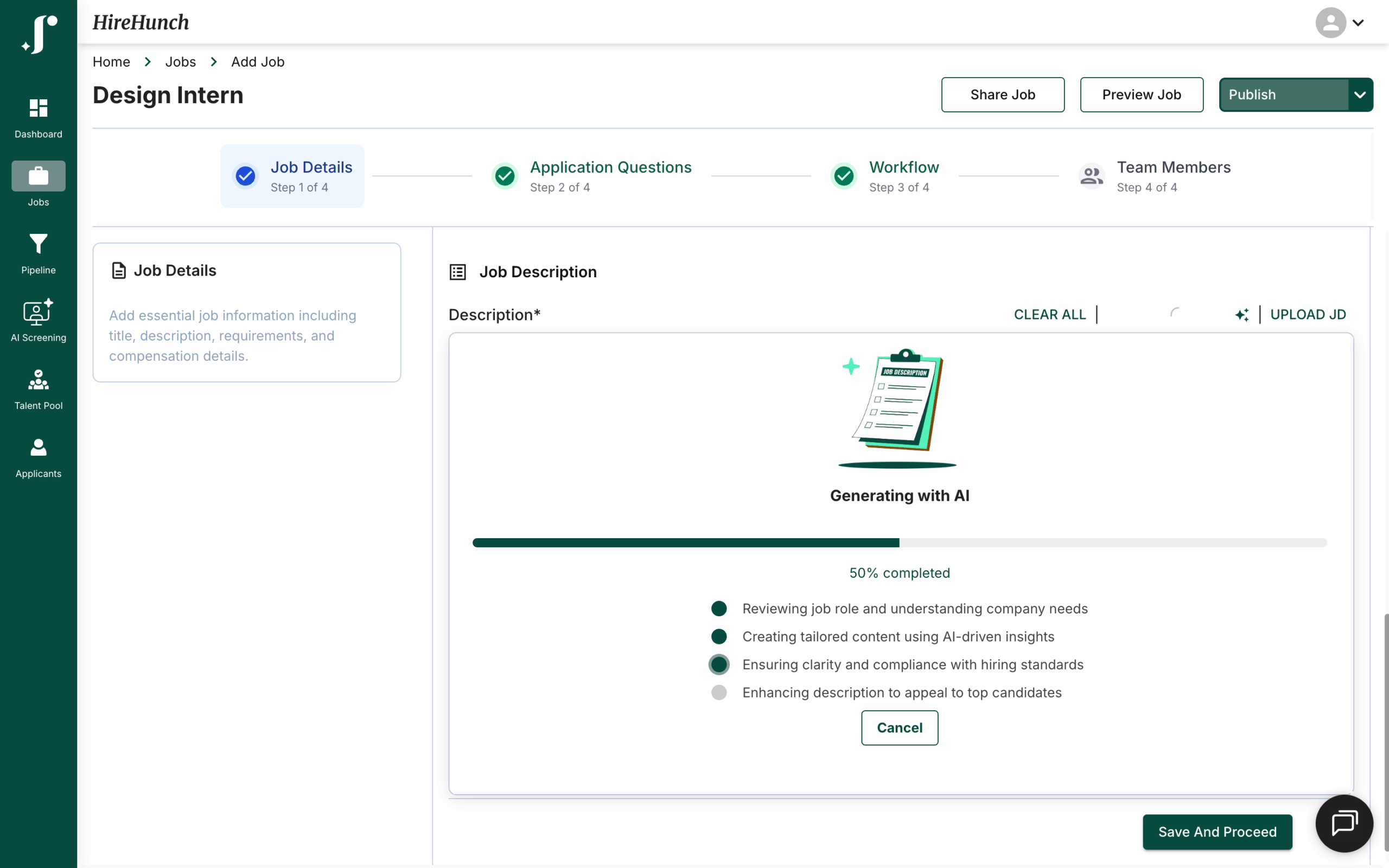
With JusRecruit, promote consistency across job postings by creating a clear, tailored job description instantly with AI.
7. Widen and Systematize Sourcing Channels
Bias shrinks when the funnel grows.
Where advanced teams source from:
- Underrepresented talent communities
- Returnships & career restart programs
- Niche role-specific communities
- Skill-based platforms
- Diversity-focused job boards
- Structured outbound programs
How to operationalize it:
- Track “diversity yield” per channel
- Track “conversion to assessment”
- Monitor “conversion to interview”
- Stop investing in low-yield/high-bias channels
8. Make Data Your Single Source of Truth
Bias often hides in small inconsistencies across the funnel.
Key metrics to track:
- Drop-off rates by demographic
- Interviewer scoring variance
- Time-in-stage differences
- Assessment score patterns
- Offer rate parity
- Rejection reason distribution
9. Validate Every AI Tool You Use
AI can either reduce bias or amplify it, depending on design, transparency, and guardrails.
Questions you should always ask vendors:
- What factors are considered?
- What factors are explicitly excluded?
- Are outputs explainable?
- Is there per-candidate justification?
- How often is the model audited?
- Are human overrides possible?
- How is edge-case fairness handled?
10. Tie Hiring to Diversity Goals & Leadership Accountability
Bias-reduction efforts collapse when they’re “owned” only by recruiters. Real change happens when leadership owns the metrics.
Examples of aligned goals:
- Increase representation in top-of-funnel
- Reduce interview variance to <20%
- Achieve offer parity across groups
- Reduce time-to-signal (first reliable evaluation)
- Improve fairness index quarterly
Leadership rituals that work:
- Monthly fairness reviews
- Quarterly hiring deep-dives
- Scorecard calibration sessions
- Transparent dashboards
Tools & Templates That Help Reduce Bias
Modern hiring teams are evolving from fragmented workflows to systems that enforce consistency.
Here’s a deeper look at what actually works in practice:
1. Anonymization Tools
Reduce resume-level bias by masking identity signals.
Particularly effective in high-volume inbound pipelines.
2. Skills Platforms
Generate structured signals early, reducing dependency on uncalibrated interviews.
3. Structured Interview Tools
Enforce question consistency, scoring evidence, and comparable evaluations.
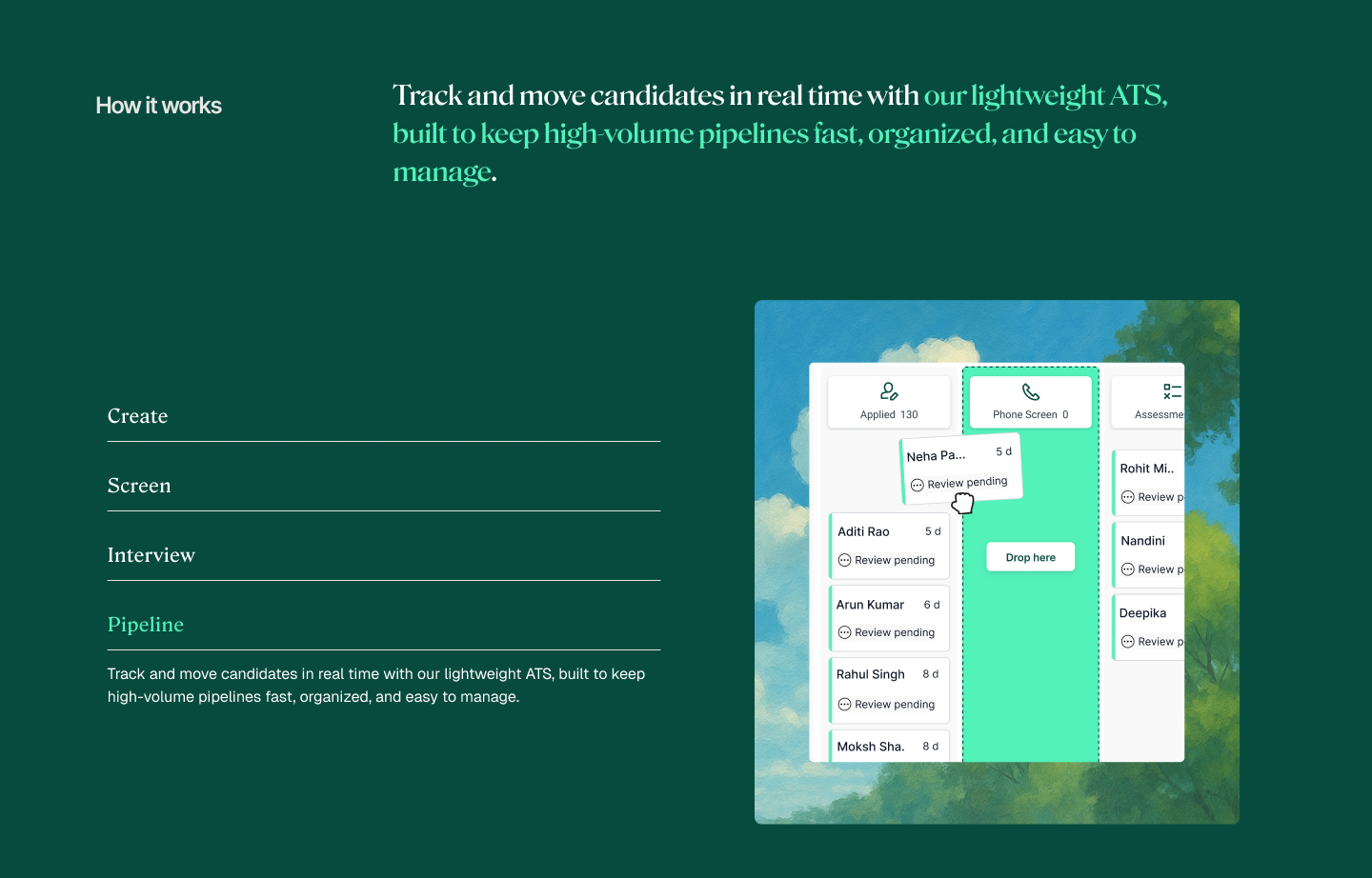
4. Unified Pipelines
This is where most teams fail:
Their sourcing → screening → assessments → interviews data is spread across emails, spreadsheets, ATS, and separate interview tools.
A unified pipeline centralizes:
- resumes
- scorecards
- assessment results
- interviewer notes
- audit logs
- progress stages
Platforms like JusRecruit excel here because they’re built with the philosophy of:
“Automation where scale matters; human judgment where nuance matters.”
5. Fairness Dashboards
Track conversion parity, interviewer drift, offer equity, and funnel health, all essential for identifying hidden bias.
30-Day Bias-Reduction Playbook
This version is far more detailed, tactical, and grounded in how real recruiters work.
If someone applied this exactly as written, their hiring process would materially improve within a month.
Week 1 — Audit the Funnel
Goals:
- Map the full recruitment process from sourcing → offer
- Identify bias triggers in every step
- Check for inconsistent rejection reasons
- Examine resume filters
- Check for unstructured interviews
- Identify scoring drift between interviewers
Deliverables:
- A “bias hotspots” document
- Proposed fixes per stage
- Alignment meeting with hiring managers
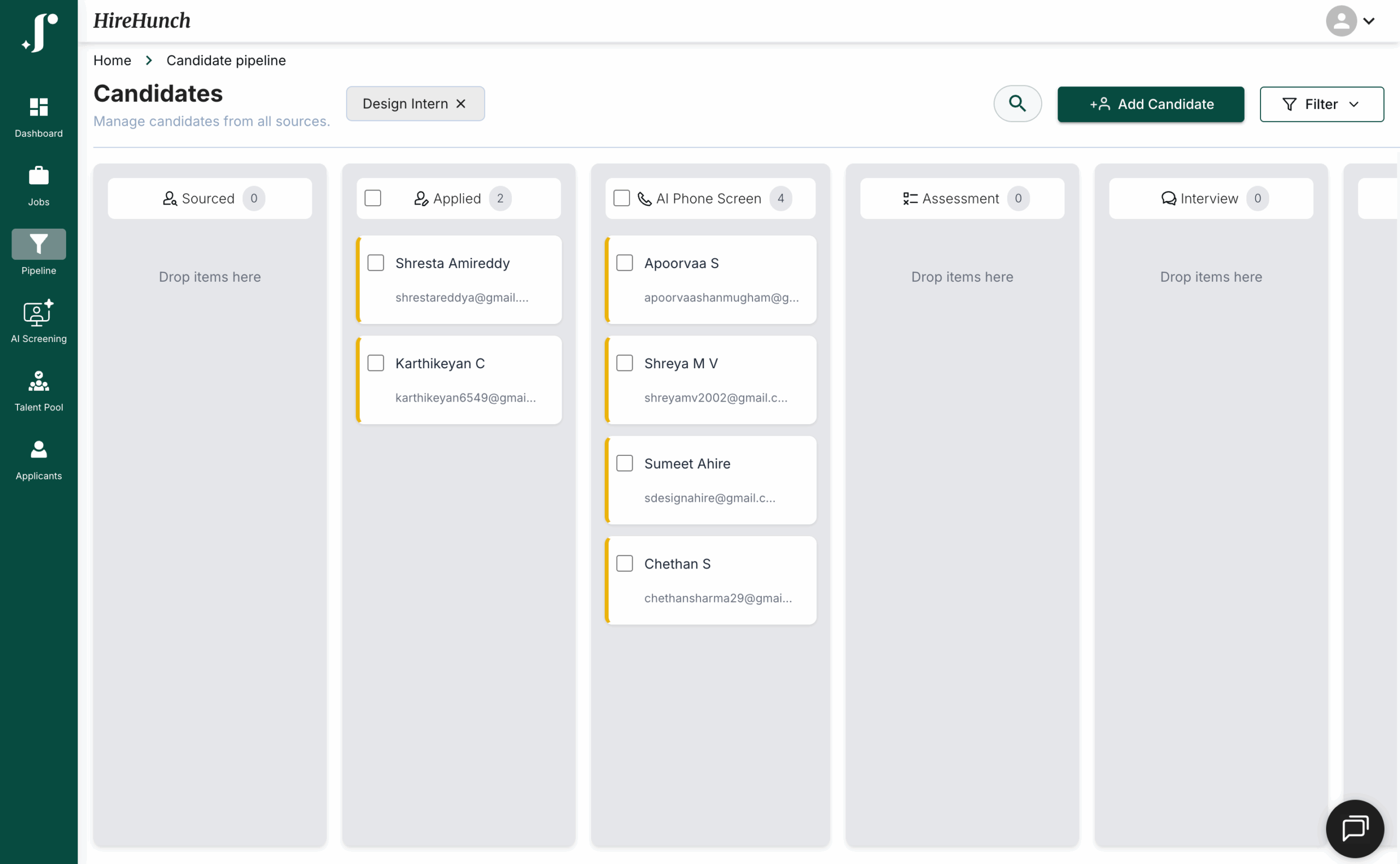
JusRecruit provides a unified pipeline view, making audits significantly easier.
Week 2 — Implement Structured Scorecards
Goals:
- Replace opinion-based interviews
- Standardize evaluation criteria
- Define behavioral indicators
- Roll out training
- Enforce structured scoring across all interviews
Deliverables:
- Scorecards for every active role
- Interviewer training workshop
- Calibration test interviews
JusRecruit automatically ties scorecards to first-round interviews, making it easy for teams to adopt structured evaluations fast.
Week 3 — Add Skills Assessments
Goals:
- Introduce short job-relevant tasks
- Reduce noise from unqualified applicants
- Establish early-stage signal
Deliverables:
- 1–2 scenario tasks per role
- Scoring rubric for each
- Assessment benchmarks
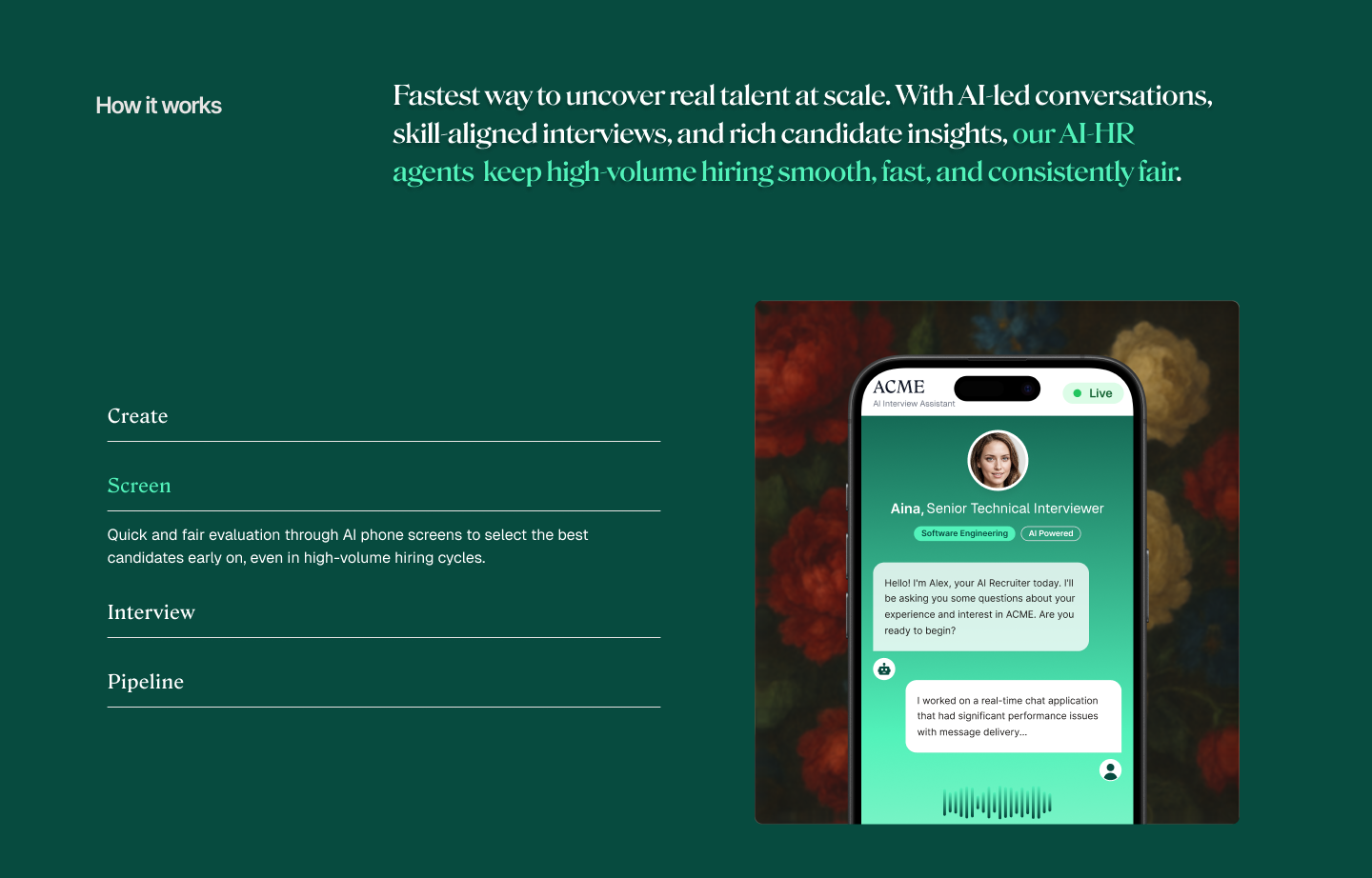
JusRecruit’s adaptive first-round interviewer functions as a skills-first screening layer, removing 70% of noise.
Week 4 — Train Interviewers & Launch Fairness Dashboard
Goals:
- Conduct micro-sessions on unconscious bias
- Train interviewers on evidence-based scoring
- Launch fairness tracking
- Introduce weekly or bi-weekly calibration rituals
Deliverables:
- Interviewer capability evaluation
- Fairness dashboard live
- Leadership alignment doc
Reducing hiring bias isn’t about one big fix, it’s about building a process where fairness becomes automatic. When teams combine skills-first screening, structured interviews, wider sourcing, and data-led audits with transparent, guardrail-driven automation, the result is a hiring engine that’s faster, more consistent, and fundamentally more equitable.
It’s the same balanced approach modern platforms like JusRecruit embody: automation to cut noise, human judgment to make great decisions. Put these ten steps together, and bias has nowhere to hide, and your team has everything it needs to hire with confidence.