
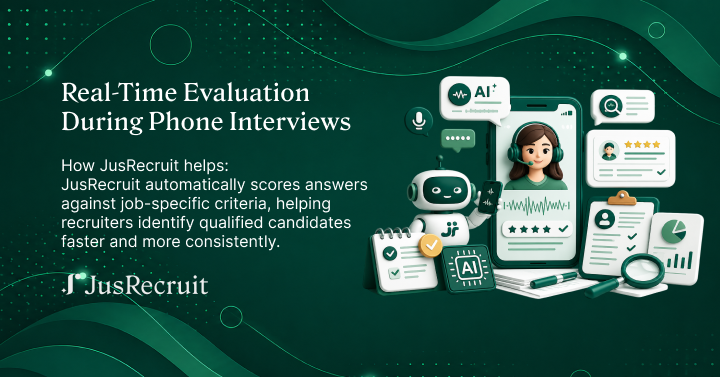
AI phone screening automates the initial interview process by using machine learning models to assess candidate responses in real time. It analyzes verbal content, tone, and intent, compares answers against job criteria, and generates structured feedback for recruiters, drastically reducing the time and bias inherent in manual phone screens.
Screening candidates by phone has long been a bottleneck in recruitment, draining hours from hiring teams and introducing subjective inconsistencies. Now, AI-powered phone screening is transforming this crucial step. By handling high volumes of applicants efficiently and fairly, AI empowers recruiters to focus less on repetitive screening and more on strategic hiring decisions. For competitive organizations, adopting AI phone screening is a direct path to faster shortlists, higher-quality hires, and consistent candidate experiences.
What Happens During AI Phone Screening?
AI phone screening uses advanced natural language processing (NLP) and conversational AI to replicate and even enhance the first rounds of candidate evaluation. When a candidate takes an AI-led phone screening call, the process unfolds systematically:
- The candidate receives a schedule link from an AI assistant.
- The AI asks role-specific questions, using dynamic follow-ups based on responses.
- Verbal and contextual data are captured, including not just what is said but how it is said.
- The AI interprets responses, evaluates skills alignment, and benchmarks answers using large datasets and current job criteria.
- Recruiters receive structured, bias-reduced feedback and scoring for each candidate.
This process ensures every candidate is evaluated on the same criteria while saving hiring teams from repetitive, time-consuming calls.
Core Technologies Powering AI Phone Screening
To deliver reliable, consistent results at scale, AI phone screening integrates several state-of-the-art technologies:
- Natural Language Processing (NLP): Extracts meaning, sentiment, and intent from spoken answers.
- Machine Learning Models: Continuously improve with more data, refining how candidate potential is assessed compared to the JD.
- Speech Recognition: Transcribes and analyzes audio for both content and delivery (tone, pacing, confidence).
- Automated Scoring Engines: Objectively rate candidate fit against role requirements.
- Integration with ATS: Seamlessly shares structured data and recommendations so teams can act faster. For JusRecruit, it has an inbuilt ATS.
These technologies combine to deliver fast, reliable pre-screening that far surpasses manual methods.
How AI Delivers Consistency and Fairness
Manual phone screenings often depend on recruiter availability, mood, and subjective judgment, leading to inconsistent candidate experiences. In contrast, AI-led screening applies the same calibrated questions and scoring logic to every interview, removing human bias from early evaluations and creating a level playing field for all applicants.
Traditional vs. AI Phone Screening: Key Differences
- Traditional: Recruiters juggle schedules, inevitably rush or delay conversations, and risk unconscious bias or missed follow-ups.
- AI-Powered: Screenings are on-demand, fully documented, and deliver consistent evaluation – regardless of recruiter workload or time zone.
Fairness is further enhanced as AI can objectively assess speech and provide equal opportunities even for candidates from non-traditional backgrounds, providing modern talent teams a clear edge over less advanced processes.
According to recent research, companies using AI-driven pre-screening have reduced time-to-interview by up to 60 percent and report a 40 percent improvement in candidate satisfaction rates.
What Recruiters Gain From AI Phone Screening
Adopting AI-based screening methods transforms recruiter workflows for the better:
- Faster Shortlisting: Automated evaluation cuts days to hours without sacrificing quality or thoroughness.
- Improved Candidate Quality: Skill-based, role-specific scoring highlights true top talent early in the funnel.
- Structured Feedback: AI provides clear, data-backed insights on each candidate, supporting objective downstream discussions.
- More Time for Engagement: With manual screening work removed, recruiters can focus on high-impact relationships and strategic talent planning.
Ultimately, AI phone screening arms recruiters with tools that drive more accurate decisions, reduced operational overload, and a higher-performing talent acquisition team.
The Candidate Experience: A New Standard
A common misconception is that automation results in a colder, less personal process. However, AI phone screening consistently enhances candidate experience:
- On-demand scheduling gives candidates flexibility and quicker next steps.
- Consistent questions and unbiased evaluation foster fairness.
- Structured, timely feedback helps candidates understand and trust the process.
By removing human bottlenecks and aligning evaluation to role requirements, candidates see reduced delays and a more professional process. Leading hiring teams who adopt AI here elevate their employer brand and attract the best talent, especially in competitive markets.
Frequently Asked Questions
How does AI phone screening maintain data privacy?
Modern talent teams implementing AI phone screening use secure, encrypted systems that comply with all relevant data protection regulations, such as GDPR or CCPA. Candidate audio and evaluation data are stored securely and only accessed by authorized personnel, ensuring privacy at every step.
Can AI identify soft skills during a phone screen?
Yes, AI can assess soft skills like communication, problem-solving, and professionalism by analyzing speech patterns, response clarity, tone, and the candidate’s ability to articulate thoughts. These insights help recruiters go beyond keyword filters and simple yes/no answers.
Does AI phone screening replace human recruiters?
No, AI phone screening enhances hiring workflows by handling repetitive, early-stage tasks, but final decisions still require recruiter judgment and human touch. Recruiters become more effective by receiving better candidate data faster, enabling smarter follow-up conversations and better hiring outcomes.
Is AI phone screening suitable for all roles?
AI screening is most effective for high-volume, early-stage screening across roles where specific skills and communication abilities can be evaluated by conversation. For highly technical or niche roles, it often serves as the initial filter before advanced, human-led assessments.
The Future: AI as the Foundation of Modern Hiring
AI phone screening is not a trend – it is the new standard for organizations serious about hiring efficiently and fairly. As AI advances, expect even more intelligent, adaptive interviews, deeper insights into candidate competencies, and truly personalized hiring journeys. Forward-thinking recruiters already see AI as essential. Those who continue to rely on outdated manual screening risk falling irreversibly behind in the battle for top talent.