
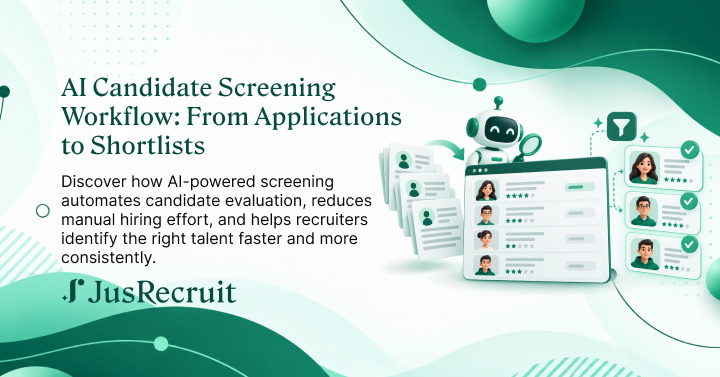
An AI candidate screening workflow is an automated, data-driven process that uses artificial intelligence to evaluate, shortlist, and engage job applicants at scale. By integrating advanced algorithms into applicant tracking systems (ATS), talent acquisition teams can reliably assess suitability, speed up decision making, and improve consistency in early-stage screening, outperforming traditional manual methods.
Hiring has advanced rapidly with AI-enabled tools, transforming staffing from a slow, manual endeavor into a scalable and sophisticated science. Modern organizations face high volumes of applicants, tighter competition for top talent, and increased expectations for fairness and speed. AI-powered screening provides an immediate advantage: recruiters and hiring managers can identify qualified candidates faster, reduce human bias, and dedicate more time to strategic initiatives. This shift is fundamentally shaping the future of talent acquisition.
How AI Screening Transforms Traditional Hiring
Traditional resume screening depends heavily on manual review, inconsistent keyword filters, and subjective judgment. This process is slow, prone to errors, and makes it difficult to spot high-potential candidates who may not use perfect keywords. AI addresses these issues head-on, introducing precision, efficiency, and repeatability into the process.
- Manual Screening: Involves recruiters reviewing each resume, often missing top talent due to time constraints and fatigue.
- AI Screening: Instantly assesses thousands of applications, using pattern recognition, context analysis, and skills mapping to identify best-fit candidates.
- Before: Hiring teams spent hours, sometimes days, compiling shortlists from stacks of CVs.
- Now: AI completes shortlisting in minutes, ensuring only the most relevant candidates progress.
Modern talent teams consistently report shorter time-to-hire and improved candidate quality when AI powers their screening workflow.
Key Components of an AI Candidate Screening Workflow
An effective AI-powered screening workflow is built on integrated technologies and defined sequences that deliver accurate, actionable results. Below are the critical components driving its success:
- Automated Resume Parsing: AI extracts information from resumes, regardless of format, normalizing data for consistent evaluation.
- Natural Language Processing (NLP): Advanced NLP algorithms interpret context, skills, experience, and achievements beyond mere keywords.
- AI Phone Screening: Conversational AI conducts structured phone interviews, evaluating communication skills, motivation, and culture fit without bottlenecks.
- Data-Driven Scoring: Each candidate receives a real-time, attribute-based score, highlighting strengths and suitability for the role.
- Automated Shortlisting and ATS Integration: Qualified candidates are ranked and pushed directly into the ATS for recruiter action, ensuring no qualified candidate is overlooked.
This structured, AI-led approach rapidly surfaces the right talent, reducing manual touchpoints and creating a smoother experience for both recruiters and applicants.
Benefits for Recruiters and Hiring Teams
Forward-thinking recruiters consistently see dramatic performance improvements by deploying AI-driven screening. Key benefits include:
- Time Saved: Bulk processing and shortlisting reduce administrative hours, freeing recruiters for deeper engagement with finalists.
- Improved Consistency: AI removes subjective biases, applying uniform standards across every applicant.
- Enhanced Candidate Quality: Intelligent assessment surfaces high-potential candidates who may be missed with manual reviewing.
- Scalability: Handle high applicant volumes during hiring surges or seasonal recruitment without additional headcount.
- Data-Driven Insights: AI delivers actionable analytics and performance benchmarks for ongoing process improvement.
According to industry research, organizations using AI-powered screening report a 50% reduction in time-to-fill and a 35% increase in recruiter productivity compared to manual workflows.
The most successful hiring operations are those that embrace AI’s ability to transform process speed, consistency, and quality.
Delivering a Superior Candidate Experience
AI screening is not just recruiter-focused: it also creates a faster, fairer process for candidates. Automated workflows address typical frustrations with manual screening and elevate the end-to-end experience.
AI’s Impact on Candidate Engagement
- Faster Response Times: Immediate evaluation and progress updates prevent candidates from feeling ignored.
- Fair Assessment: Every candidate goes through the same checks and criteria, ensuring equity and inclusivity.
- Structured Feedback: AI can provide candidates with actionable feedback at each stage, supporting their professional development.
- More Transparent Process: Candidates are kept in the loop with real-time notifications and clear next steps.
These factors improve employer brand reputation and deter top talent from abandoning the process for a competitor.
Integrating AI Screening with Your ATS and Interview Workflow
To maximize the value of AI, leading hiring teams seamlessly connect AI screening modules with their applicant tracking system and downstream interviewing process. This integration streamlines hiring, from source to offer, eliminating manual data entry and delays.
- Candidates apply through the career site or talent pool.
- AI automatically parses, evaluates, and scores each incoming applicant profile.
- Top candidates are auto-scheduled for AI-led phone interviews, with results recorded and analyzed for recruiter review.
- Shortlisted profiles are injected directly into the ATS, ready for panel interviews or technical assessments.
- Full audit trails and analytics ensure recruiters maintain oversight without sacrificing speed.
This end-to-end orchestration gives recruitment teams greater control, transparency, and agility – hallmarks of the most competitive organizations.
Frequently Asked Questions
How does AI screening reduce bias in the hiring process?
AI candidate screening uses objective data and standardized evaluation criteria, removing variability tied to individual recruiters. By anonymizing and scoring applications based on relevant skills and experience, AI ensures qualifiers are selected on merit rather than subjective impressions or unconscious bias.
Is AI screening suitable for all role types and seniority levels?
AI-powered screening is highly effective for volume recruitment and early-stage shortlisting across most roles, from entry to senior professional. For executive or niche positions, AI quickly surfaces candidates with specialized expertise, allowing recruiters to focus on deeper assessment and relationship-building rather than sifting through hundreds of profiles.
What data privacy considerations apply to AI screening workflows?
Modern AI screening solutions are built with robust data security and compliance features in mind. Leading talent teams ensure that all candidate data is stored, processed, and deleted in accordance with data protection regulations such as GDPR. Transparent candidate communication about how AI is used further builds trust and ensures compliance.
How quickly can AI candidate screening be implemented?
Deployment timelines vary, but most organizations can integrate AI screening technology into their ATS within weeks. Minimal disruption, combined with immediate efficiency gains, means recruiters see ROI rapidly – streamlining hiring cycles almost overnight.
The Future of Efficient, Fair, and Scalable Hiring
The adoption of AI-enabled screening is the new standard for modern recruitment. As competition for talent intensifies, organizations using AI-driven workflows will continue to move farther ahead – delivering faster, fairer, and more personalized hiring outcomes at scale. The future belongs to those who embrace intelligent automation. Talent teams investing in AI today are not just keeping pace: they are setting the pace for the next era of hiring excellence.