
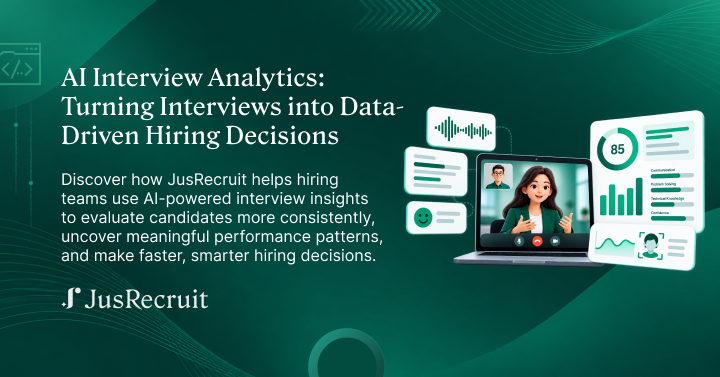
AI interview analytics uses artificial intelligence to analyze responses, voice cues, behaviors, and performance during interviews at scale, providing recruiters with structured data and actionable insights that go beyond subjective notes. This technology enables faster, more consistent, and higher-quality shortlisting of candidates compared to manual review processes.
The evolution of hiring is unmistakably powered by intelligent automation. AI interview analytics now sets the standard for identifying top talent efficiently, minimizing human error, and capturing deeper insights than face-to-face or video interviews alone. Hiring managers and talent leaders who harness these advanced tools are securing a powerful edge, meeting aggressive hiring goals while delivering a superior candidate experience.
What Is AI Interview Analytics?
AI interview analytics refers to the process of capturing structured data from candidate interviews using artificial intelligence algorithms. Modern talent teams use AI to assess not just what candidates say, but also how they communicate, their decision-making patterns, and the qualities they demonstrate under interview conditions.
This technology can process data from phone screenings, one-way or two-way video interviews, and even live virtual conversations. By evaluating tone of voice, speech patterns, keyword usage, facial expressions, and response consistency, AI generates a standardized summary of key competencies and fit. The output is a highly objective profile that allows for direct comparison between candidates.
How AI Interview Analytics Works
To understand its value, it’s important to break down the workflow involved in AI interview analytics. Modern AI-driven interview tools follow a data-rich, multi-step process:
- Recording: The system records interviews via phone or video, capturing both audio and visual data.
- Analysis: Natural Language Processing (NLP) and machine learning models evaluate the responses for behavioral cues, role-specific knowledge, and emotional intelligence.
- Benchmarking: The AI compares candidates’ answers and delivery styles against predefined high-performer models or industry benchmarks.
- Reporting: Structured summaries, scored rubrics, and actionable recommendations are generated for recruiters to review in the ATS.
This workflow allows teams to assess more candidates in less time, ensuring a consistent evaluation criteria across the board.
Key Metrics and Insights Provided by AI Interview Analytics
Hiring managers today expect data, not anecdotes. AI interview analytics provides a suite of metrics that drive confident decision-making. Some of the most valuable insights include:
- Communication Clarity: Assessment of articulation, confidence, and conciseness in candidate answers.
- Role Fit: Evaluation of relevant experience, skills alignment, and domain expertise using predictive modeling.
- Behavioral Traits: Analysis of soft skills such as adaptability, leadership potential, and problem-solving approaches.
- Engagement & Motivation: Sentiment analysis to track passion, positivity, and commitment throughout the interview.
- Consistency: Detection of contradictions or mismatched responses, helping eliminate red flags early.
According to industry research, companies using AI interview analytics report up to a 40% reduction in time-to-hire and observe a 30% improvement in candidate satisfaction with the process.
AI Interview Analytics vs. Traditional Manual Scoring
Manual processes rely on recruiter memory, paper notes, and subjective judgments, often resulting in bias or missed signals. In contrast, AI-driven analytics records every interaction, applies a transparent rubric, and delivers rapid, repeatable insights. See how the two approaches compare:
- Manual Scoring:
- Highly variable interviewer styles and feedback quality
- Susceptible to recency or affinity bias
- Slow review and follow-up, especially at high volume
- Limited by human attention span and energy
- AI Interview Analytics:
- Consistent evaluations across every candidate and interviewer
- Objective and data-driven, reducing bias and oversight
- Accelerated screening and shortlist creation
- Comprehensive reporting and benchmarked performance data
Forward-thinking recruiters recognize that shifting to AI analytics is not simply about speed, but about elevating the quality and consistency of every hiring decision.
Benefits for Recruiters and Candidates
The impact of AI interview analytics is felt on both sides of the hiring equation. Recruiters and hiring managers gain control, transparency, and efficiency. Candidates experience faster, fairer, and more transparent processes. Here’s how each group benefits:
- For recruiters:
- Time reclaimed from first-round interviews, phone screens, and note reviewing
- Structured feedback, reducing ambiguity and decision fatigue
- Better predictive matching of candidates to the competencies required
- Clear audit trail for compliance and quality assurance
- For candidates:
- Faster response times and clear communication on next steps
- More objective, skills-based evaluation rather than keyword filtering or gut instinct
- Potential for tangible feedback on strengths and opportunities for growth
- Consistent and respectful engagement at every touchpoint
Contrasting Outcomes: Before and After AI Interview Analytics
- Before AI: Candidates wait weeks for feedback. High-volume roles swamp recruiters with repetitive manual reviews and highly variable notes.
- After AI: Structured insights are delivered instantly, candidate review is objective, and recruiters spend their time identifying genuine fit rather than processing repetitive data.
Best Practices for Implementing AI Interview Analytics
Intelligent adoption of AI interview analytics ensures quality outcomes and organizational buy-in. Forward-looking talent teams follow these best practices:
- Define Success Metrics: Agree on which competencies and behaviors the AI should prioritize for each role, aligning analytics to business impact.
- Train and Calibrate: Periodically review analytics models using feedback from top performers to keep assessments accurate and relevant.
- Transparent Candidate Communication: Let candidates know how AI-driven assessment benefits them and supports fairness.
- Continuous Feedback Loops: Use analytics reports to inform hiring manager training and further refine job requirements.
Embracing these practices positions organizations to maximize both process efficiency and candidate engagement from the outset.
Frequently Asked Questions
How does AI interview analytics ensure fairness in candidate evaluation?
AI interview analytics brings standardized criteria to every interview, evaluating each candidate under the same rubric. By removing subjective judgments and minimizing unconscious bias, it supports merit-based decisions while complying with fairness and anti-discrimination requirements.
Are candidates comfortable with AI being used during interviews?
Most candidates appreciate the increased speed, transparency, and feedback offered by AI-driven processes. When organizations communicate the benefits clearly, candidates recognize that AI eliminates guesswork, provides faster updates, and offers more structured feedback compared to traditional interviews.
What types of roles are best suited for AI interview analytics?
AI interview analytics is valuable across a broad range of functions, from engineering and sales to customer success and operations. High-volume roles that require standardized screening benefit the most, but even specialized positions gain from deeper insight into candidate competencies and soft skills.
How quickly can hiring teams see results after implementing AI interview analytics?
Most modern talent teams report significant improvements in time-to-shortlist, candidate engagement, and quality-of-hire within the first quarter of implementation. Results accelerate as AI models calibrate to organizational standards and hiring managers become proficient in interpreting analytics reports.
The Future of Hiring with AI Interview Analytics
AI interview analytics is setting a new standard for hiring speed, accuracy, and candidate experience. As the technology advances, it will only get sharper in predicting job success, personalizing interview flows, and supporting truly inclusive hiring strategies. Organizations investing in AI-powered workflows today are not just optimizing screening, but building the foundation for a predictive, adaptive, and data-driven talent function that will shape the future of work.