

Most recruiters today aren’t struggling with a shortage of applicants. They’re struggling with an overflow, an average of 250+ inbound resumes for every open role, with nearly 88% of them misaligned. For many, the hiring process breaks before it even begins. The first bottleneck isn’t interviews or assessments. It’s the avalanche of resumes that must be sifted manually before anyone with genuine potential even reaches a conversation.
This is why Automated resume Screening has become central to modern hiring systems in 2025. Not as a futuristic experiment, but as a practical necessity.
But here’s the nuance most conversations miss: automated screening only works when it’s structured, transparent, and paired with human judgment. The teams winning today aren’t the ones who replaced recruiters with AI. They’re the ones who blended automation into the early funnel so recruiters could do the meaningful work that automation can’t.
Platforms like JusRecruit, take an approach where AI handles early vetting, adaptive interviews generate structured scorecards, and a lightweight ATS keeps everything visible in one flow, all without overshadowing human decision-making. It’s a workflow shift, not a technological one.
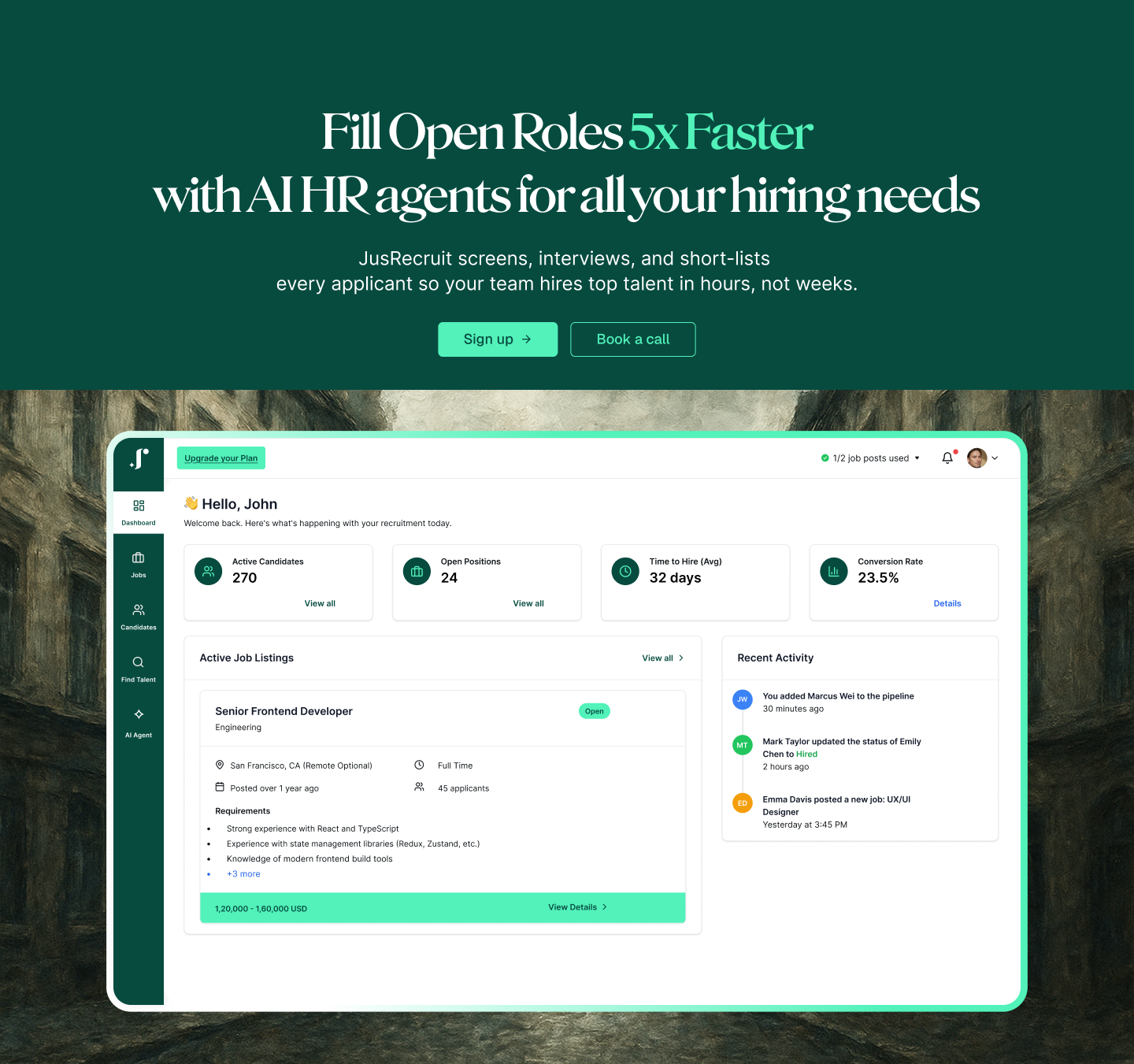
This guide breaks down the entire landscape: what Automated resume Screening is, why it matters, how it works, how to implement it, how to choose tools, and how to futureproof your hiring funnel.
What is Automated Resume Screening
Automated resume screening uses software, typically combining natural language processing (NLP), machine learning (ML), and structured scoring logic, to evaluate resumes against job requirements.
A modern system does far more than keyword scanning. It extracts and analyzes:
- Skills and tools
- Seniority and progression
- Domain knowledge
- Project-level impact
- Tenure and stability
- Behavioral indicators
- Writing clarity and communication
- Evidence of ownership and problem-solving
It then uses this extracted data to surface the candidates with the strongest alignment to the role, reducing manual load and improving consistency across the hiring team.
Automation doesn’t replace humans here. It simply creates an environment where humans start from a curated list, not a chaotic pile.
Why Automated Resume Screening Matters in 2025: Speed, Quality & Fairness
Automation is no longer a “nice-to-have.” It’s become the only practical way to run a modern hiring engine when:
- inbound volume is high
- job descriptions attract broad applicant pools
- recruiting teams are lean
- candidate expectations for fairness and speed are rising
The market has shifted in three ways:
1. Speed is existential now.
Candidates won’t wait weeks for a response. The teams that move quickly win the best talent.
2. Quality demands structure.
Hiring managers want to interview people who can actually do the job, not people who phrased their resume well.
3. Fairness and transparency matter.
Candidates want clarity. They want evaluation based on skills, not bias or randomness.
Automated screening, when combined with human judgment, drives all three outcomes.
Key Metrics to Expect: Time-to-Hire, Cost-per-Hire, Qualified-Candidates-per-Role
If implemented well, Automated resume Screening improves the following KPIs:
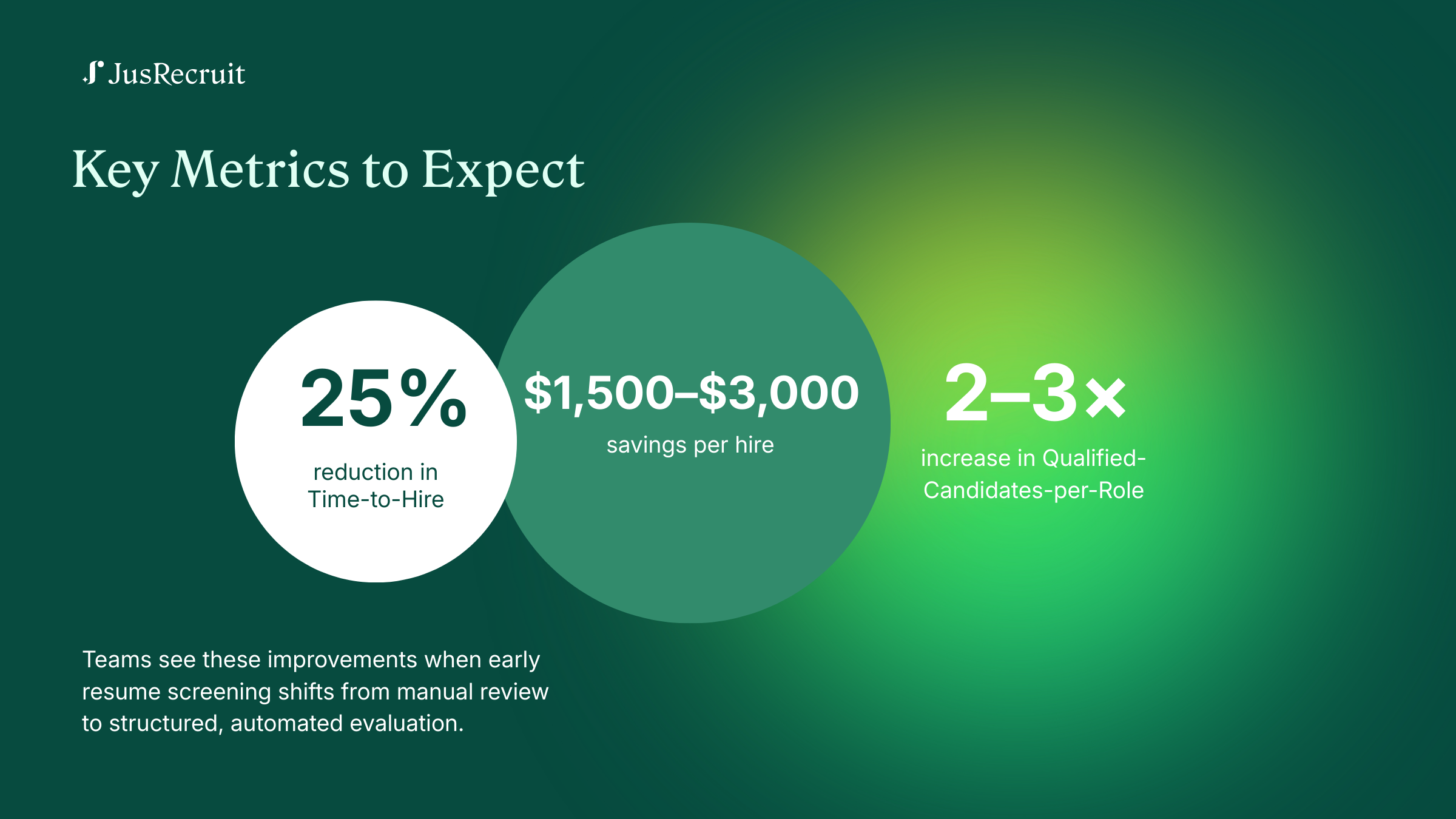
Time-to-Hire
Modern teams reduce total hiring cycle time by 35–60% once early screening is automated.
Cost-per-Hire
Less manual screening + fewer misaligned interviews = better resource allocation.
Savings: $1,500–$3,000 per hire on average.
Qualified-Candidates-per-Role
Better signal extraction pushes more interview-ready talent to the top of the funnel.
Improvement: 2–3×.
Sample KPI Formulas and Benchmarks
Screening Accuracy
= (Number of candidates who pass screening and pass first interview) ÷ (Total candidates who pass screening)
Healthy benchmark: 60–70
Shortlist Strength
= (Interview-to-offer ratio)
Strong teams aim for: 4:1–6:1
Screening Efficiency
Manual baseline: 10–15 resumes reviewed → 1 high-fit
Automated benchmark: 3–5 resumes reviewed → 1 high-fit
These metrics become achievable when screening follows a structured, repeatable methodology.
Implementing Automated Resume Screening: A 10-Step Playbook for TA Teams
This section is where good intentions turn into real operational change.
Below is the refined 2025-ready implementation roadmap.
1. Define Hiring Outcomes and Success Metrics
Start with clarity:
- What does “qualified” mean for this role?
- What KPIs must improve (speed, accuracy, fairness, consistency)?
- What failure modes must be eliminated (misaligned interviews, bias drift)?
High-performing TA teams define success before touching a tool.
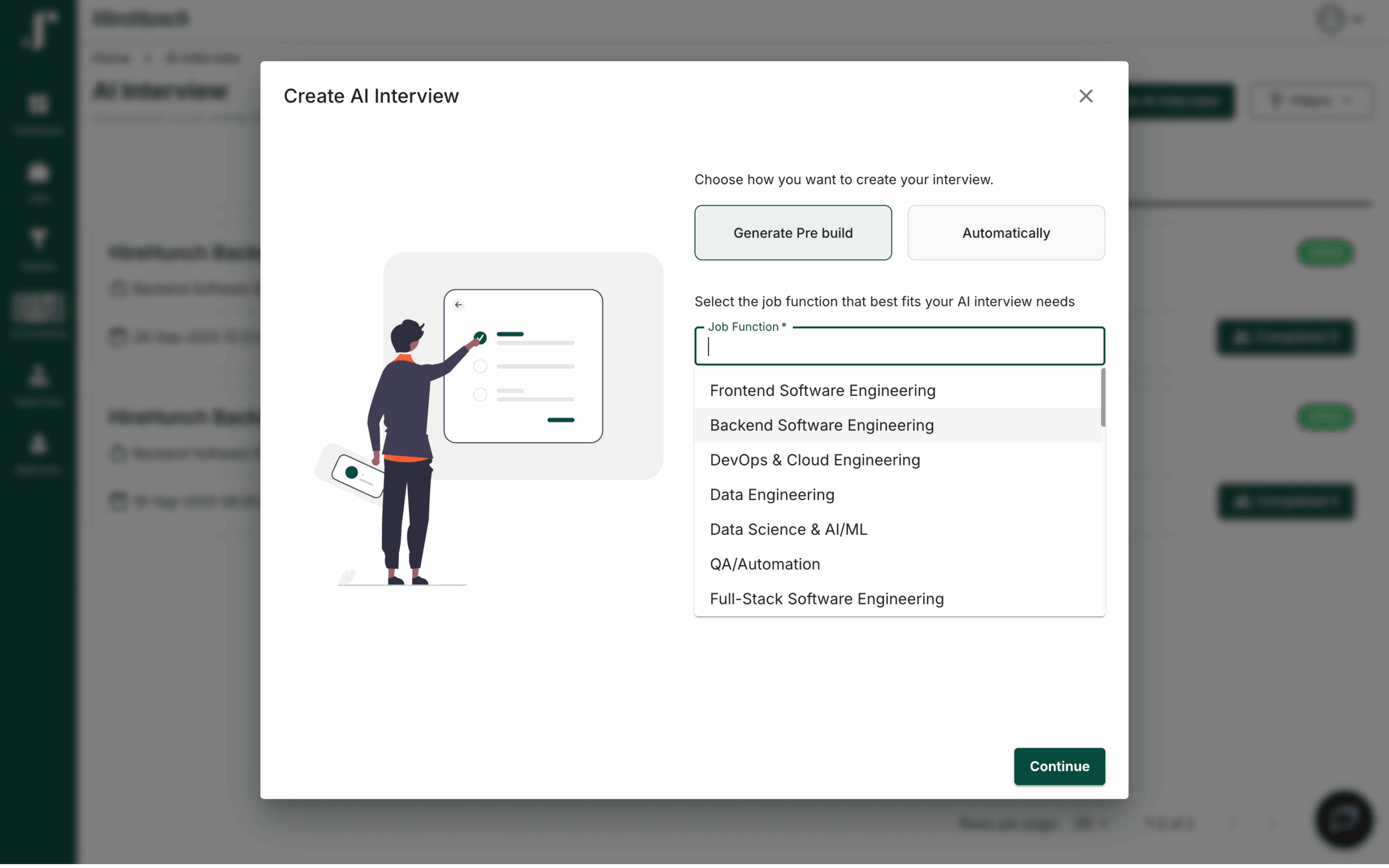
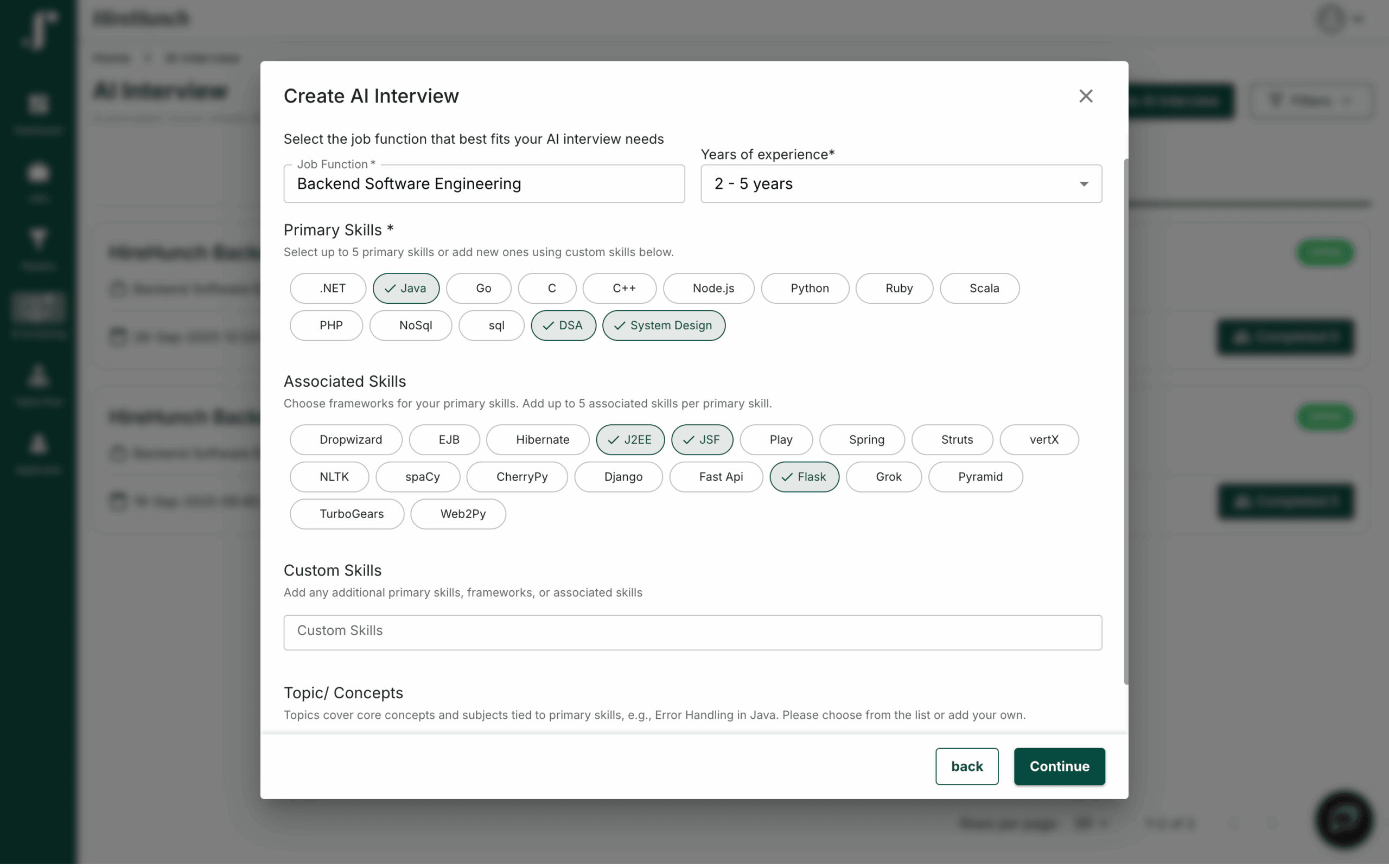
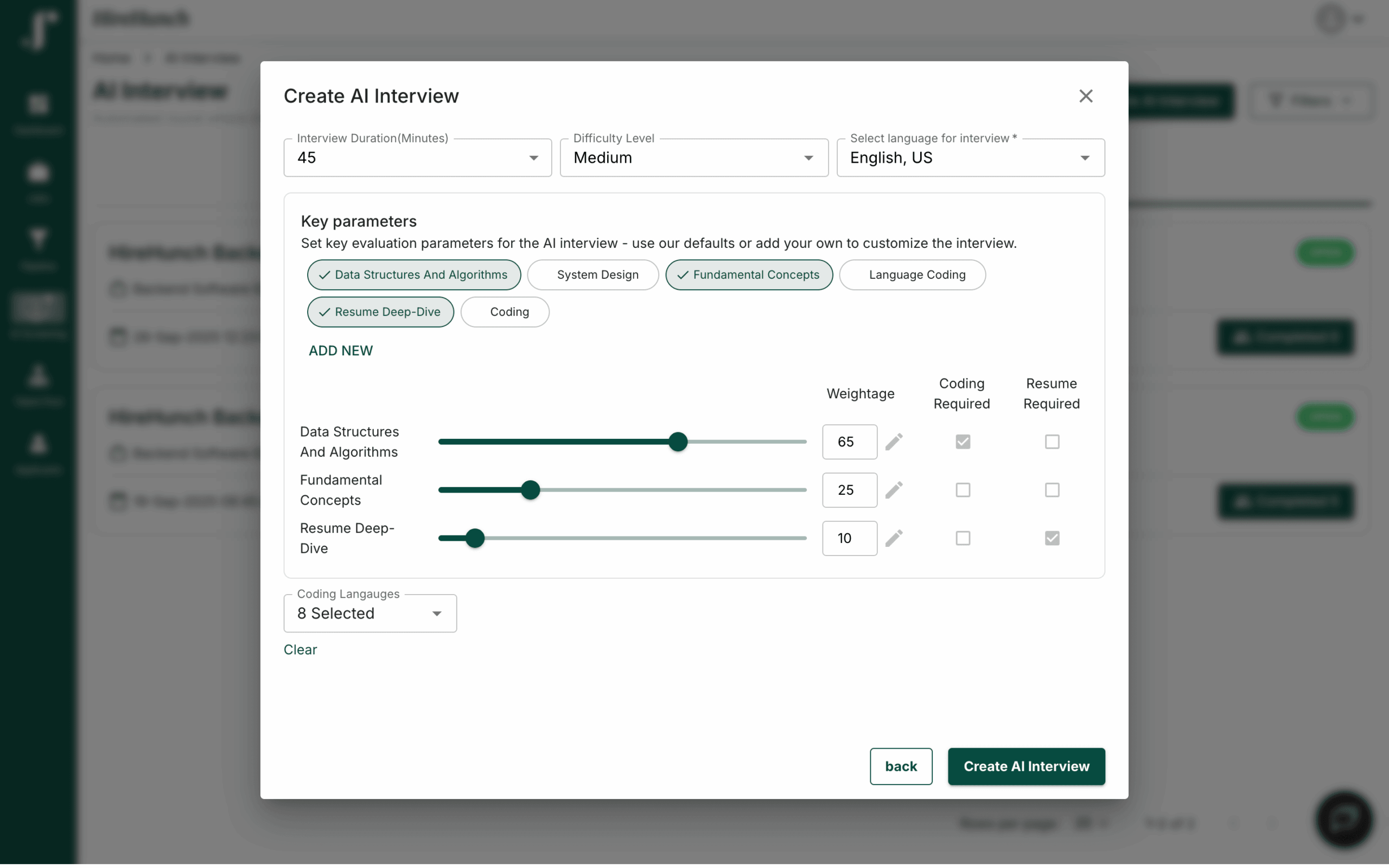
2. Create Role-Specific Evidence Rubrics
Rubrics are the backbone of automated screening.
They describe what good looks like, using evidence rather than vagueness.
A rubric includes:
- Required skills
- Experience thresholds
- Behavioral expectations
- Domain requirements
- Acceptable vs unacceptable evidence
- Red flags
Platforms like JusRecruit make rubrics central to their workflow, ensuring every evaluation ties back to structured criteria.
3. Map resume Fields to Rubric Elements
This is where automation becomes intelligent.
Example:
- resume “Backend developer – 3 years” → maps to “API development” + “system design exposure”
- resume “Led squad of 5 engineers” → maps to “team leadership” + “stakeholder communication”
The mapping logic informs the automated scoring engine.
4. Select & Pilot Screening Tool
During a pilot, evaluate:
- Parsing quality
- Contextual interpretation depth
- False positive patterns
- False negatives in strong candidates
- Human override clarity
- Bias safeguards
- Calibration controls
- ATS alignment
Avoid tools that behave like black boxes. Look for explainability.
5. Validate Model: Bias, Precision, Recall Tests
Bias testing isn’t optional. It defines whether automation is ethical.
Run controlled tests across:
- Gender-coded names
- University tier
- Zip code / location
- Career breaks
- Age-signaling terms
- Disability markers (implicit or explicit)
Measure model performance:
- Precision: How accurate accepted candidates are
- Recall: How many qualified candidates are captured
- False negatives: The silent killer of strong pipelines
If your model over-rejects any demographic cluster, recalibrate immediately.
6. Integrate With Your ATS and Data Flows
Automation fails when the ATS becomes a bottleneck.
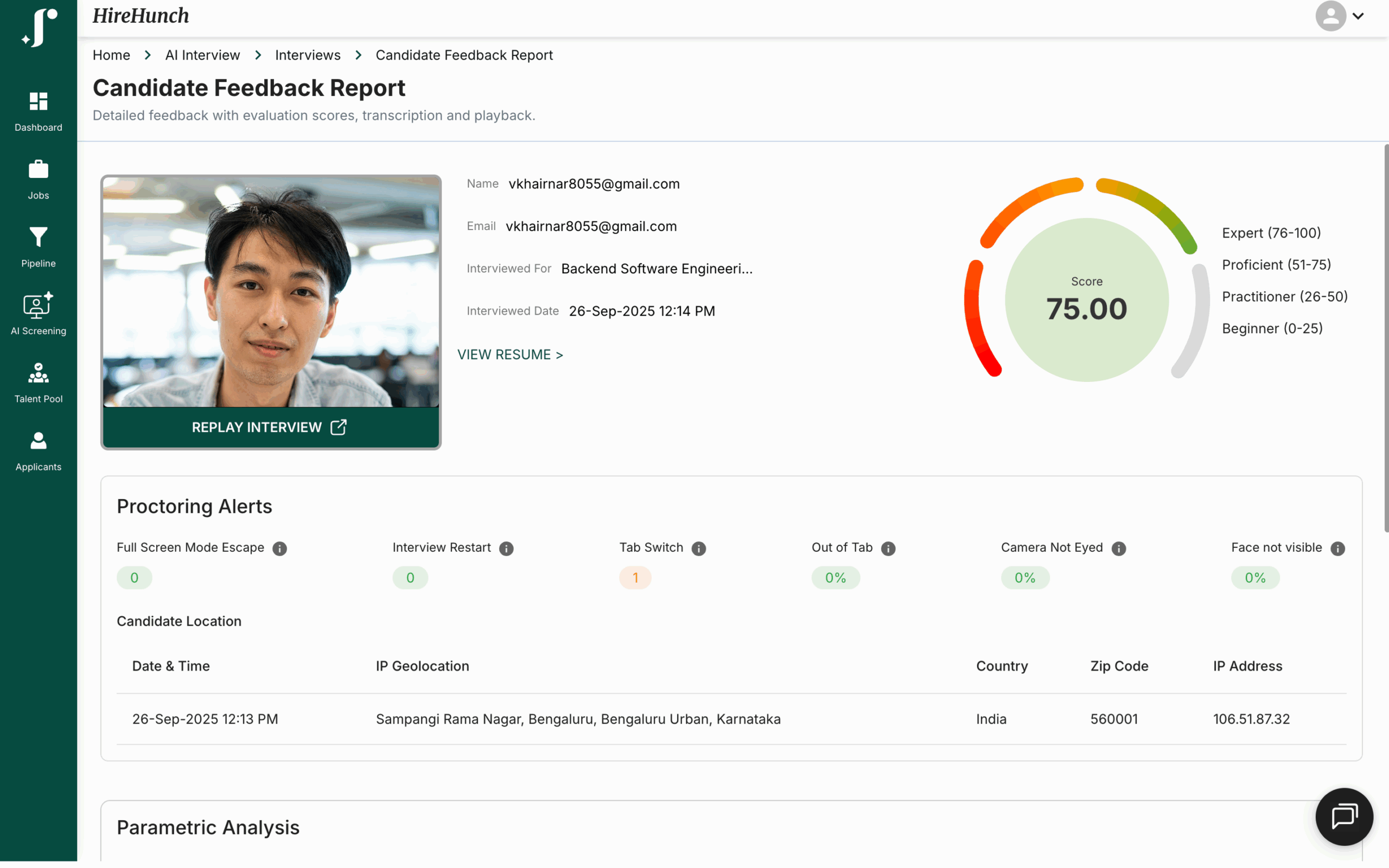
Platforms like JusRecruit, which bundle a lightweight ATS, reduce this friction by centralizing:
- resume vetting
- Adaptive interview results
- Structured scorecards
- Pipeline stages
- Recruiter notes and overrides
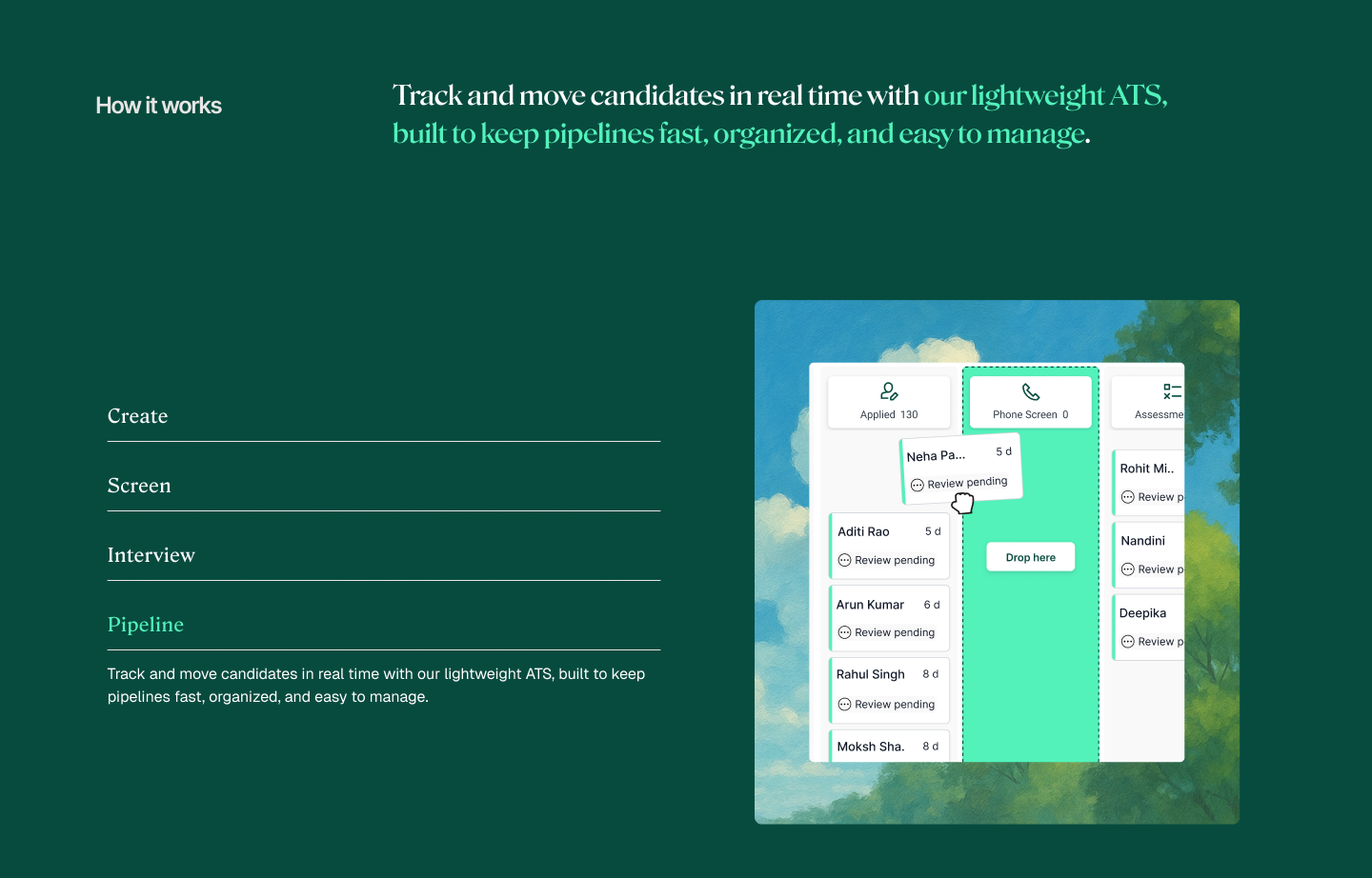
Key ATS mapping checks:
- Does the scorecard appear inside candidate profiles?
- Do stages sync reliably?
- Do analytics flow end-to-end?
- Does the system deduplicate profiles?
Integration quality determines day-to-day usability.
7. Design Human-in-Loop Review Rules
Automation should assist, not override.
Define rules like:
- All borderline candidates → human review
- All high-confidence candidates → automatic advancement to structured interview
- All low-confidence candidates → sampled rather than automatically rejected
These rules prevent automation from becoming too aggressive.
8. Communicate to Candidates Transparently
Candidates increasingly expect clarity.
A simple statement such as:
“Your application will be evaluated using both automated and human review to ensure fairness and consistency.”
…dramatically improves trust.
9. Monitor & Iterate Using Dashboards
Track:
- False negatives
- Drift in scoring trends
- Diversity metrics
- Screening speed
- Interview-to-offer ratio
- QoH patterns
- Rejection distribution
Good teams monitor screening the way engineers monitor system performance.
10. Scale & Archive Candidate Pools
Structured systems allow talent rediscovery.
Platforms like JusRecruit store structured evidence, allowing teams to rebuild shortlists or rediscover high-quality talent from previous searches.
Rediscovery alone can reduce time-to-hire by weeks.
Best Automated Resume Screening Tools (2025): Feature-by-Feature Breakdown
Here’s the 2025 market landscape. These are the real tools teams compare when evaluating automated or AI-augmented screening solutions.
1. JusRecruit
Why it matters:
It fixes the front half of hiring, where most time is lost and most bias creeps in.
What it does:
- Turns resume noise into ranked, evidence-backed shortlists
- Runs adaptive AI-led first-round interviews
- Generates comparable scorecards
- Automates early screening so recruiters spend time only where it counts
Best for:
Teams tired of resume chaos and slow funnels.
2. Metaview
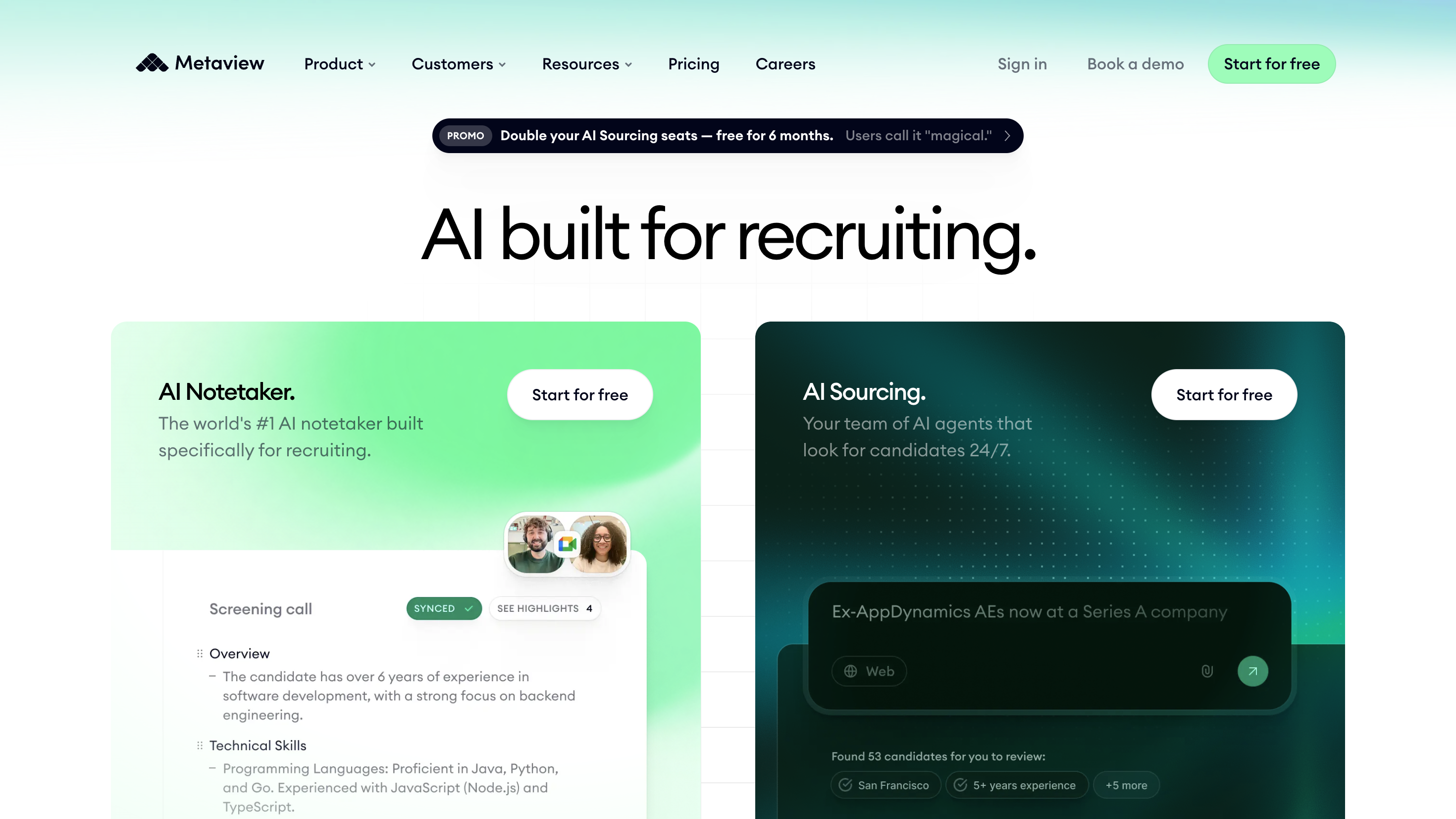
Why it matters:
Improves the quality and consistency of interviewer-led rounds.
What it does:
- Real-time transcription during interviews
- Automatically generates structured notes
- Scorecards align to competencies
Best for:
Teams are scaling interviews and reducing interviewer bias.
3. HireEZ
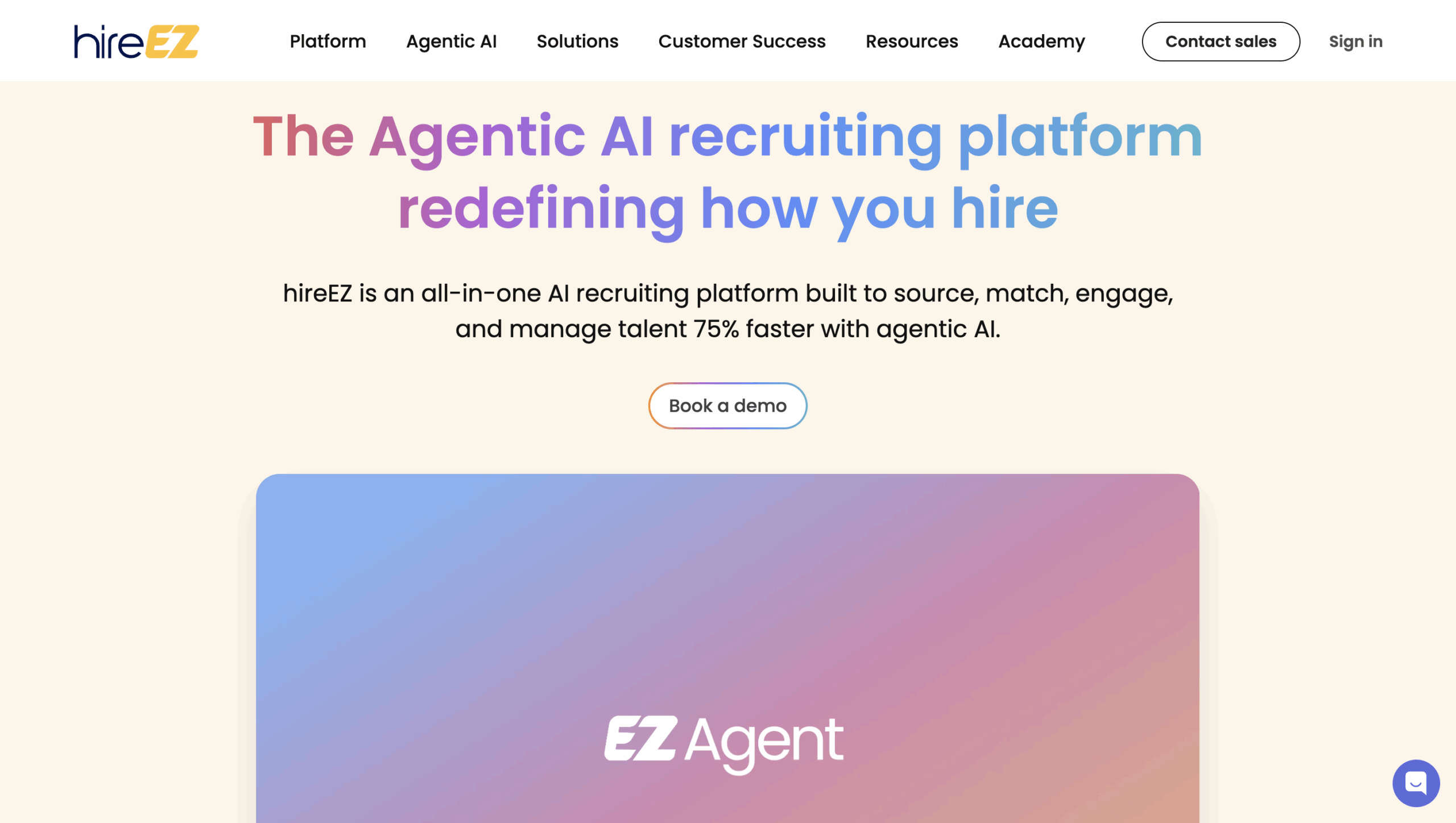
Why it matters:
Uncovers talent most teams never find.
What it does:
- Searches the entire web, not just LinkedIn
- Builds enriched candidate profiles
- Surfaces diversity and market insights
Best for:
Niche roles, competitive hiring markets, and passive talent sourcing.
4. SeekOut
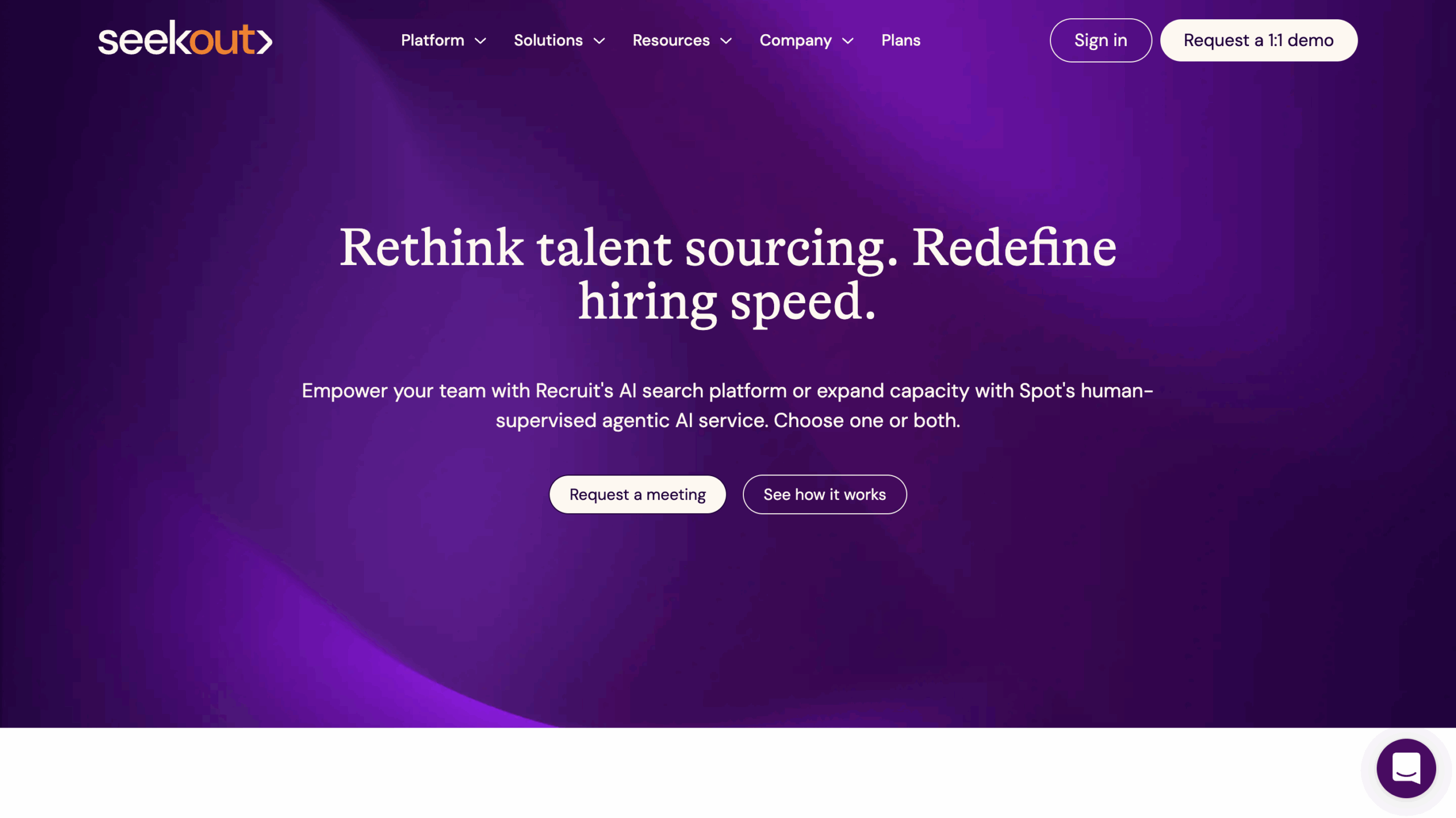
Why it matters:
Supports enterprise-scale workforce intelligence and planning.
What it does:
- Advanced sourcing with deep Boolean
- DEI analytics and insights
- Internal mobility and workforce planning
Best for:
TA leaders making strategic, data-backed decisions.
5. Paradox Olivia
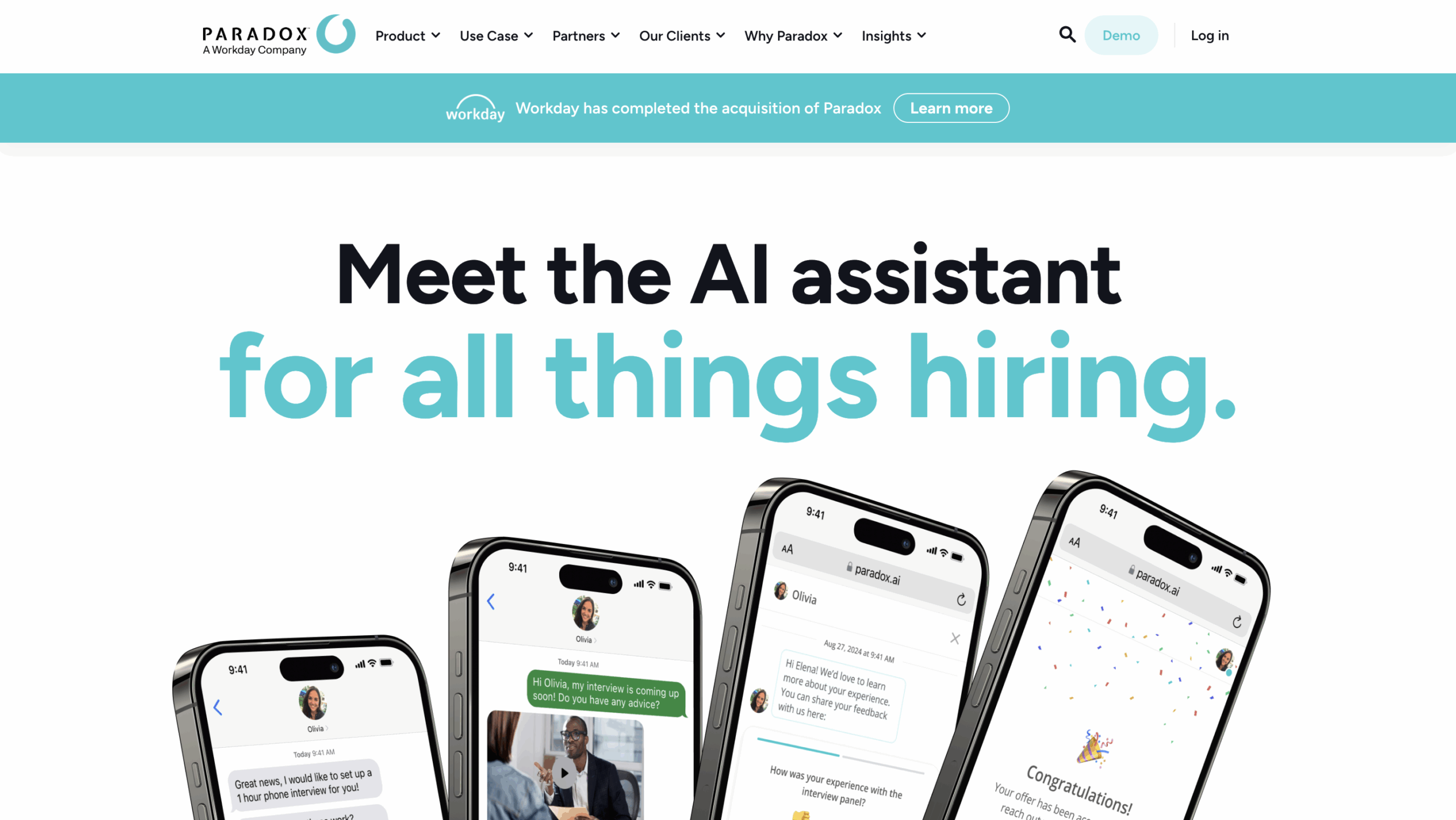
Why it matters:
Removes repetitive friction in high-volume hiring environments.
What it does:
- Automated candidate Q&A
- Knockout workflows
- Instant interview scheduling
Best for:
Retail, logistics, BPO, hospitality, anywhere speed matters more than nuance.
Keeping Candidate Experience Human: Feedback Loops & Transparency
Automation often improves candidate experience when used correctly.
Here’s how:
1. Faster Responses
Candidates hear back sooner because the system eliminates early bottlenecks.
2. Clearer Expectations
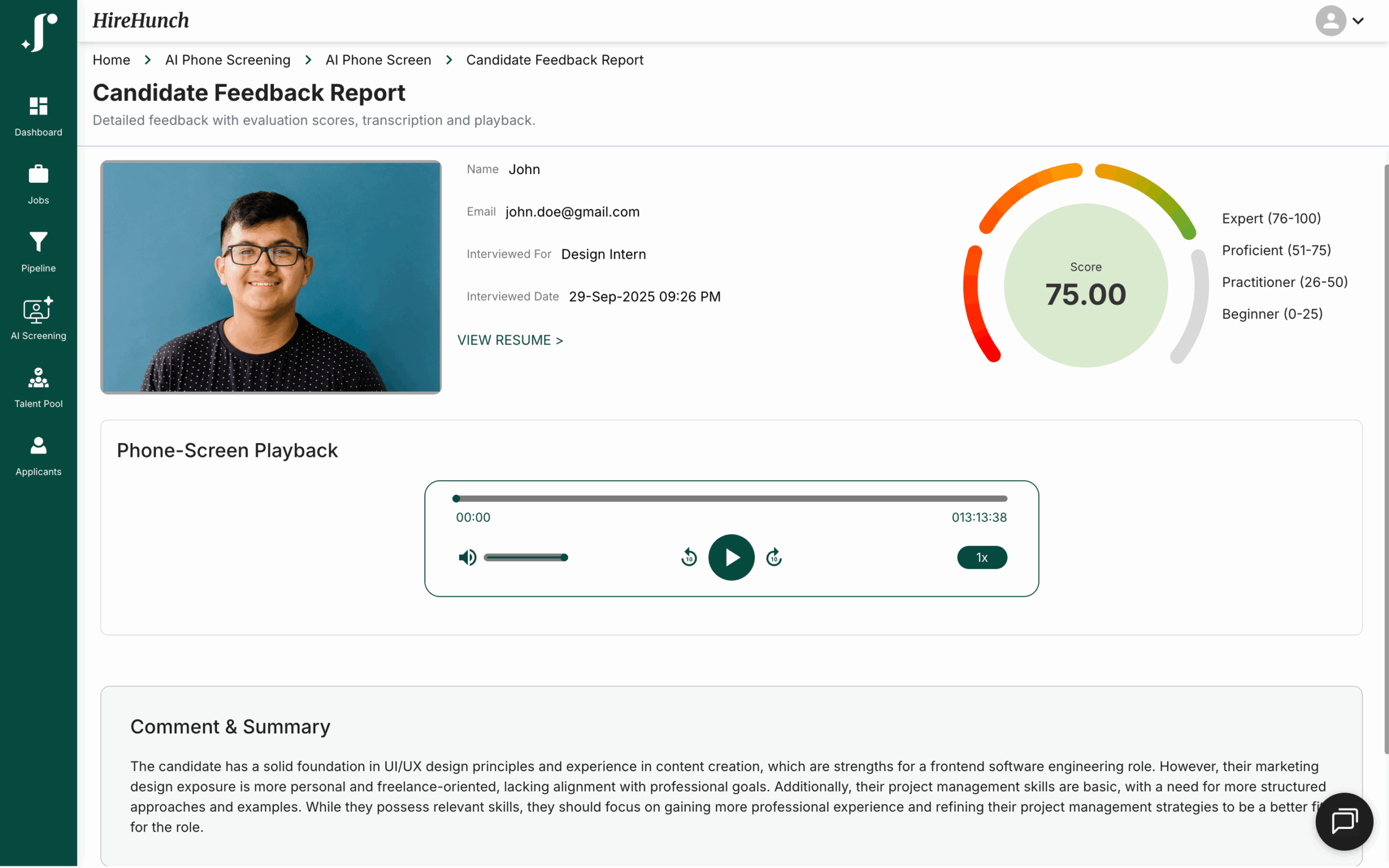
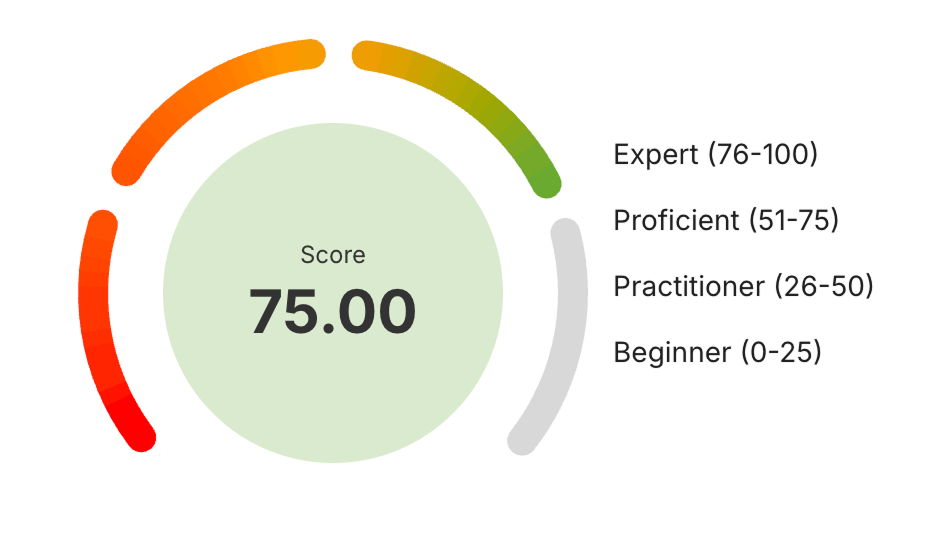
Platforms like JusRecruit generate structured scorecards that allow recruiters to provide meaningful, evidence-based feedback.
3. More Consistent Evaluation
Adaptive interviews ensure each candidate is measured against the same criteria, not interviewer mood, schedule, or intuition.
4. Reduced Bias
Structured, evidence-based assessment limits the influence of unconscious bias.
Candidates don’t mind automation when it’s used fairly and explained clearly.
Final Thoughts
The real unlock in 2025 isn’t AI. It’s structured, transparent, human-centered hiring supported by the right amount of automation.
The best teams today use systems where:
- Automated resume screening cuts through noise
- AI evaluates evidence quietly in the background
- Adaptive interviews generate comparable scorecards
- A lightweight ATS keeps everything visible
- Recruiters make the final judgment calls
- Candidates move through a consistent, fair experience
Tools like JusRecruit don’t replace recruiters, they create workflows where recruiters can actually do their best work.