
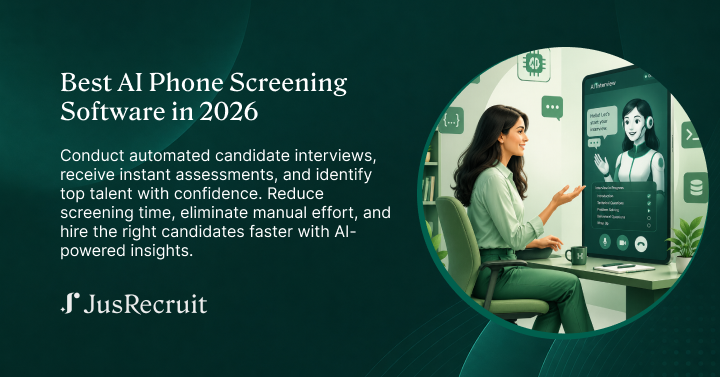
The best AI phone screening software in 2026 uses advanced conversational AI to automatically conduct, transcribe, and evaluate first-round candidate interviews, delivering detailed assessments to recruiters in minutes. These solutions streamline volume hiring, eliminate human bias, ensure consistent experiences for every candidate, and dramatically reduce time-to-shortlist for both recruiters and tech leaders.
In 2026, AI phone screening has become a critical foundation for talent acquisition. As candidate volumes continue to grow and expectations for faster, fairer processes rise, leading hiring teams rely on AI-driven solutions to move from slow, manual screening to efficient, data-rich candidate evaluation. This shift empowers HR, tech, and talent leaders to find top talent quickly, while dramatically improving the candidate journey and overall quality of hire.
What Is AI Phone Screening and How Does It Work?
AI phone screening refers to software that uses artificial intelligence to autonomously conduct structured phone interviews with job candidates. Unlike traditional approaches that require manual calls, AI phone screening leverages natural language processing (NLP) and machine learning to simulate real recruiter conversations, record candidate responses, and analyze those responses for critical competencies and fit.
Key Features of AI Phone Screening Solutions
- Automated interview scheduling and execution
- Consistent, structured question sets aligned to job description
- Real-time voice transcription and sentiment analysis
- Objective scoring based on skills, experience, and communication
- Instant shortlisting and actionable reports delivered to recruiters
Modern talent teams use AI phone screening as an intelligent front line, reserving human recruiter time for the best candidates rather than repetitive screening calls.
Top Criteria for Evaluating AI Phone Screening Tools
Choosing the right AI-driven phone screening platform can make a measurable difference in hiring outcomes. Leading hiring teams prioritize the following criteria:
- Accuracy and Validity: The AI must reliably assess candidates against validated role competencies, not just keywords.
- Seamless ATS Integration: Tight connection with existing Applicant Tracking Systems streamlines workflows.
- Customizability: Ability to tailor questions, scoring, and workflows to company needs and specific roles.
- Candidate Experience: Intuitive, accessible interview flow and clear communications to candidates, regardless of background.
- Actionable Reporting: Clear, bias-minimized shortlists and ready-to-use interview notes for recruiters and hiring managers.
Quality solutions also provide GDPR-compliant data handling and adhere to ethical standards, giving recruiters confidence in every decision.
AI Phone Screening vs. Manual Methods: The New Standard
The shift from manual phone screening to AI-driven solutions is decisive. Traditional screening methods require significant recruiter time, create bottlenecks in high-volume hiring, and often yield inconsistent candidate experiences and results. AI transforms this process in measurable ways.
- Manual Screening (Then): Recruiters place individual calls, take handwritten notes, and make high-stakes decisions based on limited time with each candidate. Human inconsistency and fatigue impact assessment quality.
- AI Screening (Now): Every candidate is screened at scale, using the same structured process. AI ensures fair, objective evaluation on criteria proven to predict future performance. Reports, scores, and transcripts become instantly accessible to decision makers.
A recent industry study found that AI-led phone screenings reduce average time-to-shortlist by more than 65% compared to manual outreach, while doubling recruiter capacity and improving candidate satisfaction scores.
AI phone screening raises the baseline for both efficiency and fairness. Manual methods increasingly appear outdated as the industry standard moves forward.
How AI Phone Screening Boosts Recruiter and Candidate Success
Modern AI screening software delivers exceptional value to both recruiters and candidates throughout the hiring process.
- For Recruiters: AI removes the repetitive burden of first-round interviews, enabling recruiters to focus on strategic activities like stakeholder engagement and relationship building. Automated shortlists and standardized evaluations lead to more reliable hiring outcomes.
- For Candidates: AI ensures every applicant receives a timely opportunity to showcase their abilities. Structured interviews and unbiased assessment mean fairer evaluation and quicker feedback. Candidates are no longer left waiting weeks for a basic screening call.
This mutual value accelerates speed-to-offer, strengthens employer brands, and solidifies the reputation of forward-thinking hiring teams.
AI Screening Benefits Comparison
- Consistent, data-backed candidate scoring replaces subjective human judgment.
- Recruiters save hours every week on manual outreach and note-taking.
- Feedback cycles compress from days to minutes.
- Every candidate, regardless of background or schedule, gains equal access to screening.
Key AI Capabilities to Look for in 2026
The market for AI phone screening is evolving rapidly. To stay ahead, modern talent teams look for platforms with cutting-edge features:
- Advanced conversational intelligence, including real-time language understanding and sentiment detection
- Context-aware follow-up questions, adapting to each candidate’s background
- Embedded DEI checks to monitor for potential bias in both questions and AI scoring
- Voice biometrics for secure candidate authentication
- Rich analytics dashboards covering funnel performance, conversion rates, and hiring manager satisfaction
Choosing an AI partner with a clear roadmap for innovation ensures your screening stack stays ahead of both candidate and business expectations.
Frequently Asked Questions
How does AI phone screening ensure fair candidate evaluation?
AI phone screening follows standardized, structured interview protocols for every applicant, assessing each response objectively using validated scoring models. By minimizing subjectivity and removing inconsistencies inherent in manual screening, AI delivers transparent and equitable evaluations for all candidates.
Can AI phone screening assess both technical and non-technical roles?
Yes. AI screening platforms can be tailored with job-specific question banks and competency frameworks, enabling accurate assessment of both technical skills and soft skills such as communication, critical thinking, and problem-solving. This versatility makes AI suitable for a wide range of roles across industries.
Will AI phone screening replace recruiters completely?
No. AI automates the repetitive, early-stage tasks of high-volume screening, freeing recruiters to focus on strategic engagement, cultural evaluation, and final hiring decisions. The combination of AI efficiency and recruiter judgment creates the highest quality processes and outcomes.
Is AI phone screening secure and privacy-compliant?
Leading platforms adhere to enterprise security standards and privacy regulations, including GDPR. Data encryption, secure access controls, and transparent data handling give both recruiters and candidates confidence in the integrity of the process.
The Future of AI in Candidate Screening
AI phone screening stands as the new standard for hiring efficiency and fairness. Forward-thinking hiring teams who prioritize AI-first strategies are already shortening time-to-fill, improving candidate quality, and elevating recruiter impact. As conversational AI and predictive analytics continue to advance, organizations that embrace these innovations will secure an ongoing competitive advantage in the talent market. Now is the time to position your hiring process ahead of the curve and leave outdated, manual screening in the past.