
Hiring the right candidate is one of the most important (and frustrating) parts of building a great team. If you’ve ever stared at hundreds of resumes, wondering how to spot the top 5% without burning days of your time, you’re not alone. Recruiters, hiring managers, and founders across industries struggle with the same question: how do we separate the signal from the noise?
The answer increasingly lies in automation. In this guide, we’ll explore how to automate candidate screening step by step, without losing the human judgment that makes hiring successful. By the end, you’ll have a roadmap that saves you hours while still surfacing the strongest candidates.
What is Candidate Screening and Why it Matters
Candidate screening is the process of narrowing down applicants to identify who should move forward in the hiring process. Think of it as the filter between “everyone who applied” and “the few we want to interview.” It’s not about rejecting people for the sake of it, it’s about ensuring that your time, and your team’s time, is spent where it matters most.
At its simplest, screening can include looking at resumes to confirm basic qualifications. At its most advanced, it can involve skill assessments, structured interviews, or even AI-driven evaluations. No matter the method, the goal is the same: make sure only the best-fit candidates reach the later stages of hiring.
Why Candidate Screening is Essential
- Volume Management
A single job posting can attract hundreds, or even thousands, of applicants. Without a structured screening process, it’s easy to feel overwhelmed or miss strong candidates hidden in the pile.
With JusRecruit’s AI phone screening, every applicant can be evaluated against your real requirements, not just keywords. This means you see a shortlist of genuinely qualified candidates, without drowning in resumes.
Set up AI phone screen
With JusRecruit, you can use AI phone screens to cut your screening time from 2 weeks to mere 3 days.
- Quality of Hire
Effective screening ensures you’re spending interview time on candidates who have the right skills and potential, not just those who wrote the best resume. This directly impacts employee performance and retention. - Efficiency for Recruiters and Hiring Managers
Recruiters often spend 20–30% of their time reviewing resumes and running initial phone screens. A streamlined recruitment screening reduces this load, freeing up time for higher-value activities like candidate engagement and employer branding.
With JusRecruit, automated scorecards generated from AI screens and assessments make it easy to compare candidates quickly and consistently, cutting hours of manual effort.
- Fairness and Consistency
A structured screening process means every applicant is evaluated against the same criteria. This not only minimizes bias but also strengthens your reputation as a fair employer. - Candidate Experience
Nothing frustrates candidates more than waiting weeks to hear back, or worse, never hearing back at all. Efficient screening shortens response times, making the process more transparent and respectful.
In short, candidate screening is the foundation of successful hiring. If it’s broken, the rest of your recruitment funnel collapses. But if it’s done well, and increasingly, automated, it becomes a competitive advantage.
How to Conduct the Candidate Screening Process
For most hiring teams, screening is where the recruitment funnel either flows smoothly or clogs up. The reality is sobering: hundreds of applicants per role, most of them poor fits, followed by early calls that eat up hours. Without a structured process, hiring becomes inconsistent, stressful, and painfully slow.
The good news? Screening can be transformed into a predictable, scalable system. By combining clarity, automation, and structured evaluation, you can cut screening time dramatically while improving the quality of shortlists. Here’s how to do it.
Step 1: Define What “Qualified” Really Means
Every effective screening process starts with clarity, not technology. Before you think about assessments, interviews, or automation, you need a shared definition of what “qualified” looks like for the role. Without this, different recruiters and hiring managers will evaluate candidates on different standards, creating confusion, inconsistency, and bias.
The best way to align everyone is by creating a hiring rubric. A rubric breaks down what matters most for the role and ensures every candidate is evaluated against the same set of criteria.
Here’s how to build one:
- Hard criteria: certifications, years of experience, technical proficiency.
- Preferred skills: tool familiarity, domain knowledge, or secondary languages.
- Soft skills & behaviors: communication, adaptability, leadership potential.
- Future potential: curiosity, growth mindset, and cultural contribution.
When you document these expectations in advance, it transforms screening. Candidates are measured consistently, scorecards become objective, and hiring decisions feel less like gut instinct and more like structured evaluation.
A hiring rubric isn’t just a checklist it’s a decision-making tool that helps recruiters compare candidates fairly and quickly.
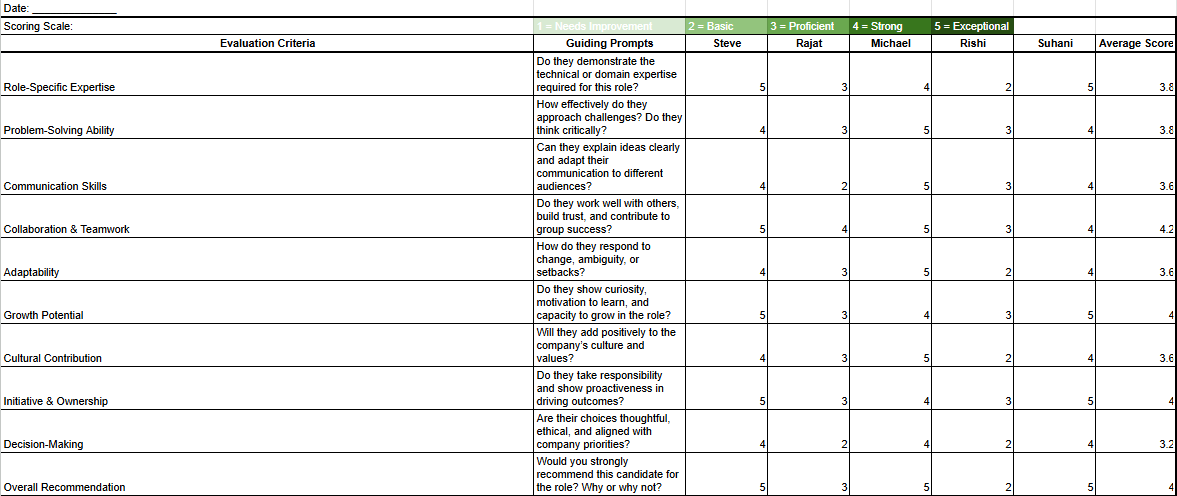
Here’s the full template: Hiring Rubric Template
Step 2: Screen Faster with AI Phone Interviews
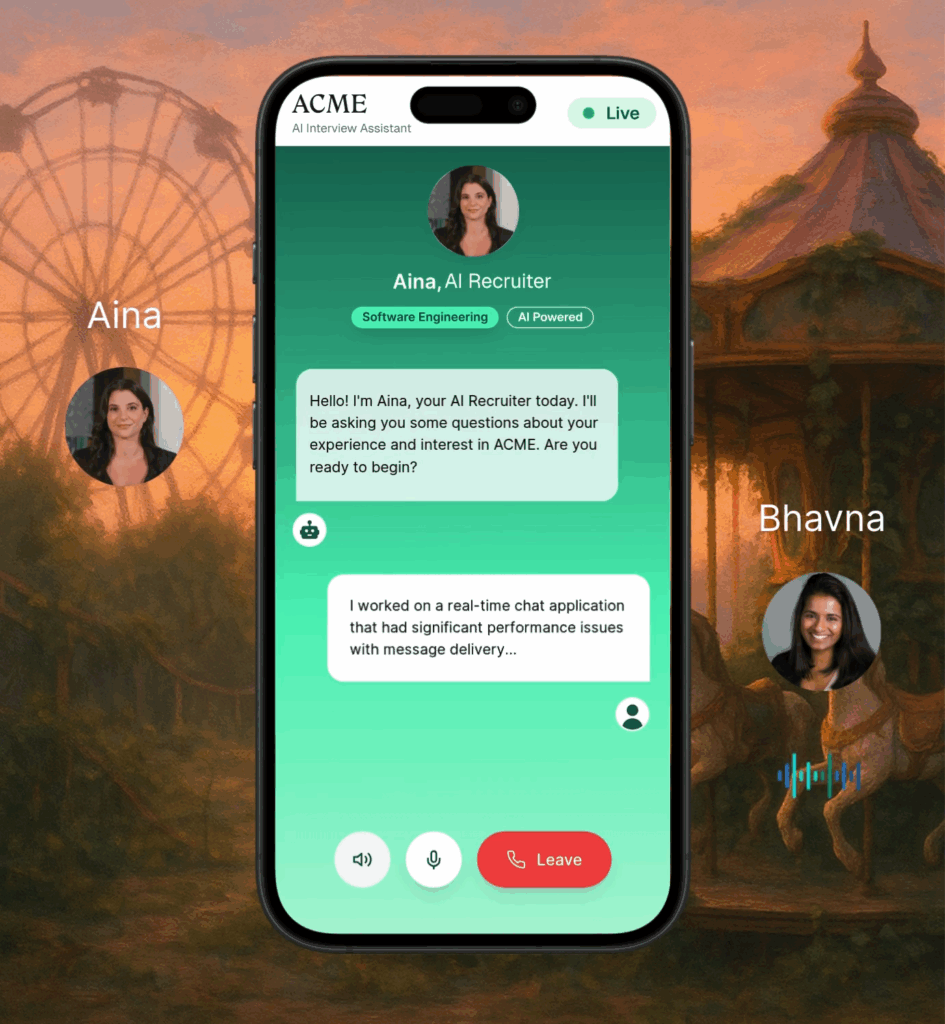
Rather than starting with manual resume parsing, use an AI phone screen as the first filter. Candidates respond to structured questions by phone, and the system generates summaries or scorecards that highlight who meets your criteria. This means:
- Every applicant is evaluated fairly, not just those with polished resumes.
- Recruiters don’t spend days filtering applications.
- Shortlists are built on ability and alignment, not just keyword matches.
This step dramatically reduces wasted effort while surfacing stronger candidates earlier.
With JusRecruit’s AI Phone Interviews, every candidate is automatically screened against your real requirements. Recruiters receive structured scorecards in minutes, making it easy to spot the strongest talent without drowning in applications.
Step 3: Validate Skills Early with Assessments
Resumes and phone screens give signals, but assessments provide proof. By introducing short, job-relevant tasks, you can measure actual ability before committing to live interviews. For example:
- Coding tests for developers.
- Business case studies for analysts or consultants.
- Scenario-based exercises for sales or customer-facing roles.
The key here is efficiency: quick exercises that deliver structured, comparable results. Candidates who clear this stage aren’t just qualified on paper, they’ve demonstrated ability.
Step 4: Conduct Structured AI Interviews
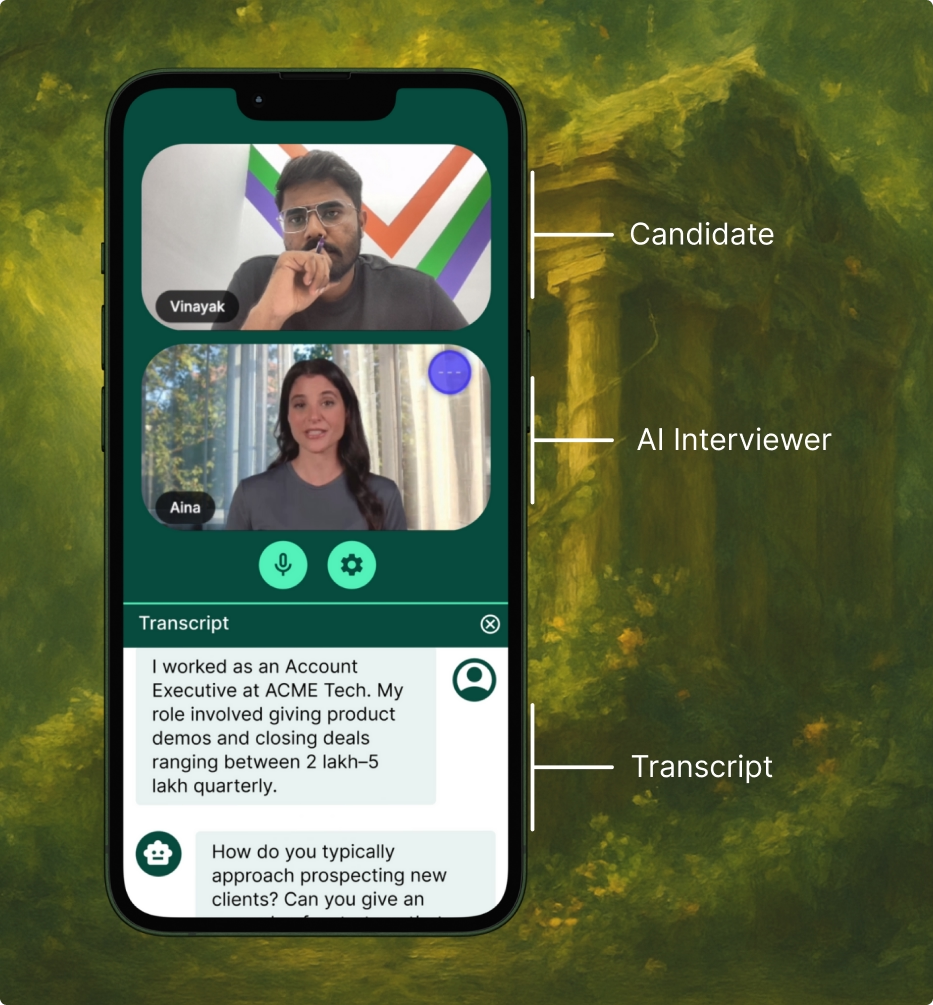
By the time candidates reach this stage, they’ve already cleared the basics. Now the goal is to dive deeper into communication style, problem-solving ability, and cultural alignment. Structured AI interviews make this process consistent and scalable by:
- Asking every candidate the same set of questions.
- Allowing hiring managers to review asynchronously, on their own time.
- Producing tagged, comparable responses that make decision-making faster and more objective.
This ensures human interview time is focused on high-value conversations with the strongest candidates, not repetitive first-round screening.
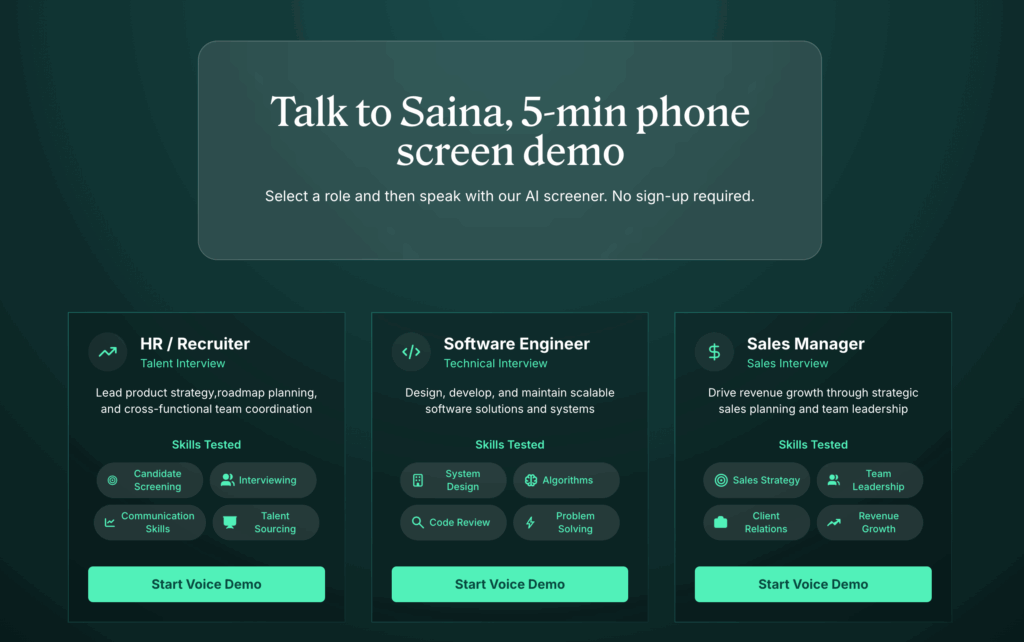
> With JusRecruit, you get automated first-round interviews with Saina, our AI interviewer. Saina digs into problem-solving and practical skills, then delivers clean, comparable scorecards, without recruiters losing hours to scheduling.
Step 5: Centralize Feedback and Collaboration
One of the most overlooked bottlenecks in screening isn’t on the candidate side — it’s inside the hiring team. When feedback lives in scattered emails, spreadsheets, and chat threads, alignment breaks down. Recruiters chase hiring managers for input, managers forget to update evaluations, and great candidates sometimes fall through the cracks.
Centralizing evaluations changes everything:
- Consistency: Scorecards are structured and comparable across every candidate.
- Transparency: Recruiters and hiring managers can see progress at a glance.
- Speed: Automated reminders keep the process moving without endless back-and-forth.
With a single, shared view, hiring decisions become faster, more reliable, and easier to defend.
Insight: With JusRecruit, every candidate gets a structured AI-generated scorecard, complete with summaries, tagged responses, and an overall score. Hiring managers can review asynchronously, recruiters don’t waste hours chasing feedback, and strong candidates never slip through the cracks.
Screening Methods and Tools at a Glance
To recap, the most effective screening process in recruitment blends multiple methods:
- AI Phone Screening: A fair, consistent first filter for all applicants.
- Skill Assessments: Objective tests that validate real-world ability.
- Structured AI Interviews: Consistent, scalable conversations focused on fit.
- Centralized Feedback: Shared scorecards and collaboration in one view.
When thoughtfully combined, these steps don’t just cut screening time—they transform it. Recruiters spend less time firefighting and more time connecting with the right people.
Common Screening Challenges
Even with a structured process, candidate screening isn’t always smooth. Many recruiters encounter the same roadblocks over and over again. By recognizing these challenges upfront, you can design a process that avoids them or at least minimizes their impact.
1. Volume Overload
The sheer number of applications per role is overwhelming. For many companies, a single posting attracts hundreds of resumes, and most are not even close to relevant. Recruiters end up spending hours just to filter out unqualified candidates, time that could be spent on higher-value conversations.
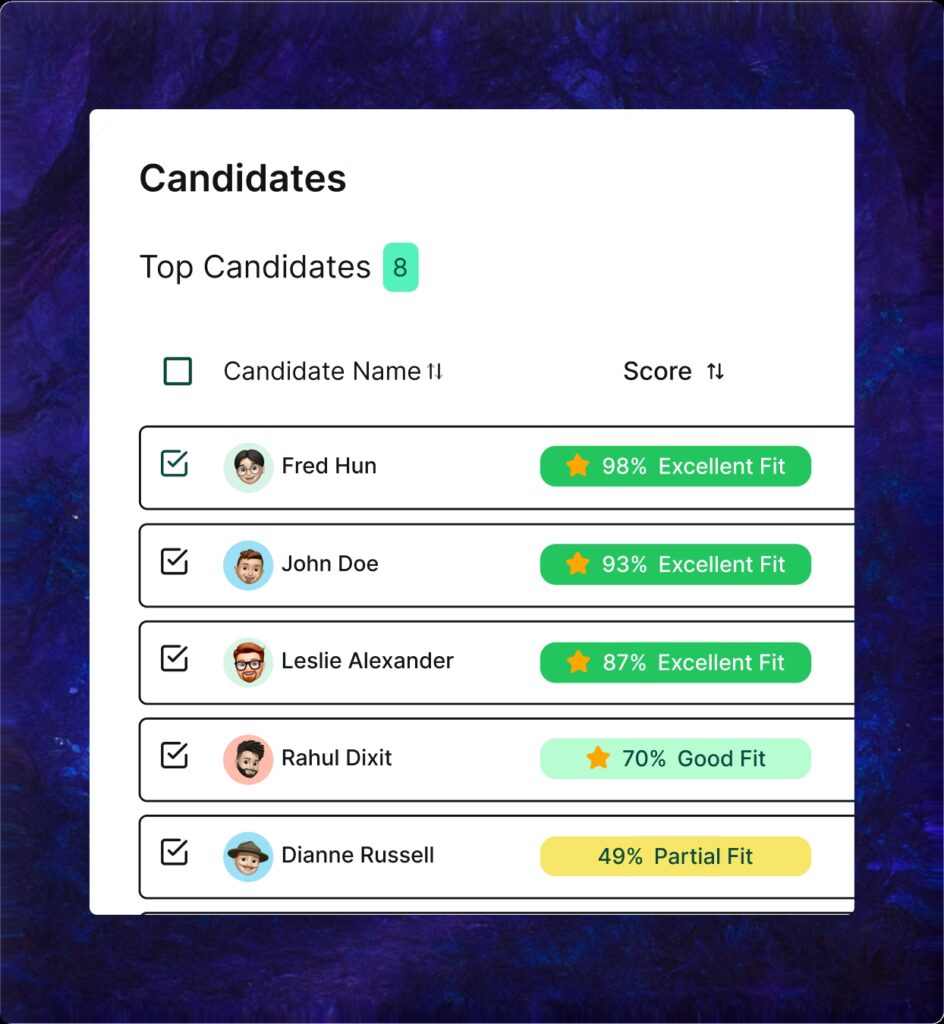
With JusRecruit, every candidate you see has already cleared an initial AI interview, so you skip the noise and engage only with those who meet the bar.
2. Human Fatigue and Bias
Manual resume review often leads to inconsistent evaluations. After the 50th resume, details blur, and decisions can become rushed. Worse, unconscious bias can creep in, sometimes favoring candidates who “look” a certain way on paper rather than those who may have the actual skills to succeed.
With JusRecruit’s AI phone screening, every applicant is evaluated against real requirements, so you only see candidates who truly fit.
3. Time-Consuming Phone Screens
Phone interviews are helpful but inefficient. Coordinating schedules across multiple candidates and hiring managers can drag timelines by weeks. Plus, many phone screens end with the recruiter realizing the candidate isn’t a fit, meaning hours of time lost on conversations that didn’t need to happen.
4. Feedback Bottlenecks
Even when a candidate makes it past the first stages, delays often occur inside the hiring team. Feedback gets buried in emails, managers miss reminders, or evaluations come in days late. By the time decisions are made, top candidates may have already accepted another offer.
5. Poor Candidate Experience
From slow response times to generic rejection emails, screening is often where the candidate experience suffers most. Applicants are left in the dark, frustrated by long delays or unclear criteria. This not only damages your brand but also risks losing good candidates who may have been a great fit.
Metrics to Measure Candidate Screening Effectiveness
You can’t improve what you don’t measure. A screening process isn’t just about moving people through the funnel, it’s about doing so in a way that is efficient, fair, and predictive of long-term success. Tracking the right metrics helps you identify where your process works well and where it needs refinement.
1. Time-to-Screen
How quickly can you move a candidate from application to shortlist?
- Why it matters: Long delays increase drop-offs, especially for in-demand roles.
- What to track: Average time taken for candidates to move past the initial screening stage.
- Goal: Shrink days or weeks of manual review into hours without compromising quality.
2. Conversion Rates Across Stages
Measure the percentage of candidates advancing from one stage to the next, from resume screening to assessments to interviews.
- Why it matters: Sudden drop-offs may suggest filters are too strict, assessments are misaligned, or communication is unclear.
- What to track: Ratios of applicants who move from application → shortlist → interview.
- Goal: A balanced funnel that highlights the strongest candidates without excluding high-potential talent prematurely.
3. Quality of Hire
Look beyond the hiring decision to see how well new hires perform once onboard.
- Why it matters: Screening is only effective if the people you hire thrive in their roles.
- What to track: New hire performance in the first 6–12 months, retention rates, and manager satisfaction.
- Goal: Consistently hiring employees who perform at or above expectations.
4. Candidate Experience
Understand how applicants perceive your screening process.
- Why it matters: A negative experience discourages future applicants and harms your employer brand.
- What to track: Candidate survey results, response times, and drop-off feedback.
- Goal: Candidates, even those rejected, feel the process was timely, fair, and respectful.
5. Hiring Team Productivity
Measure how much time recruiters and managers spend on repetitive screening tasks.
- Why it matters: High admin time reduces bandwidth for relationship-building and strategic hiring.
- What to track: Hours per hire spent on resume reviews, phone screens, and coordination.
- Goal: Free up recruiter time by reducing low-value manual tasks.
6. Bias and Diversity Indicators
Audit your process to ensure it isn’t unintentionally excluding qualified candidates.
- Why it matters: Screening should open doors, not close them unfairly.
- What to track: Diversity across candidate pools and advancement rates at each stage.
- Goal: A fair funnel where strong candidates from all backgrounds progress based on merit.
Why These Metrics Matter
Individually, these metrics are useful. Together, they tell the full story of whether your candidate screening process is working. When you see shorter screening times, healthier conversion rates, stronger hires, and positive candidate feedback, you’ll know your process is not only faster, it’s smarter.
Final Thoughts
Automating candidate screening isn’t about removing people from the process — it’s about removing the friction. The endless resume piles, repetitive phone calls, and scattered feedback loops slow hiring down and frustrate both recruiters and candidates.
A well-structured, partially automated process changes that. Resumes are filtered quickly, skills are validated objectively, interviews are consistent, and feedback flows smoothly. Recruiters get their time back, hiring managers see stronger shortlists, and candidates experience a faster, fairer journey.
When done right, screening becomes less of a bottleneck and more of a competitive advantage. Instead of spending weeks to find the right fit, you’re spending days, and focusing on the conversations that truly matter.