
Hiring is one of the most critical decisions any company makes. The recruitment and hiring process shapes the quality of your team, influences culture, and directly impacts business growth. But as technology evolves, one big question keeps coming up: should we rely on AI recruitment and automation in recruitment, or stick with tried-and-true manual hiring practices?
The answer isn’t always black and white. In this post, I’ll break down the pros and cons of recruitment automation and manual hiring, show you where each approach shines, and give you a practical framework to decide which one is right for your next role.
Why It Matters
Recruiters today face two big challenges: speed and quality. On one side, you’re competing for talent in a market where roles close quickly. On the other, you’re drowning in resumes, managing interview schedules, and juggling feedback from multiple stakeholders. It’s no surprise that screening alone can take more than 20 hours per hire, often just to find a handful of good fits.
Meanwhile, candidates expect more than ever: faster responses, fair evaluations, and a hiring process that feels personal and transparent. The reality is, if your process drags, you risk losing the best people before you even reach the interview stage.
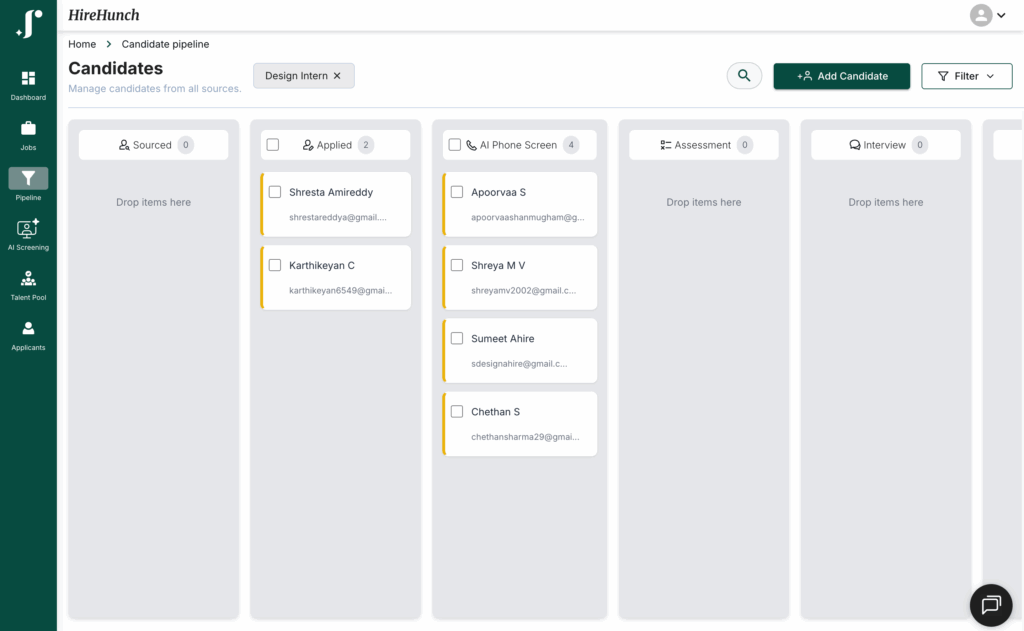
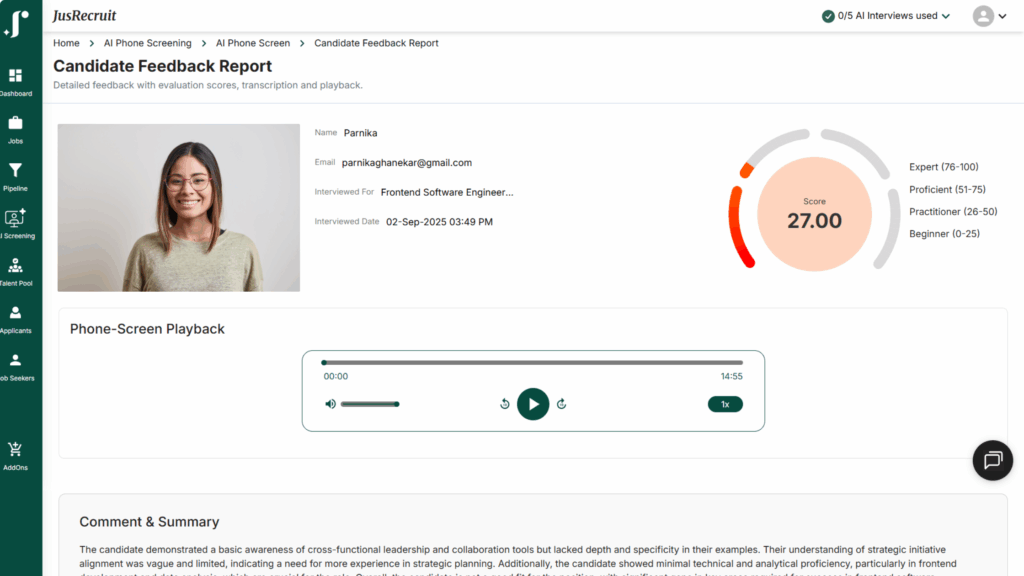
That’s where recruitment automation comes in. By handling repetitive, time-consuming tasks, automation can cut screening time dramatically and create consistency across evaluations. AI-powered interviews and structured phone screens can also generate standardized scorecards, ensuring candidates are judged against real requirements, not just keywords.
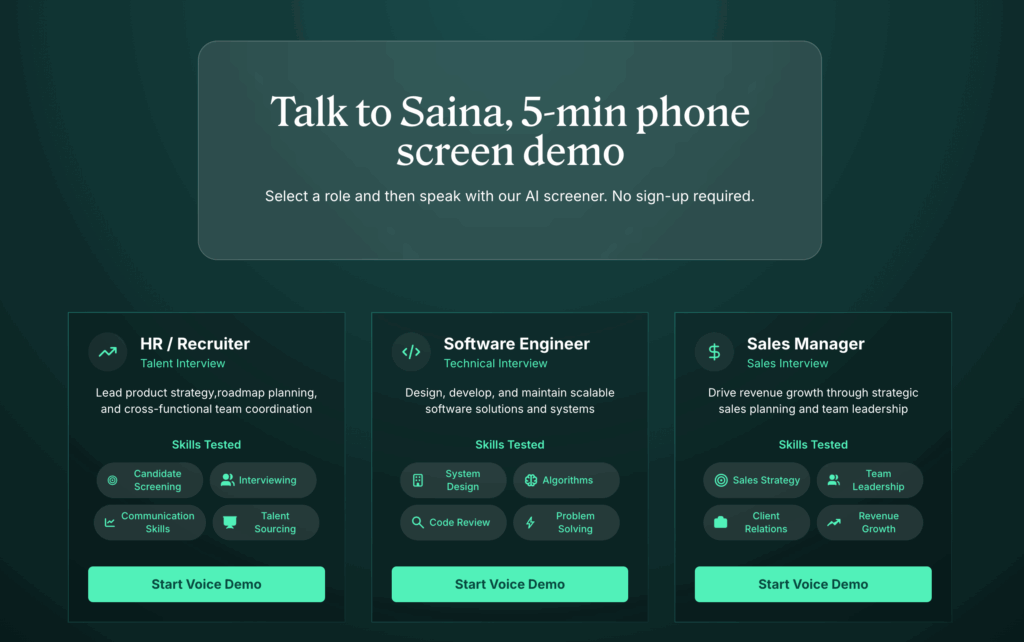
And when everything flows into a centralized pipeline, recruiters gain a single, clear view of progress. Instead of chasing feedback or updating spreadsheets, they can focus on moving the right candidates forward quickly.
Of course, not every role is best served by automation. Some positions, especially senior, niche, or culture-heavy roles, demand the nuance, empathy, and judgment that only humans bring. The trick is knowing when to lean on automation for speed and consistency, and when to lean on manual hiring for depth and personalization.
Let’s dive deeper.
What Do We Mean by Recruitment Automation?
Recruitment automation refers to using technology, often AI tools for recruitment, to handle the repetitive, time-consuming parts of the hiring process. The purpose isn’t to replace recruiters, but to take over the “busywork” so you can focus on higher-value decisions.
Examples of Recruitment Automation
- Resume parsing and candidate shortlisting using AI recruitment tools
- Automated scheduling and interview coordination
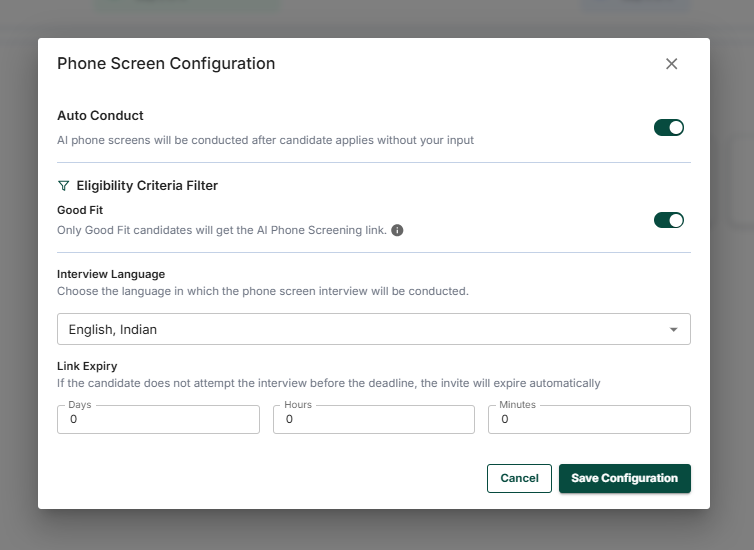
- AI-driven chatbots answering candidate FAQs
- Pre-screening assessments that generate standardized scorecards
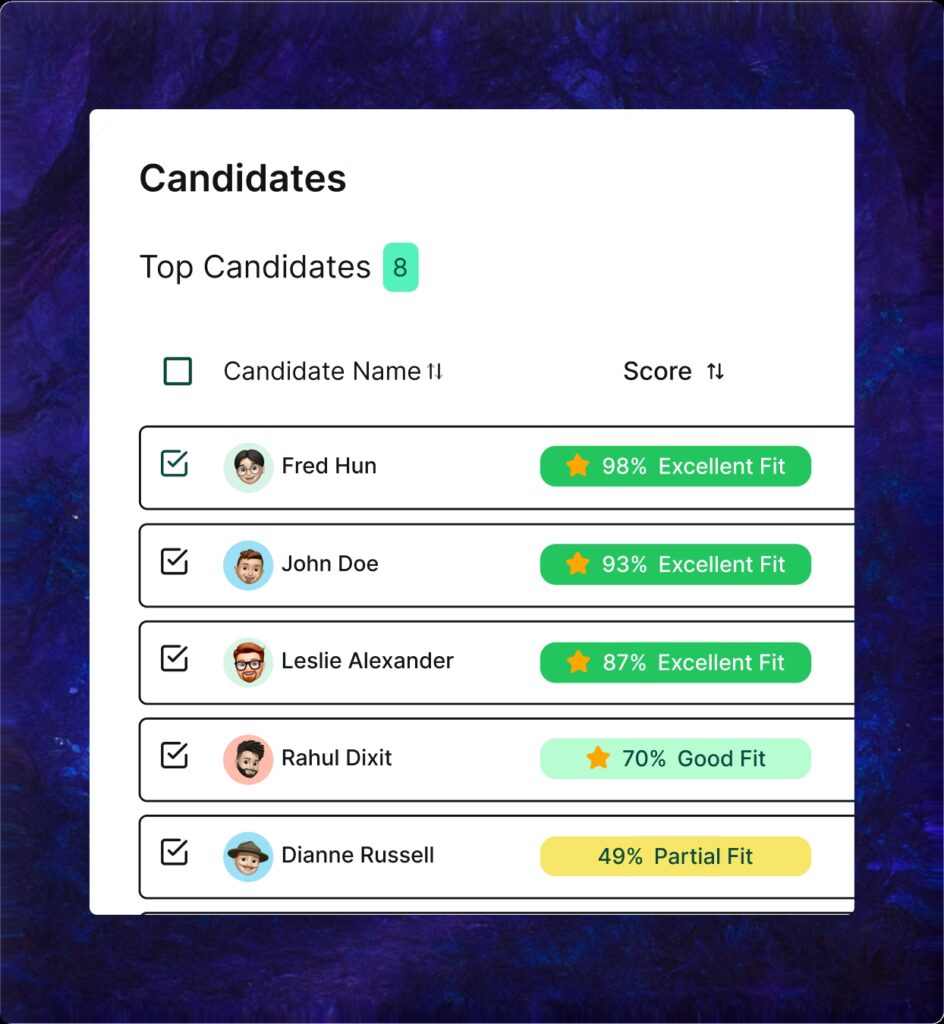
- Recruiter AI assistants summarizing candidate performance data
The goal is simple: free recruiters from repetitive tasks so they can focus on decision-making, relationship-building, and closing the best candidates.
What is Manual Hiring?
Manual hiring is the traditional approach where recruiters and hiring managers do most tasks themselves, reviewing resumes one by one, scheduling interviews manually, calling candidates, and consolidating feedback by hand. It’s often slower, but it allows for deeper personalization and more nuanced decision-making.
Examples of Manual Hiring
- Recruiters reviewing every resume by hand
- Back-and-forth scheduling over email
- Unstructured interviews with inconsistent feedback
- Hiring decisions made largely on intuition
Manual hiring still works in many contexts, especially for high-stakes or niche roles where the human element is critical.
Pros and Cons of Recruitment Automation
Advantages of Automation in Recruitment
- Speed & Efficiency: AI can process hundreds or thousands of resumes in minutes.
- Consistency: Automated scoring ensures every candidate is evaluated on the same criteria.
- Reduced Bias: Properly designed systems minimize unconscious human bias.
- Better Candidate Experience: Automated updates and faster feedback keep candidates engaged.
- Scalability: Automation scales effortlessly for high-volume or repeatable roles.
Limitations of Recruitment Automation
- Context Blindness: AI may miss subtle nuances in experience or personality.
- Setup Time: Implementing and configuring automation requires upfront effort.
- Candidate Perception: Some worry about being judged by “just an algorithm.”
- Not Role-Specific: Automation is more effective for repeatable, high-volume roles than unique, strategic positions.
Pros and Cons of Manual Hiring
Advantages of Manual Hiring
- Human Judgment: Recruiters can evaluate cultural fit, communication style, and soft skills better in person.
- Personalization: Tailored communication strengthens employer brand.
- Flexibility: Manual processes adapt quickly if requirements shift mid-search.
- Candidate Relationships: Recruiters build stronger connections through one-on-one interactions.
Limitations of Manual Hiring
- Time-Consuming: Screening hundreds of resumes manually eats up hours.
- Inconsistency: Feedback and evaluations vary widely across interviewers.
- Prone to Bias: Without structure, unconscious preferences creep in.
- Scalability Issues: Manual hiring struggles when candidate volumes spike.
Recruitment Automation vs. Manual Hiring: A Side-by-Side Comparison
| Factor | Recruitment Automation | Manual Hiring |
| Speed | Extremely fast (AI recruitment tools parse data instantly) | Slower, depends on recruiter bandwidth |
| Candidate Experience | Automated updates, consistent touchpoints | Personalized, but sometimes delayed |
| Bias Control | Reduced bias with structured AI hiring | Higher risk of unconscious bias |
| Scalability | Handles thousands of applicants easily | Limited scalability |
| Nuance & Context | Limited to data available | Strong human judgment on soft factors |
| Cost Efficiency | Saves recruiter hours, lower long-term cost | Higher recruiter workload, more hours billed |
Which Approach Fits Which Role?
The best recruitment strategy depends on what kind of role you’re hiring for. Automation and manual methods each have their sweet spots:
When Recruitment Automation Works Best
- High-volume hiring: Customer support, sales associates, delivery staff
- Early-stage screening: When you need to filter 500+ applicants down to the top 20 efficiently
- Technical assessments: Coding tests, language skills, or other structured evaluations
- Campus hiring or entry-level roles: Large applicant pools with standardized evaluation criteria
When Manual Hiring Works Best
- Leadership positions: C-level or senior roles where cultural alignment and strategic vision matter most
- Creative roles: Designers, marketers, or storytellers where portfolios and personal style are key
- Niche technical experts: When the talent pool is small and context-specific experience is critical
- High-touch industries: Roles where candidate experience itself directly reflects your employer brand
The Hybrid Model: Best of Both Worlds
More and more recruiters are realizing that it doesn’t have to be automation versus manual hiring. The real power comes from combining the two. A hybrid model leverages automation to handle the repetitive, high-volume tasks, while keeping humans in the loop for the nuanced, high-value decisions.
This approach offers the best of both worlds: the speed, consistency, and scalability of AI, balanced with the empathy, context, and judgment that only people can provide.
Example Hybrid Workflow
- Resume Parsing & Shortlisting
Use recruiter AI to scan and parse resumes, quickly surfacing the top matches from hundreds of applicants. - Skill-Based Pre-Screening
Automate the first layer of screening with structured, short assessments tailored to the role. This ensures candidates are evaluated on relevant skills early in the funnel. - Automated Scheduling & Reminders
Eliminate back-and-forth emails by letting automation handle calendar invites, reschedules, and candidate reminders. - Structured, Human-Led Interviews
Once the pool is narrowed, human interviewers step in to evaluate cultural fit, leadership potential, and soft skills, areas where nuance matters most. - Centralized Feedback & Final Decision
Collect interviewer feedback and assessment results into a single, unified system. This creates transparency, speeds up alignment, and makes it easier for teams to decide with confidence.
By blending automation and manual hiring, recruiters get the best of both worlds: speed without sacrificing quality, structure without losing human judgment, and efficiency without compromising personalization.
How to Decide: A Simple Framework
When choosing between recruitment automation and manual hiring, it helps to step back and ask a few key questions:
- What’s the role type? High-volume vs. strategic, niche vs. general.
- How large is the candidate pool? Hundreds of applicants vs. a handful.
- What skills are being measured? Structured technical skills vs. softer, context-driven qualities.
- What’s the timeline? Urgent hires that need speed vs. long-term leadership searches that demand nuance.
- What resources do we have? Do recruiters have the bandwidth to manage manually, or do we need automation to scale?
Answering these gives you clarity on whether automation should take the lead, or whether a manual approach is better suited. In most cases, the right answer will be a hybrid approach, where automation powers efficiency at the top of the funnel and human judgment guides the final decisions.
Common Myths About AI Recruitment
Let’s clear up some misconceptions that often hold teams back from adopting automation:
- “AI tools for recruitment will replace recruiters.”
Not true. Recruiter AI is designed to assist, not replace. Humans remain central for judgment, context, and relationship-building. - “Automation removes personalization.”
Done right, automation takes care of repetitive tasks, freeing recruiters to spend more time on personalized candidate engagement. - “AI hiring is biased.”
While no system is perfect, structured AI tools can actually help reduce bias by ensuring every candidate is evaluated on the same criteria. The key is careful setup and ongoing monitoring.
The Future of AI and Recruitment
The future of hiring won’t be a battle between humans and machines. Instead, it’s about balance. Automation will continue to handle the heavy lifting, resume parsing, scheduling, scorecards, ensuring speed, fairness, and scale. Recruiters will double down on the uniquely human skills that matter most: empathy, storytelling, persuasion, and judgment. Companies that thrive will be those that combine automation with authentic human touchpoints. They’ll have processes that are efficient, fair, and scalable, while still making candidates feel seen and valued.